News Headline
TRAI says nyet to regulating communication OTTs

MUMBAI: The Indian communication OTT ecosystem can breathe easier now. After slapping oodles of regulation on the TV sector, as voiced regularly by the television broadcasting community, the Telecom Regulatory Authority of India (TRAI) has recommended that no controls need to be imposed on OTT services such as voice over internet telephony, SMS, video calling, and instant messaging services.
On three counts, the TRAI has agreed to wait for it to evolve and consensus on regulations at the ITU level to emerge before imposing any further controls on OTTs:
. Market forces may be allowed to respond to the situation without prescribing any regulatory intervention. However, developments shall be monitored and intervention as felt necessary shall be done at appropriate time.

The TRAI further said in a report released today that the increase in usage of OTT, traffic of telecom service providers has also grown. “Various studies on appropriate business models are already under consideration in various jurisdictions and it is emerging. Therefore, any regulatory prescription in haste may leave adverse impact on industry as a whole.”
No regulatory interventions are required in respect of issues related with privacy and security of OTT services at the moment.
The TRAI noted that: ”After studying the issues, it has been observed that architecture of OTT communication services is evolving to protect the end users and encryption technology deployed in a manner which prevents intermediaries from getting the communication in a clear text or in an intelligible form. Imposition of any requirements to cater to get the details of communication in an intelligible form or clear text would either lead to change in the entire architecture of such OTT services which might not provide same level of protection as offered today or would require to introduce provisions which may make the agents involved in the communication vulnerable to unlawful actors.”
It is not an opportune moment to recommend a comprehensive regulatory framework for various aspects of services referred to as OTT services, beyond the extant laws and regulations prescribed presently. The matter may be looked into afresh when more clarity emerges in international jurisdictions particularly the study undertaken by ITU.
Regulation of OTT services is a widely debated topic in many jurisdictions as well as in ITU. While few jurisdictions have started exploring possibilities to regulate some aspects of a few OTT services through legal and technical measures but these efforts are yet in nascent stage and the overwhelming majority of jurisdictions and the ITU are still studying various aspects of OTTs. Since, ITU deliberations are also at study level, therefore conclusions may not be drawn regarding the regulatory framework of OTT services. However, in future, a framework may emerge regarding cooperation between OTT providers and telecom operators. The Department of Telecommunications (DoT) and Telecom Regulatory Authority of India (TRAI) are also actively participating in the ongoing deliberations in ITU on this issue. Based on the outcome of ITU deliberations DoT and TRAI may take appropriate consultations in future.
Market forces may be allowed to respond to the situation without prescribing any regulatory intervention. However, developments shall be monitored and intervention as felt necessary shall be done at appropriate time.
Industry has anywhere for some time been stating that the Code of Criminal Procedure, 1973 and the Information Technology Act, 2000 are robust enough to regulate the OTT sector.







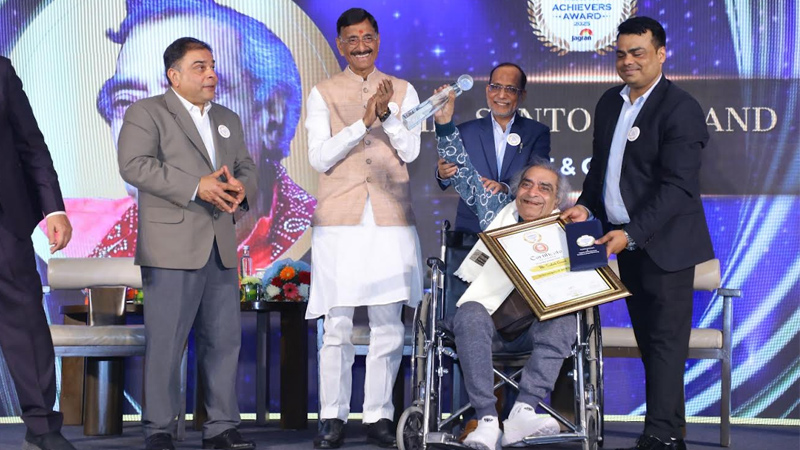
NEW DELHI: Hamdard Laboratories gathered a cross-section of India’s achievers in New Delhi on Friday, handing out the Hakeem Abdul Hameed Excellence Awards to figures who have left their mark across healthcare, education, sport, public service and the arts.
The ceremony, attended by minister of state for defence Sanjay Seth and senior officials from the ministry of Ayush, celebrated individuals whose work blends professional success with a sense of public purpose. It was as much a roll call of achievement as it was a reminder that influence is not measured only in profits or podiums, but in people reached and lives improved.
Among the headline awardees was Alakh Pandey, founder and chief executive of PhysicsWallah, recognised for turning affordable digital learning into a mass movement. On the sporting front, Arjuna Awardee and kabaddi player Sakshi Puniya was honoured for her contribution to the game and for pushing women’s participation onto bigger stages.
The cultural spotlight fell on veteran lyricist and poet Santosh Anand, whose songs have echoed across generations of Hindi cinema. At 97, Anand accepted the honour with characteristic humility, reflecting on a life shaped by perseverance and hope.
Healthcare honours spanned both modern and traditional systems. Manoj N. Nesari was recognised for strengthening Ayurveda’s place in national and global health frameworks. Padma shri Mohammed Abdul Waheed was honoured for his research-backed work in Unani medicine, while padma shri Mohsin Wali received recognition for his long-standing contribution to patient-centred care.
Education and social development also featured prominently. Padma shri Zahir Ishaq Kazi was honoured for decades of work in education, while former Meghalaya superintendent of Police T. C. Chacko was recognised for public service. Goonj founder Anshu Gupta received an award for his dignity-centred rural development initiatives, and the Hunar Shakti Foundation was honoured for empowering women and young girls through skill development.
The Lifetime Achievement Award went to former IAS officer Shailaja Chandra for her long career in public healthcare and governance, particularly in the traditional systems under Ayush.
Speaking at the event, Hamdard chairman Abdul Majeed said the awards were a tribute to those who combine excellence with empathy. “These awardees reflect Hakeem Sahib’s belief that healthcare, education and public service must ultimately serve humanity,” he said.
Minister Seth struck a forward-looking note, saying India’s young population gives the country a unique opportunity to become a global destination for learning, health and wellness by 2047.
The ceremony also featured the trailer launch of Unani Ki Kahaani, an upcoming documentary starring actor Jim Sarbh, set to premiere on Discovery on 11 February.
Instituted in memory of Unani scholar and educationist Hakeem Abdul Hameed, the awards have grown into a national platform that celebrates those building a more inclusive and resilient India. For one evening at least, the spotlight was not just on success, but on service with substance.






