News Headline
TRAI says Indian broadband subs crossed a billion in November 2025

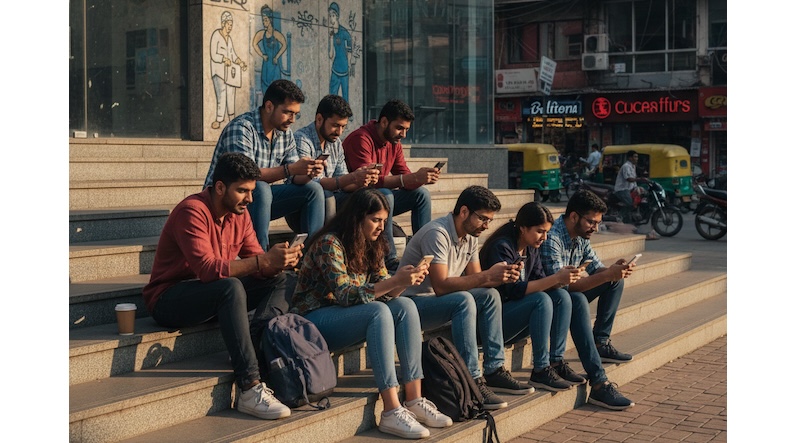
NEW DELHI: India’s digital revolution hit a milestone in November 2025 that would have seemed fanciful a decade ago: one billion broadband subscribers. That is 100 crore people with high-speed internet access, up from just 131.49 million in November 2015, a nearly sixfold increase that shows India has figured out how to wire up a subcontinent while much of the world was still arguing about net neutrality.
The Telecom Regulatory Authority of India’s (TRAI) year-end data released on December 31 reveals a market that is both mature and manic. Total telephone subscribers, wireless and wireline combined, stood at 1.23 billion, with overall tele-density at 86.77 per cent. Delhi topped the charts with a staggering 277.09 per cent tele-density, meaning more SIM cards than people, while Bihar lagged at 58.23 per cent. Urban India is saturated with connectivity, clocking 135.39 per cent wireless tele-density, while rural India trails at 59.50 per cent, underscoring a divide that is narrowing but far from closed.
Reliance Jio Infocomm, Mukesh Ambani’s telecom upstart turned titan, continues to dominate. With 510.52 million broadband subscribers, it commands 50.87 per cent of the broadband market. Of these, 496.92 million are wireless broadband users, while 13.59 million are fixed-wired subscribers. Jio added 13.89 million wireless subscribers in November alone, translating into a monthly growth rate of 0.29 per cent. The increase is incremental on paper but formidable at scale.

Bharti Airtel, the incumbent that refuses to fade quietly, holds 314.26 million broadband subscribers, giving it a 31.31 per cent market share. Its total wireless base stands at 394.88 million, and it remains the undisputed leader in machine-to-machine (M2M) connections, with 63.08 million cellular links, accounting for 60.96 per cent of the segment. Airtel also boasts the highest proportion of active subscribers. As much as 98.81 per cent of its wireless users were active on the Visitor Location Register (VLR) in November, an indicator that its subscribers are actually using their connections rather than letting SIM cards lie idle.
Vodafone Idea, the perpetually embattled third private player, reported 127.75 million broadband subscribers, a 12.73 per cent market share, and 199.71 million wireless users. It lost 1.01 million wireless subscribers in November, a 0.50 per cent monthly decline that highlights its ongoing struggle for survival. State-owned Bharat Sanchar Nigam Limited (BSNL) reported 33.85 million broadband subscribers and 92.96 million wireless users, but only 58.47 per cent of its wireless base was active, the lowest among major operators.
Wireline telecom, long treated as the Cinderella of Indian connectivity, is small but stirring. Wireline subscribers rose to 47.05 million in November, up by 0.30 million from October, marking a 0.63 per cent monthly growth rate. Jio leads the segment with about 14.54 million wireline connections, followed by Airtel with 10.77 million, Tata Tele with 8.97 million and BSNL with 7.52 million. Rural wireline penetration remains negligible, with tele-density at 0.56 per cent, compared to 8.20 per cent in urban areas.
Wireless, however, remains the backbone of Indian telecom. The country ended November with 1.19 billion wireless subscribers, including 1.17 billion mobile users, alongside around 13.60 million fixed wireless access (FWA) connections. FWA, largely driven by Jio’s 5G-powered home broadband, expanded from 9.91 million in October to 10.41 million in November, registering around 5 per cent month-on-month growth. Jio also operates 3.19 million unlicensed band radio (UBR) FWA connections, a category it began reporting separately in August 2025.
Active wireless subscribers, measured by peak VLR data, stood at 1.09 billion, or 92.93 per cent of the total wireless base. The remaining portion, millions of inactive SIM cards, remains the industry’s open secret, inflating headline subscriber numbers without corresponding revenue. BSNL’s low activity ratio suggests that more than four in ten of its wireless connections are dormant.
Mobile Number Portability (MNP) requests touched 14.69 million in November, reflecting persistent churn as users hunt for better coverage or tariffs. Zone I, covering north and west India, accounted for 7.94 million requests, led by Uttar Pradesh East with 1.97 million and UP West with 1.35 million. Zone II, covering south and east India, saw 6.74 million requests, with Madhya Pradesh at 1.40 million and Bihar at 1.33 million. Since its launch in 2010, MNP has turned the market into a perpetual game of musical chairs.
Broadband growth is the story beneath all the noise. Of the one billion broadband subscribers, 958.54 million are wireless, while 45.11 million are fixed wired connections. Fixed wired access, including DSL and fibre, grew 0.64 per cent in November, while fixed wireless access surged 6.69 per cent. Mobile wireless broadband, covering 3G, 4G and 5G, inched up 0.28 per cent to 944.48 million subscribers.
M2M connections, the uncelebrated plumbing of the Internet of Things, climbed from 98.87 million in October to 103.48 million in November. Airtel’s dominance here signals a strategic bet on connected vehicles, smart meters and industrial automation, even as rivals focus on consumer data.
The billion-broadband milestone reflects scale rather than uniform infrastructure maturity. Urban wireless tele-density stands at 135.39 per cent, while rural wireless tele-density is 58.94 per cent. Rural India accounted for 537.26 million wireless subscribers, or 45.24 per cent of the total, marginally up from October. Rural wireline connections rose 2.72 per cent to 5.11 million. The numbers remain small but are moving.
Competition, however, is thinning. Jio, with 41.41 per cent, and Airtel, with 33.64 per cent, together control roughly three-quarters of India’s wireless market, giving them significant pricing power. Vodafone Idea, with a 17.01 per cent wireless share, remains on life support. BSNL, at 7.92 per cent, with MTNL contributing a negligible 0.02 per cent, continues to bleed subscribers despite sustained government backing.
TRAI’s data reveals a market running at two speeds. Urban consumers enjoy dense 5G coverage and relentless price competition. Rural users often make do with patchy 4G and await fibre rollout. Delhi’s 277.09 per cent tele-density reflects commuters, enterprises and multi-SIM households, while Bihar’s 58.23 per cent underscores persistent income and infrastructure gaps. The national average masks these extremes.
India ended 2025 with one billion broadband subscriptions, 1.23 billion telephone connections, and a market increasingly defined by two private giants. The milestone is real, but so are the risks. The next test is not scale. It is whether competition survives, prices remain affordable, and connectivity reaches the last mile. For now, India is wired, connected, and endlessly scrolling. Whether it is equally informed, productive and equitable remains an open question.







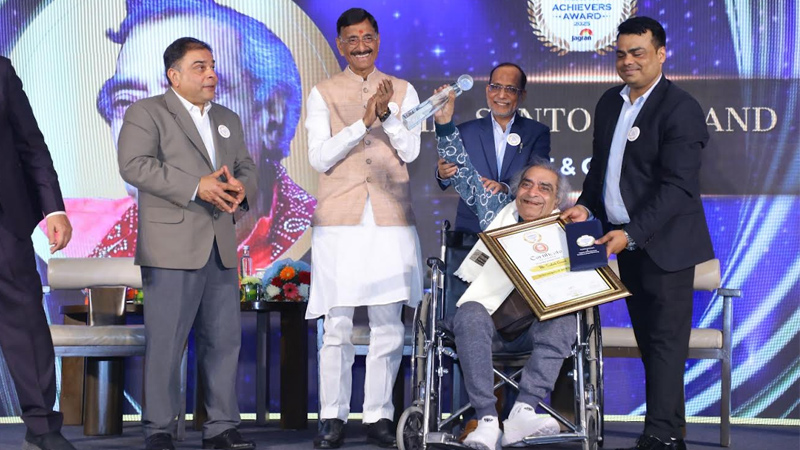
NEW DELHI: Hamdard Laboratories gathered a cross-section of India’s achievers in New Delhi on Friday, handing out the Hakeem Abdul Hameed Excellence Awards to figures who have left their mark across healthcare, education, sport, public service and the arts.
The ceremony, attended by minister of state for defence Sanjay Seth and senior officials from the ministry of Ayush, celebrated individuals whose work blends professional success with a sense of public purpose. It was as much a roll call of achievement as it was a reminder that influence is not measured only in profits or podiums, but in people reached and lives improved.
Among the headline awardees was Alakh Pandey, founder and chief executive of PhysicsWallah, recognised for turning affordable digital learning into a mass movement. On the sporting front, Arjuna Awardee and kabaddi player Sakshi Puniya was honoured for her contribution to the game and for pushing women’s participation onto bigger stages.
The cultural spotlight fell on veteran lyricist and poet Santosh Anand, whose songs have echoed across generations of Hindi cinema. At 97, Anand accepted the honour with characteristic humility, reflecting on a life shaped by perseverance and hope.
Healthcare honours spanned both modern and traditional systems. Manoj N. Nesari was recognised for strengthening Ayurveda’s place in national and global health frameworks. Padma shri Mohammed Abdul Waheed was honoured for his research-backed work in Unani medicine, while padma shri Mohsin Wali received recognition for his long-standing contribution to patient-centred care.
Education and social development also featured prominently. Padma shri Zahir Ishaq Kazi was honoured for decades of work in education, while former Meghalaya superintendent of Police T. C. Chacko was recognised for public service. Goonj founder Anshu Gupta received an award for his dignity-centred rural development initiatives, and the Hunar Shakti Foundation was honoured for empowering women and young girls through skill development.
The Lifetime Achievement Award went to former IAS officer Shailaja Chandra for her long career in public healthcare and governance, particularly in the traditional systems under Ayush.
Speaking at the event, Hamdard chairman Abdul Majeed said the awards were a tribute to those who combine excellence with empathy. “These awardees reflect Hakeem Sahib’s belief that healthcare, education and public service must ultimately serve humanity,” he said.
Minister Seth struck a forward-looking note, saying India’s young population gives the country a unique opportunity to become a global destination for learning, health and wellness by 2047.
The ceremony also featured the trailer launch of Unani Ki Kahaani, an upcoming documentary starring actor Jim Sarbh, set to premiere on Discovery on 11 February.
Instituted in memory of Unani scholar and educationist Hakeem Abdul Hameed, the awards have grown into a national platform that celebrates those building a more inclusive and resilient India. For one evening at least, the spotlight was not just on success, but on service with substance.






