News Headline
TRAI releases recommendations on ‘License Fee and Policy Matters of DTH Services’


Mumbai: The Telecom Regulatory Authority of India (TRAI) has issued the recommendations on “License Fee and Policy Matters of DTH Services”. The Ministry of Information and Broadcasting (MIB), vide letter No. 2/33/2021-BP&L dated 2 January 2022, sought recommendations of TRAI under Section (11)(1)(a) of the TRAI Act, 1997.
The reference alluded to the amendments carried out by the Department of Telecommunications (DoT) in Unified License (UL) Agreement. Vide the amendments dated 25.10.2021 and 06.10.2021, DoT has rationalised the definition of Adjusted Gross Revenue (AGR) and Bank Guarantee (BG) quantum respectively under structural reforms.
DTH operation in India is governed by the policy guidelines for obtaining license for providing DTH broadcasting services in India. These guidelines prescribe a License Fee (LF). LF is a non-tax fee levied on a service provider against the privilege of being permitted to carry out a licensed activity. As per the provisions of the guidelines, the DTH operators are required to pay a LF, which is eight per cent of Adjusted Gross Revenue (AGR) on a quarterly basis to MIB.

Bank Guarantee (BG) is a type of financial instrument to ensure that a service provider pay their dues on time and is obligated to fulfil the terms and conditions of the license agreement. The extant DTH guidelines prescribe a BG for an amount of Rs five crore for the first two quarters, and thereafter, for an amount equivalent to LF for two quarters and other dues not otherwise securitised.
Based on the reference, a consultation paper on “License Fee and Policy Matters of DTH Services” was issued by TRAI on 13 January 2023. Written comments and counter-comments on the Consultation Paper were invited from the stakeholders by 27 February 2023 and 13 March 2023 respectively. The Authority received seven comments and one counter-comment from various stakeholders. All these comments and counter-comment are available on TRAT website www.trai.gov.in. An Open House Discussion was also convened on the issues raised in the Consultation Paper on 20 April 2023 through video conferencing.
The salient features of the recommendations are as follows: –
a. Gross Revenue (GR) shall comprise revenue accruing to the licenced entity by way of all operations/ activities and inclusive of all other revenue! income on account of interest, dividend, rent, profit on sale of fixed assets, miscellaneous income etc. without any set-off for related items of expense. The recommendations also provided certain explanations with the definition.
b. Applicable Gross Revenue (ApGR) for arriving at the revenue calculations for license fee should be equal to the total GR of the licensee as reduced by the following items:
i. Revenue from activities under a license/permission issued by DoT;
ii. Reimbursement, if any, from the Government;
iii. List of other income to be excluded from GR to arrive at AGR:
a. Income from Dividend;
b. Income from Interest;
c. Income from sale of fixed assets and securities;
d. Gains from Foreign Exchange rates fluctuations;
e. Income from property rent;
f. Insurance claims;
g. Bad Debts recovered;
h. Excess Provisions written back
*subjects to conditions given in Annexure-IJI of these recommendations
c. Adjusted Gross Revenue (AGR) is calculated by excluding GST paid to the Government from the ApGR, if ApGR had been included as a component of GST.
d. MIB should revise the Form-D (the Statement of Revenue and Licence Fee for DTH Licensees) and adopt the format of Form-D as prescribed in the recommendations. The process for the submission of Form-D should be Page 2 of 4 made end-to-end online with the facility to upload all the related documents in digital mode via a single window system.
e. MIB should develop a robust mechanism for the deduction verification process through a single window portal. The Licensee is required to produce to the Licensor, all such books of accounts and documents required for reconciliation which have a bearing on the verification of revenue for the purpose of calculating License Fee.
f. DTH Licensee should pay an annual license fee equivalent to three per cent of AGR.
g. License Fee for DTH Licensees should be brought down to zero in the next three years. DTH Licensees should not be charged any License Fee after the end of the financial year 2026-2027.
h. The Licensee should submit an Initial Bank Guarantee from any Scheduled Bank to the MIB for an amount of Rs five crore for the first two quarters.
i. Thereafter, the Licensee should submit a Bank Guarantee (covering Financial and Performance Bank Guarantee) from any Scheduled Bank to the MIB for an amount equivalent to the Initial Bank Guarantee (i.e., Rs five crore) or 20 per cent of the estimated sum payable, equivalent to License Fee for two quarters and other dues not otherwise securitized, whichever is higher.
j. Once the license fee becomes zero, the Licensee should submit a Bank Guarantee (Performance Bank Guarantee) for a fixed amount equivalent to the initial Bank Guarantee (i.e Rs five crore) from any Scheduled Bank to the MIB, which should be valid for a minimum of one year and renewed every year to ensure it remains valid for the entire currency of the license agreement.
k. The Licensor should be at the liberty to encash the Bank Guarantee in full or part in the event of violation of any of the license conditions.
l. Electronic Bank Guarantee should be encouraged and permitted for ease of doing business.
m. These recommendations including the definition of Gross Revenue (GR), Applicable Gross Revenue (ApGR), Adjusted Gross Revenue (AGR) and the percentage of AGR to calculate the License Fee for the DTH Liçnse may be made applicable ‘prospectively’.
In the highly competitive television distribution market, urgent measures are required for the DTH sector. The quick implementation of these recommendations will help the sector and enable all-round growth.






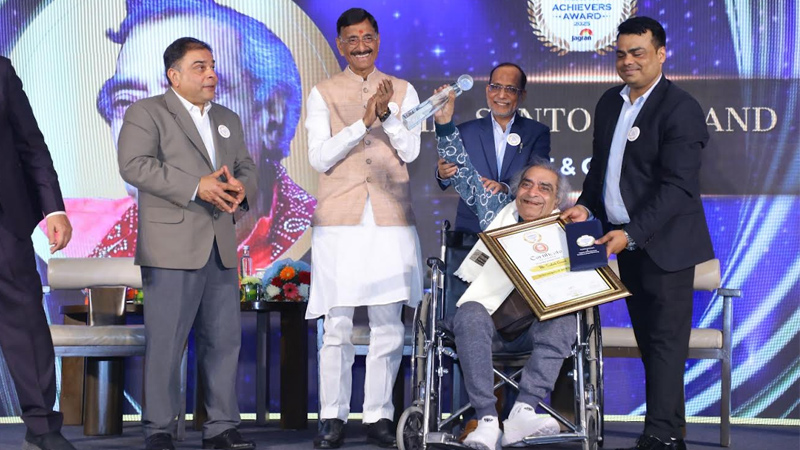
NEW DELHI: Hamdard Laboratories gathered a cross-section of India’s achievers in New Delhi on Friday, handing out the Hakeem Abdul Hameed Excellence Awards to figures who have left their mark across healthcare, education, sport, public service and the arts.
The ceremony, attended by minister of state for defence Sanjay Seth and senior officials from the ministry of Ayush, celebrated individuals whose work blends professional success with a sense of public purpose. It was as much a roll call of achievement as it was a reminder that influence is not measured only in profits or podiums, but in people reached and lives improved.
Among the headline awardees was Alakh Pandey, founder and chief executive of PhysicsWallah, recognised for turning affordable digital learning into a mass movement. On the sporting front, Arjuna Awardee and kabaddi player Sakshi Puniya was honoured for her contribution to the game and for pushing women’s participation onto bigger stages.
The cultural spotlight fell on veteran lyricist and poet Santosh Anand, whose songs have echoed across generations of Hindi cinema. At 97, Anand accepted the honour with characteristic humility, reflecting on a life shaped by perseverance and hope.
Healthcare honours spanned both modern and traditional systems. Manoj N. Nesari was recognised for strengthening Ayurveda’s place in national and global health frameworks. Padma shri Mohammed Abdul Waheed was honoured for his research-backed work in Unani medicine, while padma shri Mohsin Wali received recognition for his long-standing contribution to patient-centred care.
Education and social development also featured prominently. Padma shri Zahir Ishaq Kazi was honoured for decades of work in education, while former Meghalaya superintendent of Police T. C. Chacko was recognised for public service. Goonj founder Anshu Gupta received an award for his dignity-centred rural development initiatives, and the Hunar Shakti Foundation was honoured for empowering women and young girls through skill development.
The Lifetime Achievement Award went to former IAS officer Shailaja Chandra for her long career in public healthcare and governance, particularly in the traditional systems under Ayush.
Speaking at the event, Hamdard chairman Abdul Majeed said the awards were a tribute to those who combine excellence with empathy. “These awardees reflect Hakeem Sahib’s belief that healthcare, education and public service must ultimately serve humanity,” he said.
Minister Seth struck a forward-looking note, saying India’s young population gives the country a unique opportunity to become a global destination for learning, health and wellness by 2047.
The ceremony also featured the trailer launch of Unani Ki Kahaani, an upcoming documentary starring actor Jim Sarbh, set to premiere on Discovery on 11 February.
Instituted in memory of Unani scholar and educationist Hakeem Abdul Hameed, the awards have grown into a national platform that celebrates those building a more inclusive and resilient India. For one evening at least, the spotlight was not just on success, but on service with substance.







