News Headline
TRAI releases recommendations on ‘Inputs for formulation of National Broadcasting Policy-2024’


Mumbai – The Telecom Regulatory Authority of India (TRAI) has today released recommendations on ‘Inputs for formulation of National Broadcasting Policy-2024’.
The Ministry of Information and Broadcasting (MIB), vide its letter dated 13 per cent July 2023 has requested TRAI to provide its considered inputs under Section 11 of the TRAI Act, 1997 for formulation of National Broadcasting Policy.
As a first step, TRAI issued a Pre-Consultation Paper on 2 September 2023, to elicit the issues which were required to be considered for the formulation of National Broadcasting Policy. Based on the comments received from a discussion held with stakeholders, TRAI released the Consultation Paper on ‘Inputs for formulation of National Broadcasting Policy-2024’ on 274 April 2024. The Consultation Paper identified the focus areas and raised 20 questions seeking comments of the stakeholders. TRAI received comments from 42 stakeholders including service providers, organizations, industry associations, consumer advocacy groups and few individuals.

The Open House Discussion (OHD) was held on 15 May 2024. Certain additional comments were also received post OHD. The comments, OHD submissions and the additional comments have been analysed and duly considered while framing the recommendations to the Government.
The broadcasting sector is a sunrise sector having huge potential to contribute towards the growth of the Indian economy. The recommendations on inputs for formulation of the broadcasting policy has stipulated the vision, mission, goals and strategies for the planned development and growth of the broadcasting sector in the country in the era of emerging technologies.
The objective of the policy is to facilitate the growth of the sector with quick adoption of the emerging technologies for providing an immersive and enriching experience to the consumers in a cost-effective manner, while safeguarding the interest of the stakeholders involved in the broadcasting sphere. Achieving these goals necessitates collaboration among the key stakeholders viz. the central and state governments, local governments and agencies, television and radio broadcasters, OTT service providers, content creators, distributors, equipment manufacturers, academia, research institutes, industry including startups and small and medium enterprises.
The Authority has recommended the following Vision, Mission and Goals for the National Broadcasting Policy-2024.
Vision
To foster a competitive, affordable and ubiquitous ecosystem for sustained growth of the broadcasting sector, catering to the diverse needs of consumers that facilitates quality content creation, promotes democratic values and cultural diversity, enables inclusivity and literacy, attracts investments, safeguards intellectual property, develops resilient indigenous infrastructure, adopts emerging technologies, generates employment and drives socio-economic development through innovation and collaboration for strengthening India’s soft image and positioning ‘Brand India’ globally.
Mission
In pursuit of establishing India a global leader in the broadcasting sector, this policy intends to target broad roadmap for 10 years with special focus on the next five years. The National Broadcasting Policy-2024, envisages to achieve the following:
A.Propelling Growth
1.Establishing a robust broadcasting ecosystem by enabling growth-oriented policies and regulations through data-driven governance.
2.Supporting creation of a resilient, adaptive and tech-agile infrastructure fostering R&D, technology innovation and indigenous manufacturing.
3.Facilitating level-playing field and healthy competition; promoting ease of doing business and stimulating economic growth by enabling the reach of broadcasting services to all, positioning India as an ‘Uplinking Hub’ for television channels, attracting investments, generating employment opportunities and promoting skill development.
B. Promoting Content
1.Supporting quality content production and distribution for television, radio and OTT broadcasting services, encouraging proliferation of Indian content, both locally and globally, by harnessing the power of emerging broadcasting technologies and making India a ‘Global Content Hub’.
2.Establishing India as a preferred destination for content creation. Enabling quality content production in public service broadcasting to inform, educate and entertain the masses.
3.Promoting and facilitating the growth of Indian content through films, animation, visual effects, gaming, music and state-of-the-art post-production infrastructure.
C. Protecting Interests
1.Combating piracy and safeguarding the rights of content creators and intellectual property holders through copyright protection.
2.Fulfilling social responsibilities by ensuring awareness and enabling provisions for disseminating information to all strata of society; and environmental responsibilities through green broadcasting practices and disaster preparedness.
A. Propelling Growth: Establishing a robust broadcasting ecosystem
a. Measure sector’s performance based on various key economic parameters to enable data-driven policy decisions
b. Enable reach and access of television broadcasting services to uncovered households
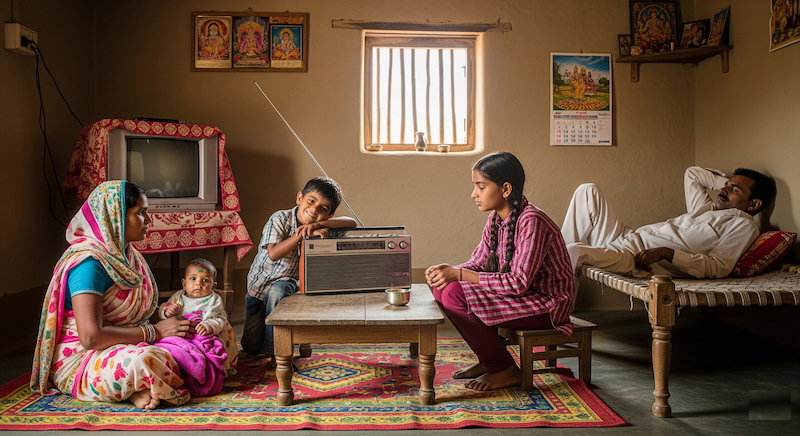
c. Enable radio coverage in uncovered areas
d. Promote R&D and secure IPR in broadcasting sector
e. Promote manufacturing and adoption of new technologies including indigenous broadcasting technologies and equipment
f. Employment generation, bolstered up through training and upskilling for providing New Age Skills to the workforce
g. Encourage innovation-led startups and empower Small and Medium Enterprises




NEW DELHI: Hamdard Laboratories gathered a cross-section of India’s achievers in New Delhi on Friday, handing out the Hakeem Abdul Hameed Excellence Awards to figures who have left their mark across healthcare, education, sport, public service and the arts.
The ceremony, attended by minister of state for defence Sanjay Seth and senior officials from the ministry of Ayush, celebrated individuals whose work blends professional success with a sense of public purpose. It was as much a roll call of achievement as it was a reminder that influence is not measured only in profits or podiums, but in people reached and lives improved.
Among the headline awardees was Alakh Pandey, founder and chief executive of PhysicsWallah, recognised for turning affordable digital learning into a mass movement. On the sporting front, Arjuna Awardee and kabaddi player Sakshi Puniya was honoured for her contribution to the game and for pushing women’s participation onto bigger stages.
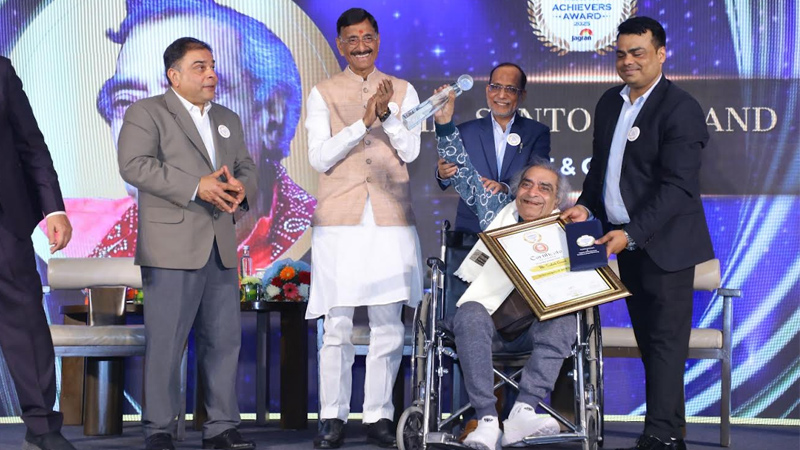
The cultural spotlight fell on veteran lyricist and poet Santosh Anand, whose songs have echoed across generations of Hindi cinema. At 97, Anand accepted the honour with characteristic humility, reflecting on a life shaped by perseverance and hope.
Healthcare honours spanned both modern and traditional systems. Manoj N. Nesari was recognised for strengthening Ayurveda’s place in national and global health frameworks. Padma shri Mohammed Abdul Waheed was honoured for his research-backed work in Unani medicine, while padma shri Mohsin Wali received recognition for his long-standing contribution to patient-centred care.
Education and social development also featured prominently. Padma shri Zahir Ishaq Kazi was honoured for decades of work in education, while former Meghalaya superintendent of Police T. C. Chacko was recognised for public service. Goonj founder Anshu Gupta received an award for his dignity-centred rural development initiatives, and the Hunar Shakti Foundation was honoured for empowering women and young girls through skill development.
The Lifetime Achievement Award went to former IAS officer Shailaja Chandra for her long career in public healthcare and governance, particularly in the traditional systems under Ayush.
Speaking at the event, Hamdard chairman Abdul Majeed said the awards were a tribute to those who combine excellence with empathy. “These awardees reflect Hakeem Sahib’s belief that healthcare, education and public service must ultimately serve humanity,” he said.
Minister Seth struck a forward-looking note, saying India’s young population gives the country a unique opportunity to become a global destination for learning, health and wellness by 2047.
The ceremony also featured the trailer launch of Unani Ki Kahaani, an upcoming documentary starring actor Jim Sarbh, set to premiere on Discovery on 11 February.
Instituted in memory of Unani scholar and educationist Hakeem Abdul Hameed, the awards have grown into a national platform that celebrates those building a more inclusive and resilient India. For one evening at least, the spotlight was not just on success, but on service with substance.






