News Headline
TRAI releases paper on OTT expanding its definition

MUMBAI: India’s telecom and broadcast regulator TRAI today released another consultation paper on OTT services seeking to expand the definition of the sector and also the regulator’s jurisdiction over a sector hitherto “unregulated”.
“Would inter-operability among OTT services and also inter-operatability of their services with TSPs services promote competition and benefit the users? What measures may be taken, if any, to promote such competition? Please justify your answer with reasons.” Questions like these in the paper hint that the government and the regulator are looking at regulations for the OTT services that would include both audio and video services.
Earlier, the Authority issued a consultation paper on Regulatory Framework for Over-the-top (OTT) services on the 27th of March, 2015, which also included questions on the principles of net neutrality, reasonableness of traffic management practices, non-price based discrimination of services and transparency requirements. Due to the large number of issues and their complexity, it became difficult to deliberate upon and conclude all of them together. Therefore, Authority decided to deal with related issues in separate parts, keeping focus on a core set of issues each time. Accordingly, the following actions have been taken:

a. The Authority issued regulations on Prohibition of Discriminatory Tariffs for Data Services Regulations, 2016.
b. Recommendations on provisioning of free data given to Government on 19th December 2016,
c. Recommendations on Net Neutrality to Government on Nov 28,
2017.
d. Recommendations on privacy, security, and data ownership issues in the telecom sector submitted to Government on July 16, 2018.
3. Questions relating to the potential market failures in each segment, the appropriate tools to address those failures and the costs and benefits of any possible regulatory interventions have also been investigated.
4. Keeping in v1ew the fast evolving nature of the sector, it is also considered useful to examine OTI related aspects, after taking into account the changes that have taken place since March, 2015.
5. The objective of this Consultation Paper is to analyse and discuss the implications of the growth of OTis; the relationship between OTI players and TSPs; the similarity, if any, between services provided by the TSPs and OTI players; changes that may be required in the current regulatory framework to govern these entities; and the manner in which such changes should be effected . While preparing this consultation paper, information collected by the Authority in response to previous consultations has also been used. It may also be noted that current consultation is not intended to revisit regulations or recommendations given by the Authority earlier on OTI, which had broader implications and were therefore concluded first following due consultation and diligence.
6. Comments on the issues raised in the consultation paper are invited from the stakeholders by 10.12.2018 and counter comments, if any, by 24.12.2018.






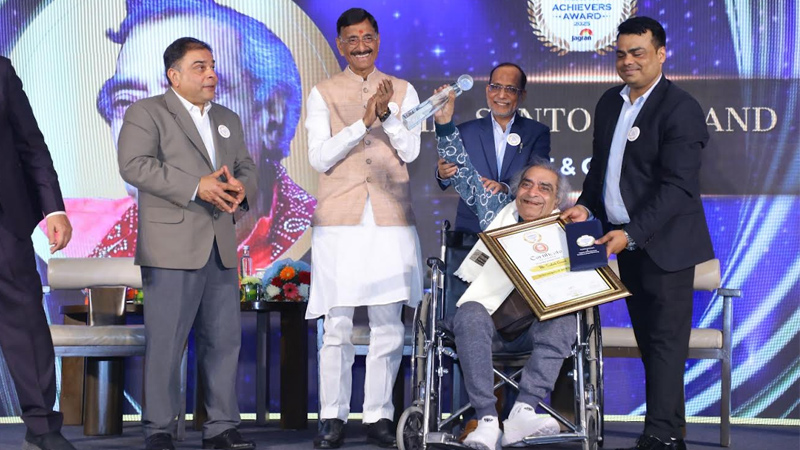
NEW DELHI: Hamdard Laboratories gathered a cross-section of India’s achievers in New Delhi on Friday, handing out the Hakeem Abdul Hameed Excellence Awards to figures who have left their mark across healthcare, education, sport, public service and the arts.
The ceremony, attended by minister of state for defence Sanjay Seth and senior officials from the ministry of Ayush, celebrated individuals whose work blends professional success with a sense of public purpose. It was as much a roll call of achievement as it was a reminder that influence is not measured only in profits or podiums, but in people reached and lives improved.
Among the headline awardees was Alakh Pandey, founder and chief executive of PhysicsWallah, recognised for turning affordable digital learning into a mass movement. On the sporting front, Arjuna Awardee and kabaddi player Sakshi Puniya was honoured for her contribution to the game and for pushing women’s participation onto bigger stages.
The cultural spotlight fell on veteran lyricist and poet Santosh Anand, whose songs have echoed across generations of Hindi cinema. At 97, Anand accepted the honour with characteristic humility, reflecting on a life shaped by perseverance and hope.
Healthcare honours spanned both modern and traditional systems. Manoj N. Nesari was recognised for strengthening Ayurveda’s place in national and global health frameworks. Padma shri Mohammed Abdul Waheed was honoured for his research-backed work in Unani medicine, while padma shri Mohsin Wali received recognition for his long-standing contribution to patient-centred care.
Education and social development also featured prominently. Padma shri Zahir Ishaq Kazi was honoured for decades of work in education, while former Meghalaya superintendent of Police T. C. Chacko was recognised for public service. Goonj founder Anshu Gupta received an award for his dignity-centred rural development initiatives, and the Hunar Shakti Foundation was honoured for empowering women and young girls through skill development.
The Lifetime Achievement Award went to former IAS officer Shailaja Chandra for her long career in public healthcare and governance, particularly in the traditional systems under Ayush.
Speaking at the event, Hamdard chairman Abdul Majeed said the awards were a tribute to those who combine excellence with empathy. “These awardees reflect Hakeem Sahib’s belief that healthcare, education and public service must ultimately serve humanity,” he said.
Minister Seth struck a forward-looking note, saying India’s young population gives the country a unique opportunity to become a global destination for learning, health and wellness by 2047.
The ceremony also featured the trailer launch of Unani Ki Kahaani, an upcoming documentary starring actor Jim Sarbh, set to premiere on Discovery on 11 February.
Instituted in memory of Unani scholar and educationist Hakeem Abdul Hameed, the awards have grown into a national platform that celebrates those building a more inclusive and resilient India. For one evening at least, the spotlight was not just on success, but on service with substance.






