News Headline
Trai recommends digitalisation of cable in urban centres by 2010

NEW DELHI: Broadcast regulator Telecom Regulatory Authority of India (Trai) today recommended that the first phase of digitalisation of cable TV should start from April 2006 and that such a service would help providing more choice to consumers.
In its recommendations on Digitalisation of Cable Television, released today, Trai exhorted the Central government to advise the states to spend on education of consumers between 2006 and 2010 when the first phase of digitalization process is to end, coinciding with the Commonwealth games in Delhi.
The recommendations were issued after a detailed process of consultation with stakeholders.

Pointing out that consumers would benefit from digitalisation of cable TV in India, Trai has said, “By providing digital service and upgradation of networks, MSOs and cable operators will also be able to compete more effectively with new technologies for delivery of content on television.”
Digitalisation of cable television has already started in the country in a limited way and the policies proposed in the recommendations are expected to give this process a further momentum as well as provide a framework for regulation.
The recommendations provide for a voluntary approach to digitalisation on behalf of both the operators as well as the consumers.
Accordingly, during the first phase of 2006-2010, Trai has proposed that digital services should be made available in all cities/urban agglomerations with a population of 1 million plus.
In all these cities, the existing analogue service will continue
simultaneously. Digital services have already commenced in the five cities of Delhi, Mumbai, Chennai, Pune and Bangalore.
The draft national plan calls for rationalisation of excise and customs duties as well as expediting the provision of right of way.
Trai has also suggested that central government should recommend to the States that the proceeds of the entertainment tax during these four years (2006 -2010) should be used for an intensive consumer education programme.
This would also help state governments in increasing their
tax base.
The recommendations also provide for a framework for licensing. This involves automatic licensing for existing operators and a non-exclusive automatic licensing process for new operators, subject to compliance with certain minimum conditions.
This licensing framework will help in future regulation as well as in administering the incentives proposed in the recommendations. Trai’s suggestions to the government also envisage the development of digital decoders whose adoption would, however, be voluntary and left to the operators and consumers to decide upon.
It has been recommended that there should also be a clear policy framework for headend in the sky (HITS), which could be on the lines of the permission already given by the government for one operator.
Some of the important recommendations include the following:
# Digital TV transmission offers a number of advantages over analogue, including better reception quality, increased channel carrying capacity, new features such as programme guides, multi-view and interactive services as well as potential to provide triple-play
# There should be a national plan for digitalisation from 1 April, 2006 till 31 March, 2010. This plan would be indicative and would not be mandatory in any form.
# Rationalisation of import and domestic duties by 1 April 2006.
# Custom duties on set-top boxes for cable televisions reduced from 15 per cent to 10 per cent.
# Excise duty increased from nil to 8 per cent and import duty on ICs reduced from 15 per cent to 8 per cent.
# No person shall be allowed to offer a digital service after 1 April 2006 without a licence for such services.
#License would be required for putting up a headend and providing signals to cable operators, but the licensee will also be allowed to provide services directly to consumers.
# All operators who have an analogue headend on the date of notification of the policy will be allowed a digital licence on an automatic basis, but they will have to apply separately for this.
#To ensure entry of serious players, all licensees would be required to provide a bank guarantee of Rs.50 lakhs (5 million) for each city/urban agglomeration of over one million and of Rs.25 lakhs (2.5 million) for each city/urban agglomeration that has a population of less than one million in case such a city is also considered for a digital license.
# Since digital operators would be operating in wide areas with jurisdictions falling under a number of authorised officers, the licensing authority for digital services should be the central government.
# The license period should be 15 years, which may be extended for a period of 5 years.
#To have consistency in policy and provide level playing field between competing technologies, there is need for a complete review of the FDI policy so that it is consistent across all sectors.
The details of Trai’s recommendations on digitalization of cable TV could be accessed from the organisation’s website, www.trai.gov.in.







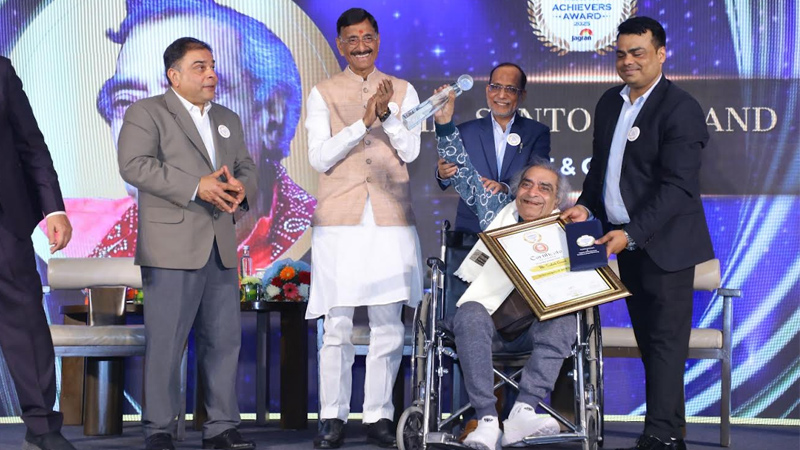
NEW DELHI: Hamdard Laboratories gathered a cross-section of India’s achievers in New Delhi on Friday, handing out the Hakeem Abdul Hameed Excellence Awards to figures who have left their mark across healthcare, education, sport, public service and the arts.
The ceremony, attended by minister of state for defence Sanjay Seth and senior officials from the ministry of Ayush, celebrated individuals whose work blends professional success with a sense of public purpose. It was as much a roll call of achievement as it was a reminder that influence is not measured only in profits or podiums, but in people reached and lives improved.
Among the headline awardees was Alakh Pandey, founder and chief executive of PhysicsWallah, recognised for turning affordable digital learning into a mass movement. On the sporting front, Arjuna Awardee and kabaddi player Sakshi Puniya was honoured for her contribution to the game and for pushing women’s participation onto bigger stages.
The cultural spotlight fell on veteran lyricist and poet Santosh Anand, whose songs have echoed across generations of Hindi cinema. At 97, Anand accepted the honour with characteristic humility, reflecting on a life shaped by perseverance and hope.
Healthcare honours spanned both modern and traditional systems. Manoj N. Nesari was recognised for strengthening Ayurveda’s place in national and global health frameworks. Padma shri Mohammed Abdul Waheed was honoured for his research-backed work in Unani medicine, while padma shri Mohsin Wali received recognition for his long-standing contribution to patient-centred care.
Education and social development also featured prominently. Padma shri Zahir Ishaq Kazi was honoured for decades of work in education, while former Meghalaya superintendent of Police T. C. Chacko was recognised for public service. Goonj founder Anshu Gupta received an award for his dignity-centred rural development initiatives, and the Hunar Shakti Foundation was honoured for empowering women and young girls through skill development.
The Lifetime Achievement Award went to former IAS officer Shailaja Chandra for her long career in public healthcare and governance, particularly in the traditional systems under Ayush.
Speaking at the event, Hamdard chairman Abdul Majeed said the awards were a tribute to those who combine excellence with empathy. “These awardees reflect Hakeem Sahib’s belief that healthcare, education and public service must ultimately serve humanity,” he said.
Minister Seth struck a forward-looking note, saying India’s young population gives the country a unique opportunity to become a global destination for learning, health and wellness by 2047.
The ceremony also featured the trailer launch of Unani Ki Kahaani, an upcoming documentary starring actor Jim Sarbh, set to premiere on Discovery on 11 February.
Instituted in memory of Unani scholar and educationist Hakeem Abdul Hameed, the awards have grown into a national platform that celebrates those building a more inclusive and resilient India. For one evening at least, the spotlight was not just on success, but on service with substance.






