News Headline
TRAI recommendation on media and ownership including cross-media issues expected next month

NEW DELHI: More than 15 months after its second consultation paper on media ownership, the Telecom Regulatory Authority of India (TRAI) is expected to come out with its recommendations on media control and ownership including the tricky issue of cross-media ownership next month.
TRAI chairman Rahul Khullar has said that he hopes the final recommendation will be out in early August but says that at the latest it would be available before the end of the month.

TRAI had in 2008 and in its consultation paper in February 2013 given its view on the matter in which it ruled out state and government ownership leading to a furore since states like Tamil Nadu and West Bengal have applied for state ownership of either television channels or TV signal distribution. After issuing the paper, TRAI had also organised several Open House meets with stakeholders in different parts of the country. Open Houses were in Ahmadabad, Hyderabad, Delhi, Bhubaneswar and Indore.
It has gained urgency with Tamil Nadu once again raising the issue of Arasu licensing for Digital Access Systems.
While bodies like the Delhi Union of Journalists have suggested dismantling of existing monopolies and cross media empires, Times Television Network wants a ban on entry of lobbyists having association with public relations or political parties, religious bodies, urban and local administrative bodies, central government ministries and departments, and central government owned companies undertakings.
However, the Indian Newspaper Society feels TRAI should stay out of this as this will mean placing restrictions on the print media with which TRAI is not authorised to deal.
Besides media companies, industry bodies including Cable Operators Association of India, CII, CASBAA, FICCI and IAMAI also participated in consultation process.
In its paper issued in February last year, TRAI had sought comments on devising ownership rules for vertical integration between broadcasting and distribution entities.
The paper was expected to devise rules/restrictions in case of mergers and acquisitions in the media sector, and media ownership rules within and across media segments.
Methodology to measure ownership or control of an entity over a media outlet, identification of genres to be considered while framing media ownership rules and prescribing norms for mandatory disclosures by media entities are some other issues.
TRAI also discussed in its paper issues relating to identification of media segments wherein media ownership rules are to be prescribed, and identification of relevant markets for evaluating various parameters to be used for devising ownership rules and the methodology for measuring these parameters.
At the outset, TRAI said the paper had been issued at the request of the Information and Broadcasting Ministry earlier last year following a report of the Administrative Staff College of India, in Hyderabad.
TRAI said that it was felt that reasonable restrictions may need to be put in place on ownership in the media sector, to ensure media pluralism and to counter the ills of monopolies. It pointed out that such restrictions do exist in many international markets.
In the Open Houses, a majority of the participants in the fifth Open House on Media Ownership in Indore today alleged that the media in the country was in the hands of just a handful of large corporate houses.






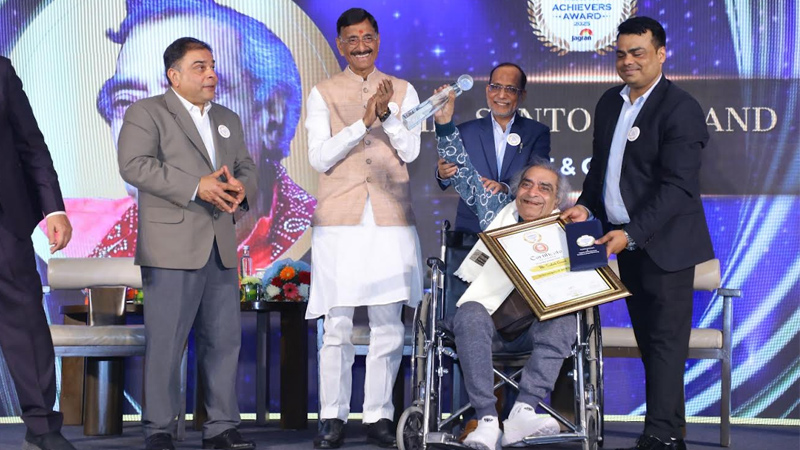
NEW DELHI: Hamdard Laboratories gathered a cross-section of India’s achievers in New Delhi on Friday, handing out the Hakeem Abdul Hameed Excellence Awards to figures who have left their mark across healthcare, education, sport, public service and the arts.
The ceremony, attended by minister of state for defence Sanjay Seth and senior officials from the ministry of Ayush, celebrated individuals whose work blends professional success with a sense of public purpose. It was as much a roll call of achievement as it was a reminder that influence is not measured only in profits or podiums, but in people reached and lives improved.
Among the headline awardees was Alakh Pandey, founder and chief executive of PhysicsWallah, recognised for turning affordable digital learning into a mass movement. On the sporting front, Arjuna Awardee and kabaddi player Sakshi Puniya was honoured for her contribution to the game and for pushing women’s participation onto bigger stages.
The cultural spotlight fell on veteran lyricist and poet Santosh Anand, whose songs have echoed across generations of Hindi cinema. At 97, Anand accepted the honour with characteristic humility, reflecting on a life shaped by perseverance and hope.
Healthcare honours spanned both modern and traditional systems. Manoj N. Nesari was recognised for strengthening Ayurveda’s place in national and global health frameworks. Padma shri Mohammed Abdul Waheed was honoured for his research-backed work in Unani medicine, while padma shri Mohsin Wali received recognition for his long-standing contribution to patient-centred care.
Education and social development also featured prominently. Padma shri Zahir Ishaq Kazi was honoured for decades of work in education, while former Meghalaya superintendent of Police T. C. Chacko was recognised for public service. Goonj founder Anshu Gupta received an award for his dignity-centred rural development initiatives, and the Hunar Shakti Foundation was honoured for empowering women and young girls through skill development.
The Lifetime Achievement Award went to former IAS officer Shailaja Chandra for her long career in public healthcare and governance, particularly in the traditional systems under Ayush.
Speaking at the event, Hamdard chairman Abdul Majeed said the awards were a tribute to those who combine excellence with empathy. “These awardees reflect Hakeem Sahib’s belief that healthcare, education and public service must ultimately serve humanity,” he said.
Minister Seth struck a forward-looking note, saying India’s young population gives the country a unique opportunity to become a global destination for learning, health and wellness by 2047.
The ceremony also featured the trailer launch of Unani Ki Kahaani, an upcoming documentary starring actor Jim Sarbh, set to premiere on Discovery on 11 February.
Instituted in memory of Unani scholar and educationist Hakeem Abdul Hameed, the awards have grown into a national platform that celebrates those building a more inclusive and resilient India. For one evening at least, the spotlight was not just on success, but on service with substance.






