News Headline
TRAI ready to consider proposal for e-commerce but says it is already over-burdened


NEW DELHI: With more and more people depending on their computers and smart phones to transact business transactions and transfer money, the Government appears to have woken up to the need for someone to regulate this.
While confirming this, a source in the Telecom Regulatory Authority of India (TRAI) told indiantelevision.com that the role of the regulator had remained confined to telecom until 2004 when it was asked to also look into issues relating to broadcasting and had later drawn up regulations relating to telemarketing following complaints by telecom consumers about mobile calls.
The need for an e-commerce regulator was felt after the Confederation of All India Traders (CAIT) sought the Commerce Ministry’s intervention over ‘predatory pricing’ strategies of e-tailers during festival sales last year. It asked the government to set up a taskforce to “probe into the working and business model of e-commerce companies” and to set up a regulatory authority to monitor the business.
The source said TRAI will consider the proposal but will have to consider that it is already burdened with issues like spectrum e-auction and the digital addressable system for cable television.
Now, an inter-ministerial panel has requested the Authority to take up the role or suggest if there is a need for a separate regulator for e-commerce. The panel has sought an update from the Consumer Affairs Ministry on measures taken to introduce online dispute resolution in e-commerce.
The inter-ministerial panel will prepare a paper, sought by the Data Security Council of India, on imposing restrictions on the location of servers and on getting companies like Google and Amazon to set up data centres in India.

The Department of Industrial Policy and Promotion has informed the committee there is no plan to change the foreign direct investment (FDI) policy in e-commerce. The Department is understood to have said there was no lack of clarity in the FDI policy for e-commerce. If required, the Department noted, issues related to e-commerce funding and operations could be addressed by formulating guidelines for the sector rather than by modifying the FDI policy.
Last month, the DIPP had suggested up to 49 per cent FDI in consumer e-commerce following representations by several US companies. FDI is barred in e-commerce companies selling directly to consumers and there are restrictions on sourcing from local manufacturers. The DIPP also suggested a mechanism to facilitate US investments in India after Amazon, which has invested about $300 million in India, sought the government’s approval for further investments.
Foreign e-commerce companies are allowed to operate as online marketplaces. FDI of up to 100 per cent is permitted in business-to-business e-commerce.







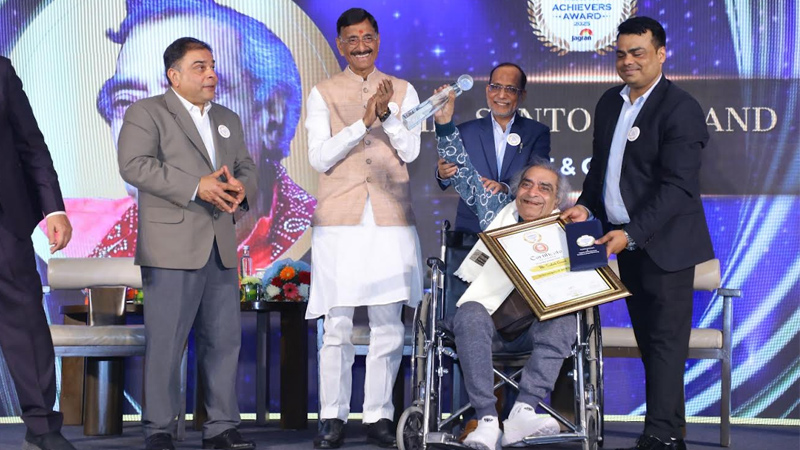
NEW DELHI: Hamdard Laboratories gathered a cross-section of India’s achievers in New Delhi on Friday, handing out the Hakeem Abdul Hameed Excellence Awards to figures who have left their mark across healthcare, education, sport, public service and the arts.
The ceremony, attended by minister of state for defence Sanjay Seth and senior officials from the ministry of Ayush, celebrated individuals whose work blends professional success with a sense of public purpose. It was as much a roll call of achievement as it was a reminder that influence is not measured only in profits or podiums, but in people reached and lives improved.
Among the headline awardees was Alakh Pandey, founder and chief executive of PhysicsWallah, recognised for turning affordable digital learning into a mass movement. On the sporting front, Arjuna Awardee and kabaddi player Sakshi Puniya was honoured for her contribution to the game and for pushing women’s participation onto bigger stages.
The cultural spotlight fell on veteran lyricist and poet Santosh Anand, whose songs have echoed across generations of Hindi cinema. At 97, Anand accepted the honour with characteristic humility, reflecting on a life shaped by perseverance and hope.
Healthcare honours spanned both modern and traditional systems. Manoj N. Nesari was recognised for strengthening Ayurveda’s place in national and global health frameworks. Padma shri Mohammed Abdul Waheed was honoured for his research-backed work in Unani medicine, while padma shri Mohsin Wali received recognition for his long-standing contribution to patient-centred care.
Education and social development also featured prominently. Padma shri Zahir Ishaq Kazi was honoured for decades of work in education, while former Meghalaya superintendent of Police T. C. Chacko was recognised for public service. Goonj founder Anshu Gupta received an award for his dignity-centred rural development initiatives, and the Hunar Shakti Foundation was honoured for empowering women and young girls through skill development.
The Lifetime Achievement Award went to former IAS officer Shailaja Chandra for her long career in public healthcare and governance, particularly in the traditional systems under Ayush.
Speaking at the event, Hamdard chairman Abdul Majeed said the awards were a tribute to those who combine excellence with empathy. “These awardees reflect Hakeem Sahib’s belief that healthcare, education and public service must ultimately serve humanity,” he said.
Minister Seth struck a forward-looking note, saying India’s young population gives the country a unique opportunity to become a global destination for learning, health and wellness by 2047.
The ceremony also featured the trailer launch of Unani Ki Kahaani, an upcoming documentary starring actor Jim Sarbh, set to premiere on Discovery on 11 February.
Instituted in memory of Unani scholar and educationist Hakeem Abdul Hameed, the awards have grown into a national platform that celebrates those building a more inclusive and resilient India. For one evening at least, the spotlight was not just on success, but on service with substance.