Cable TV
Trai proposes 74% FDI in cable TV

NEW DELHI: The Telecom Regulatory Authority of India (Trai) wants 74 per cent foreign direct investment (FDI) to be allowed in cable TV which would bring the sector in parity with telecom companies.
The current regulation allows only 49 per cent FDI in cable TV while telecos can attract 74 per cent foreign investment.
In a consultation paper released on onvergence and competition in various broadcasting and telecom services, Trai says, “Cable TV network is a carriage for delivering voice, data and TV just like the copper or fibre wires that are being used by the telecom industry for providing these services.”
The paper adds, “In view of convergence and future broadband and telephony business, it is suggested that the cable industry should also be allowed parity with telecom.”
Pointing out that convergence is already a reality, the regulator said the present paper is based on previous work done by it in individual recommendations on various industry-related issues.
Another key proposal made in the paper is on unification of customs duty. “A number of items pertaining to the cable TV industry, which have similar functions as that of items in telecom, must have similar customs duty rates,” it says.
The paper also includes issues for consultation based on the report of a committee that had been set up by Trai to examine issues relating to broadband and telephony over cable TV networks.
In 2004, the broadcast and cable TV services were re-designated as telecom services by the then government to bring them under the purview of Trai.
The consultation paper begins with an introduction to the issues of convergence and competition and goes on to introduce the idea of convergence and alternative definitions of convergence as well as various ways to approach it.
Then the paper, the full text of which is available on trai.gov.in, looks at the impact that convergence has on markets, regulations and consumers and highlights the developments taking place elsewhere in the world.
The issues for consultation are essentially the following:
# Need for a comprehensive legal framework for promoting convergence.

# Approach to unified licensing.
# Technology and service neutral spectrum licensing.
# Issues on which suggestions have been made by the committee on broadband and telephony over cable TV networks such as rationalisation of differential customs duty regime, restriction on use of protocols, license fees and right of way.
“A well-designed scheme of regulation that helps convergence can vastly increase the competitiveness and efficiency of the Indian economy. This is all the more important in an era of growing importance of information and communications,” Trai has summed up.
Written comments on the issues raised are to be sent to the regulator by 30 January, 2006.
Also read:
Trai moots 2010 as deadline for digitalisation of cable TV
Government announces broadband policy
Trai releases recommendations for broadcast sector






Cable TV
Hathway Cable appoints Gurjeev Singh Kapoor as CEO
Leadership change comes as cable TV faces shrinking subscriber base and modest earnings pressure
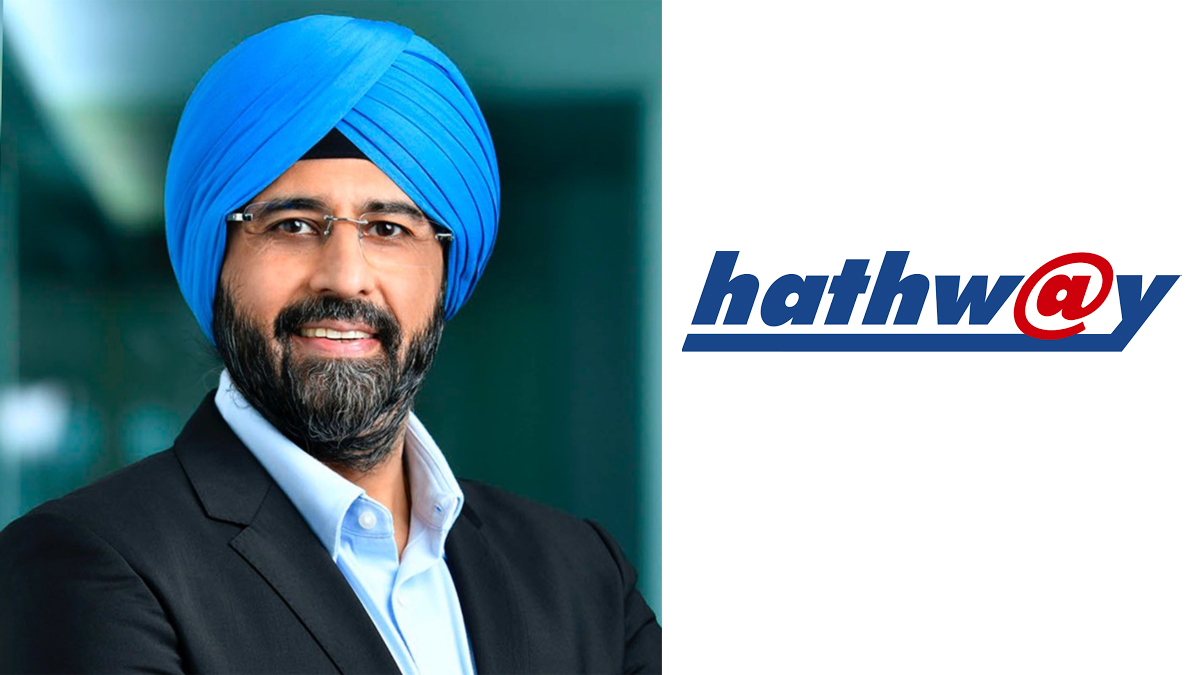
MUMBAI: Hathway Cable and Datacom has tapped industry veteran Gurjeev Singh Kapoor as chief executive officer, marking a leadership pivot at a time when India’s cable television business is under mounting strain.
Kapoor will take over from Tavinderjit Singh Panesar, who is set to retire in August after a long innings with the company. Panesar, chief executive since 2023, has held multiple leadership roles at Hathway, including his latest stint beginning in 2022.
Kapoor brings more than three decades of experience in media and entertainment. He most recently led distribution at The Walt Disney Company’s Star India business, now part of JioStar. His career spans television distribution and affiliate partnerships, with stints at Sony Pictures Networks India, Discovery Communications and Zee Entertainment.
Panesar, with over three decades in the industry, has worked across strategic planning, distribution and business development in media, broadcasting and manufacturing. His past associations include ESPN Star Sports, Star India, Apollo Tyres and JK Industries.
The transition lands as the cable sector grapples with structural disruption. Traditional operators are losing ground to streaming platforms, while telecom and broadband players tighten the squeeze with bundled offerings.
An EY report estimates India’s pay-TV base could shrink by a further 30 to 40 million households by 2030, taking the total down to 71 to 81 million. The slide follows a loss of nearly 40 million homes between 2018 and 2024, a contraction that has already wiped out more than 37,000 jobs in the local cable operator ecosystem.
Hathway’s numbers reflect the strain. The company reported a consolidated net profit of Rs 93 crore for FY25, down from Rs 99 crore a year earlier. Revenue inched up to Rs 2,040 crore from Rs 1,981 crore. As of December 2025, it had about 4.7 million cable TV subscribers and roughly 1.02 million broadband users.
Kapoor steps in with a familiar brief but a shrinking playbook. In a market where viewers are cutting cords faster than companies can reinvent them, the new chief executive inherits a business fighting to stay plugged in.







