News Headline
TRAI notifies amendments to regulatory framework for broadcasting and cable services and releases

Mumbai: Telecom Regulatory Authority of India (TRAI) has issued Telecommunication (Broadcasting and Cable) Services (Eighth) (Addressable Systems) Tariff (Fourth Amendment) Order, 2024 (1 of 2024); Telecommunication (Broadcasting and Cable) Services Interconnection (Addressable Systems) (Sixth Amendment) Regulations, 2024 (4 of 2024); the Telecommunication (Broadcasting and Cable) Services Standards of Quality of Service and Consumer Protection (Addressable Systems) (Fourth Amendment) Regulations, 2024 (3 of 2024) and also recommendations to Ministry of Information and Broadcasting (MIB) on ‘Listing of channels in Electronic Programme Guide and Upgrading DD Free Dish platform to an Addressable System’. These amendments, except for a few clauses, shall come into force after 90 days from the date of its publication in the official gazette.
In consonance with the complete digitization of the cable TV sector, TRAI on 3 March 2017 had notified the Regulatory Framework for Broadcasting and Cable services. The framework was further tuned to the need of the broadcasting ecosystem and to address the concerns of stakeholders through amendments issued in 2020 and 2022.
The stakeholders namely, broadcasters, MSOs, DTH operators and LCOs had taken up further issues for the consideration of the Authority from time to time.

To address such issues, the Authority issued a consultation paper on “Review of Regulatory Framework for Broadcasting and Cable services” on 8 August 2023 seeking stakeholders’ comments.
The consultation paper sought comments and suggestions from various stakeholders, on several issues which included Network Capacity Fee (NCF), discount limit on sum of MRP of a-la-carte channels for fixing MRP of bouquets by the distributors of TV channels (Distribution Platform Operators-DPOs), equivalence of an HD channel in terms of SD channels for capacity calculations, mandatory FTA News Channels in all packs formed by the DPOs, level playing field with DD Free Dish, amendment to Reference Interconnect Offer, listing of channels in Electronic Programme Guide (EPG), revenue share between MSO and LCO, carriage fee, removal of channels after expiry of existing interconnection agreement, issues related to billing cycle, regulation of platform service channels, review of prescribed charges, consumer corner, establishment of websites by DPOs, manual of practice, etc.
The Authority analysed the comments of the stakeholders and the discussion held during the open house discussion and noted the level of competition in the market due to the presence of multiple Broadcasters, DPOs (MSO/DTH/HITS/IPTV) and LCOs. Accordingly, there is a need to provide flexibility to the service providers for enabling them to adopt to the dynamic market conditions while at the same time safeguarding the interest of consumers and small players through transparency, accountability and equitability.
Based on the above considerations, TRAI has notified the amendments to Tariff Order 2017, Interconnection Regulations 2017 and QoS Regulation 2017. The primary objective of these amendments includes the following:
a Facilitate growth of the broadcasting sector by reducing regulatory mandates and compliance requirements.
b Provide flexibility to the service providers to adopt a market driven approach while safeguarding the interest of the consumers and small players through transparency, accountability and equitability.
c Promoting ease of doing business by simplifying the regulatory provisions.
The salient features of these amendments include the following:
A. Tariff Order
i Ceilings of Rs 130 for 200 channels and Rs 160 on more than 200 channels have been removed on Network Capacity Fee (NCF) and is kept under forbearance to make it market driven as well as equitable. Service provider may now charge different NCF based on number of channels, different regions, different customer classes or any combination thereof. To ensure transparency, all such charges have to be mandatorily published by the service providers and communicated to the consumers besides reporting to the TRAI.
ii DPOs have now been permitted to offer discount up to 45% while forming their bouquets to enable flexibility for them in forming bouquets and to offer attractive deals to the consumers. Earlier this discount was permitted only up to 15%.
iii A pay channel available at no subscription fee on the DTH platform of the public service broadcaster has to be declared free-to-air by the broadcaster of the channel for all the addressable distribution platforms also so as to have a level-playing field.
iv DPOs have been mandated to declare tariff of their platform services.
B. Interconnection Regulations
i With the proliferation of HD television sets and to encourage transmission of high-definition content, distinction between HD and SD channels has been removed for the purpose of carriage fee.
ii Carriage fee regime simplified and made technology neutral by prescribing only single ceiling for carriage fee, thereby, providing the DPOs with the option to charge a lesser carriage fee as deemed appropriate.
iii The above measures are expected to not only simplify the offerings of the service providers to the consumers but also promote the availability of high-quality channels.
C. QoS Regulations
i Charges for services like installation and activation, visiting, relocation and temporary suspension which were prescribed earlier under regulation have now been kept under forbearance. DPOs have to publish the charges of their services for clarity and transparency to consumers.
ii Relaxation of certain regulatory compliances for small DPOs.
iii Duration/Term/Validity of all prepaid subscriptions to be specified in number of days only for greater clarity to the consumers.
iv DPOs may display Distributor Retail Price (DRP) in the electronic programme guide (EPG) along with MRP for channels.
v DPOs to categorise platform service channels under the genre ‘Platform Services’ in the EPG.
vi DPOs to display respective MRP of the platform service channel in the EPG against each platform service to ensure transparency.
vii DPOs provide an option of activation/deactivation of any platform service.
D. Financial disincentives have been introduced for contravention to provisions of the Tariff Order and certain other provisions of Interconnection Regulation and QoS Regulation to ensure accountability of service providers.
E. Service providers publish all the information related to tariff and other charges which have now been kept under forbearance, on their websites. Moreover, they need to communicate the tariff and other charges to the subscribers, pertaining to the plans being subscribed.
Further, the Authority also issued recommendations to MIB on certain issues covered in the consultation process. These issues include ‘Listing of channels in Electronic Programme Guide’ and transition of ‘DD Free Dish’ to an addressable system. The salient features of these recommendations are as follows:
A. Listing of channels in EPG:
While giving permission to each channel, MIB to seek information from broadcasters about primary language of each channel and sub-Genre of every non-news channel as per Interconnection Regulation 2017 and display the same on Broadcast Seva portal of MIB to enable DPOs to place the channel at appropriate place in the EPG for easy navigation by the consumers, in accordance with the present regulation.
B. Upgradation of DD Free Dish platform to an Addressable System:
i In order to ensure quality of viewing experience, prevent unauthorized re-transmission of television channels to combat piracy and maintain the record of subscribers, Prasar Bharati to take steps to convert DD Free Dish platform from a non-addressable system to an addressable system and make a beginning by encrypting the signals of private satellite television channels at DD Free Dish head end before uplinking. Subsequently, all other channels of DD Free Dish may also be transmitted in encrypted form.
ii Public service broadcasters will be provided with the requisite exemptions of TRAI Regulations, once such notification is issued by MIB.
iii Prasar Bharati may utilize indigenous technologies for Conditional Access System (CAS), Subscriber Management System (SMS) and interoperable Set Top Boxes (STBs).
iv Prasar Bharati should adopt interoperable STBs for DD Free Dish to act as catalyst for transitioning the entire ecosystem from operator-based STBs to interoperable STBs to empower consumers’ choice. This will eliminate the need for changing STBs every time the service provider is changed.
v A roadmap for transition of DD Free Dish from non-addressable to addressable platform along with authorizing manufacturers and distributors by Prasar Bharati for sales and aftersales service of STBs, has been suggested to MIB.
vi MIB may direct private DPOs to adopt and implement interoperable STBs.
TRAI in the present amendments, addressed those issues which were covered in the consultation paper dated 8 August 2023. However, during the consultation process for these amendments, certain other issues were also raised by various stakeholders which need to undergo a detailed consultation process for the consideration of TRAI. These issues and suggestions have been noted and TRAI will come out with a comprehensive consultation paper shortly to address the relevant issues.




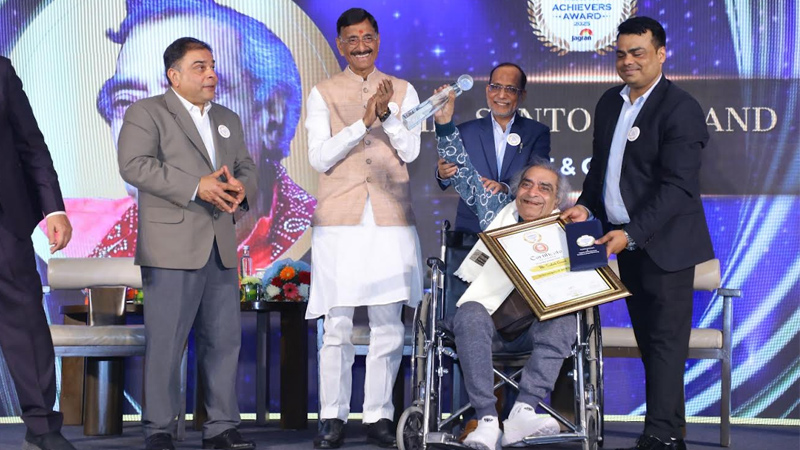
NEW DELHI: Hamdard Laboratories gathered a cross-section of India’s achievers in New Delhi on Friday, handing out the Hakeem Abdul Hameed Excellence Awards to figures who have left their mark across healthcare, education, sport, public service and the arts.
The ceremony, attended by minister of state for defence Sanjay Seth and senior officials from the ministry of Ayush, celebrated individuals whose work blends professional success with a sense of public purpose. It was as much a roll call of achievement as it was a reminder that influence is not measured only in profits or podiums, but in people reached and lives improved.
Among the headline awardees was Alakh Pandey, founder and chief executive of PhysicsWallah, recognised for turning affordable digital learning into a mass movement. On the sporting front, Arjuna Awardee and kabaddi player Sakshi Puniya was honoured for her contribution to the game and for pushing women’s participation onto bigger stages.
The cultural spotlight fell on veteran lyricist and poet Santosh Anand, whose songs have echoed across generations of Hindi cinema. At 97, Anand accepted the honour with characteristic humility, reflecting on a life shaped by perseverance and hope.
Healthcare honours spanned both modern and traditional systems. Manoj N. Nesari was recognised for strengthening Ayurveda’s place in national and global health frameworks. Padma shri Mohammed Abdul Waheed was honoured for his research-backed work in Unani medicine, while padma shri Mohsin Wali received recognition for his long-standing contribution to patient-centred care.
Education and social development also featured prominently. Padma shri Zahir Ishaq Kazi was honoured for decades of work in education, while former Meghalaya superintendent of Police T. C. Chacko was recognised for public service. Goonj founder Anshu Gupta received an award for his dignity-centred rural development initiatives, and the Hunar Shakti Foundation was honoured for empowering women and young girls through skill development.
The Lifetime Achievement Award went to former IAS officer Shailaja Chandra for her long career in public healthcare and governance, particularly in the traditional systems under Ayush.
Speaking at the event, Hamdard chairman Abdul Majeed said the awards were a tribute to those who combine excellence with empathy. “These awardees reflect Hakeem Sahib’s belief that healthcare, education and public service must ultimately serve humanity,” he said.
Minister Seth struck a forward-looking note, saying India’s young population gives the country a unique opportunity to become a global destination for learning, health and wellness by 2047.
The ceremony also featured the trailer launch of Unani Ki Kahaani, an upcoming documentary starring actor Jim Sarbh, set to premiere on Discovery on 11 February.
Instituted in memory of Unani scholar and educationist Hakeem Abdul Hameed, the awards have grown into a national platform that celebrates those building a more inclusive and resilient India. For one evening at least, the spotlight was not just on success, but on service with substance.






