News Broadcasting
TRAI notification: advantage cable ops for present?

NEW DELHI / MUMBAI: The Telecom Regulatory Authority of India (TRAI) today came out with its first order through a notification — freezing the rates at which the charges for a cable service is given as on 26 December — adding a new twist to the chaotic situation prevailing in the broadcast and cable industry.
It has also not tried to put any speed-breakers on the way of CAS rollout, contrary to the fears of the cable fraternity, and has said that it would wait for Delhi high court to take a final view on the issue of addressability
“To bring some certainty in the rates prevailing for these (cable) services, it was considered necessary by the Telecom Regulatory Authority of India to intervene in the matter. The TRAI has, therefore, deemed it appropriate to specify as ceiling the rates at which the charges will be paid by the cable subscribers to cable operators, by the cable operators to multi service operators and by multi service operators to broadcasters, as those prevailing on 26 December 2003 with respect to both free-to-air channels and pay channels, and for both CAS and non-CAS areas,” a TRAI notification states.

It further adds that this intervention will continue until a final determination by the regulator on the various issues involved.
The confusion stems from the fact that as freezing of rates of cable services is open to interpretation. It raises the question whether a demand in increase in connectivity (as done by Star India) would also be frozen as of 26 December. Certain channels have claimed that they have not increased their rates, but have slashed them. However, the reduced price is available only those cable ops and MSOs who increased their declared subscription base, which, in effect, is tantamount to a rate hike as the outflow of the cable industry to broadcasters would increase under this formula.
This was evident in how Star India COO Sameer Nair saw the development. “We have to study the TRAI order, but on the face of it, I don’t think the order would effect us. Rather, we have reduced the prices of Star channels (from Rs 30 to Rs 27),” he told indiantelevision.com.
Zee Telefilms vice-chairman and head of Siti Cable, Jawahar Goel, offers a counter view. According to him, if TRAI is speaking about freezing of rates, then it makes no sense as an MSO’s outflow would increase because of the demand of increased declaration in subscriber base. If TRAI is talking about a freeze in the charges, which would include an upped subscriber base, then it would indicate that the “regulator has managed to rein in the pay broadcasters.” He added: ” Still, clarifications would be needed on what actually TRAI is trying to say.”
One industry player however, saw no confusion in the TRAI ruling. HTMT group director and CTO KV Seshasayee under whose charge InCableNet also falls, expressed “relief that the regulator has acted very quickly.”
Queried as to what was the satus of deals that had been reached with the different broadcasters for 2004, Seshasayee said they stodd invalidated. Payment terms would have to be based on agreements that were in existence as on 26 December 2003, Seshasayee said.
SET India CEO Kunal Dasgupta had this to say: “I still need to study the implications of the order. But I do hope that the freezing of rates is not an indefinite one. However, I am sure there is a logic to what the TRAI is doing. We’ll just have to wait and watch.”
And what does TRAI chairman Pradip Baijal has to say on this issue?
Steering clear of this new debate that has been sparked off, maybe unwittingly by TRAI, Baijal said, “We have started a consultation process on various issues. I did not want a change in the status, including rates (of cable service) till I have taken a final view on the matter.”
He also said that TRAI cannot put a stop to CAS rollout or take any decision as a case relating to addressability is pending in the Delhi HC. So, can the cable ops and MSOs push ahead with CAS in South Delhi after a lull. “I suppose so,” the TRAI chief replied.
Further, what could have caused immediate confusion in the industry is the fact that TRAI has issued two sets of communications, apart from a press release sent to the media. One is the notification and the other is the more than 10 pages of consultation paper.
CAUTION & CONFUSION PREVAILS
Surprising though, the fact that TRAI’s first initiative for the broadcast and cable industry hasn’t elicited the type of enthusiasm one had expected, considering a sizeable section of the industry wanted a regulator to be in place.
So much so that many broadcasters either did not want to comment immediately or did not want to be quoted.
Even the cable fraternity is confused. And it is not only Zee’s Goel. National Cable and Telecom Association (NCTA) president Vikki Chowdhry said, “The official language is totally confusing. But I read it as we don’t have to pay the extra amount of money being demanded by the broadcasters.”
Cable Operators’ Federation of India (COFI) chief Roop Sharma said from Cochin, where she has gone to rally cable operators for CAS, that she too is “slightly confused.”
“Does the TRAI order mean that rates have been frozen all over the country or for CAS zones? Who’ll monitor whether the order is being followed or not? Does TRAI have enough manpower to do an effective monitoring of the situation?” Sharma came out with a deluge of questions.
Valid questions, though. For example, for CAS zones, Star India may have ‘dropped’ rates, but for non-CAS zones, according to the cable industry, the network is charging Rs. 55 for the bouquet now, up from Rs 50. Of course, it includes the newly-launched The History Channel too.
Another broadcaster that can get effected significantly, ESPN-Star Sports, was not available for comment.
A senior executive of Hathway Datacom, without wanting to get into nitty-gritties, said, “It’s good that TRAI has come out with something. We’ll study the material and revert to the regulator.”
What is the moral of the story? Even a regulator, probably, would need some time to understand the complexities of the broadcast and cable industry. Now, that gives rise to a very fundamental question: is TRAI adequately equipped to do so?





News Broadcasting
WITT Summit 2026 concludes in New Delhi
Babar Azam’s comical diving attempt goes viral as league introduces anti-dew measures.
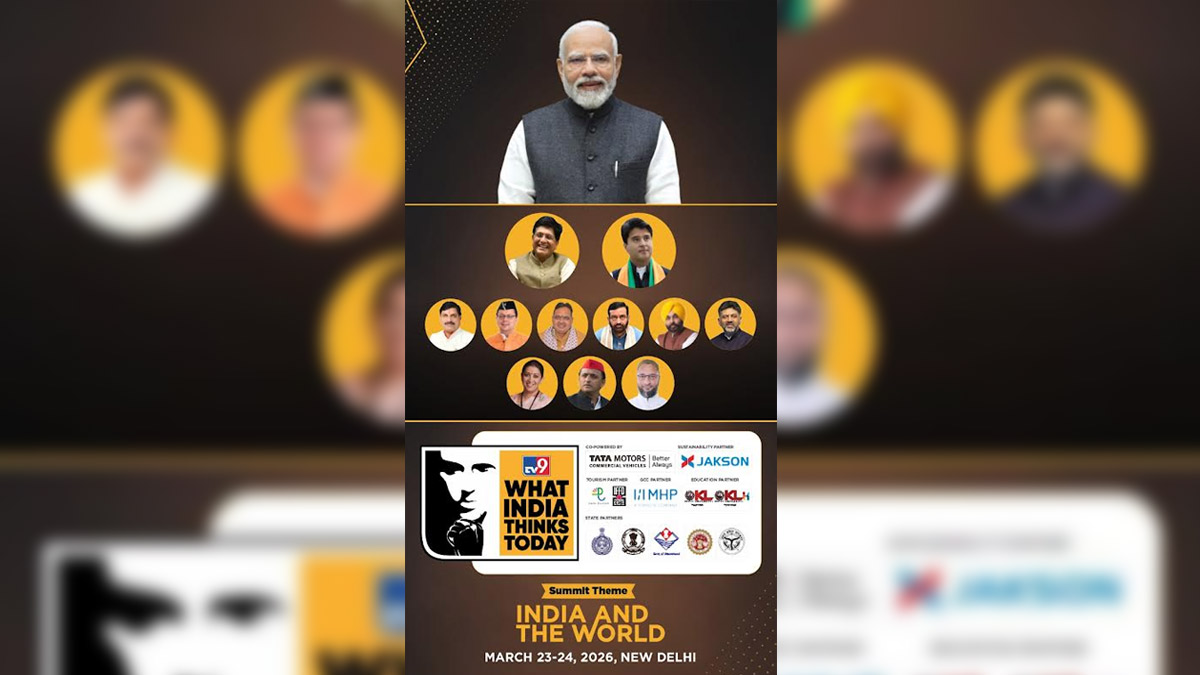
MUMBAI: The WITT Summit just wrapped up with enough big ideas to fill a policy playbook because when India’s leaders, thinkers and icons gather under one roof, even the conversations hit sixes. The eighth edition of TV9 Network’s flagship What India Thinks Today (WITT) Summit 2026 concluded on Saturday after two days of dynamic discussions at its New Delhi venue. India’s largest multi-domain public policy and culture summit brought together political leaders, policymakers, sports icons, artists and technology innovators to examine the forces shaping contemporary India and its global standing.
Prime minister Narendra Modi delivered the keynote address on the theme “India and the World” for the third consecutive year. In a wide-ranging speech, he addressed the ongoing conflict in West Asia, calling for restraint and compassion while highlighting India’s continued development trajectory despite global turmoil.
The summit featured candid conversations with state leaders. Telangana Chief Minister A. Revanth Reddy articulated a people-first governance model and contrasted it with other development approaches. Madhya Pradesh Chief Minister Mohan Yadav declared that Left-wing extremism had been effectively eliminated in his state and highlighted preparations for the upcoming Kumbh Mela. Punjab Chief Minister Bhagwant Mann defended his government’s record, citing the closure of 19 toll plazas and creation of the Sadak Suraksha Force. Karnataka Deputy Chief Minister D.K. Shivakumar expressed confidence in Congress prospects in Assam and addressed recent allegations against him.
On geopolitics and national security, Union Minister Jyotiraditya Scindia outlined India’s ambition to become a builder of trusted digital infrastructure for the world, citing the rapid 5G rollout and village-level 4G connectivity.
Cricket received significant attention. Former India captain Sourav Ganguly praised player freedom and trust as hallmarks of great leadership and named MS Dhoni as the greatest captain due to his World Cup successes. India women’s team bowling coach Aavishkar Salvi credited the BCCI and Women’s Premier League for building a pipeline of world-class talent behind the team’s recent ODI World Cup triumph.
The summit also hosted the inaugural AI² Awards 2026, celebrating the convergence of human creativity and machine intelligence in storytelling and content creation. Poet and kathavachak Kumar Vishwas delivered a nuanced take on India’s concept of Dharma and criticised the recent arrest of an 80-year-old Shankaracharya. Veteran lyricist Sameer Anjaan and storyteller Neelesh Misra reflected on changing music trends and artistic responsibility in the wake of a recent controversy involving Nora Fatehi.
In a country where conversations often run as deep as the Ganges, the WITT Summit proved once again that when leaders, thinkers and storytellers come together, the real winner is public discourse lively, layered and refreshingly unafraid to tackle the big questions shaping India’s tomorrow.








