News Headline
TRAI makes recommendations on satellite-based connectivity for low bit-rate applications


New Delhi: The Telecom Regulatory Authority of India (Trai) has released the recommendations on “Licensing Framework for Satellite-based connectivity for low bit rate applications” for both commercial and captive usage.
The recommendations come after the Department of Telecom (DoT) highlighted a need for a suitable licensing framework considering the constraints of the existing provisions in respect of proposed Satellite-based low bit-rate services. In its letter dated 23 November 2020, DoT had requested Trai to examine all the factors holistically and make recommendations.
Low bit-rate applications and IoT devices require low cost, low power, and small size terminals that can effectively perform the task of signal transfer with minimum loss. Many sparsely populated areas with important economic activities suited for IoT-related services may not have terrestrial coverage or other forms of connectivity. Therefore, Satellites can help bridge this gap by providing coverage to even the most remote areas and will help in fulfilling connect India mission.

Trai had initially issued a consultation paper on 12 March inviting comments and counter-comments from stakeholders by 7 May. “The authority received 29 comments and four counter comments from various stakeholders. An Open House Discussion (OHD) was also convened on the issues raised in the Consultation Paper on dated 2 June 2021 through video conferencing,” said Trai in a media statement.
The regulator has recommended that for provision of satellite-based connectivity for IoT and low-bit-rate applications, the relevant service licensees may provide connectivity as per the scope of their authorisation for any kind of network topology model including hybrid model, aggregator model and direct-to-satellite model.
All types of satellite – Geo Stationary Orbit (GSO) and Non-GSO (NGSO) satellites and any of the permitted satellite frequency bands may be used for providing satellite-based low-bit-rate connectivity. The Service Licensees should be permitted to obtain satellite bandwidth from foreign satellites in all the permitted satellite bands in order to provide satellite-based services.
It also recommended that the relevant existing authorisations under the Unified Licensing framework may be suitably amended for enabling satellite-based low-bit-rate connectivity. “The government may come out with a road map detailing the schedule of the launch of communication satellites and availability of the domestic satellite capacities in India to facilitate the service licensees to plan and optimise their capacity procurement,” it added.
Other recommendations include measures to make the services cheaper and affordable like permitting the hiring of foreign capacities for a longer period as per need instead of three to five years, removal of facilitation charges by the government when hiring foreign capacities from the approved list of foreign satellites/satellite systems, etc.
According to Trai, DoT should also put in place a comprehensive, simplified, end-to-end coordinated, single window online common portal for all the agencies involved in the grant of various approvals/permissions etc, wherein the service licensees can place their request and the agencies respond online in a transparent and time-bound manner.
Last September, the then chairman of Trai, R S Sharma, had also called for an urgent need to bring down the price of broadband services provided through satellites, asserting that its current high price could pose a challenge in its adoption in the country.







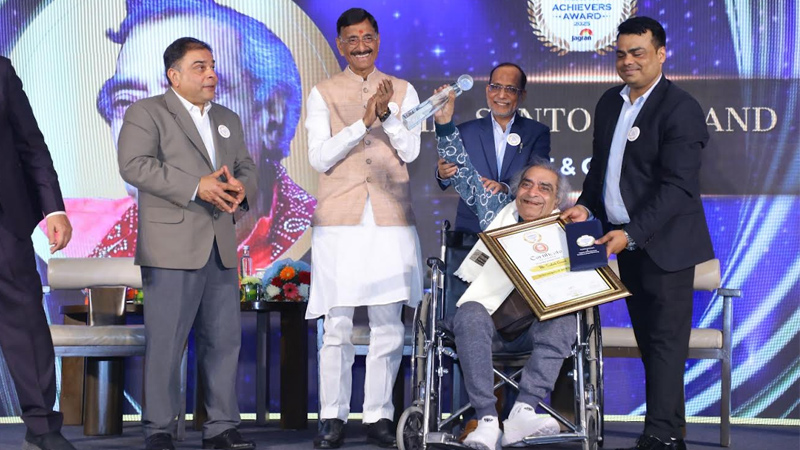
NEW DELHI: Hamdard Laboratories gathered a cross-section of India’s achievers in New Delhi on Friday, handing out the Hakeem Abdul Hameed Excellence Awards to figures who have left their mark across healthcare, education, sport, public service and the arts.
The ceremony, attended by minister of state for defence Sanjay Seth and senior officials from the ministry of Ayush, celebrated individuals whose work blends professional success with a sense of public purpose. It was as much a roll call of achievement as it was a reminder that influence is not measured only in profits or podiums, but in people reached and lives improved.
Among the headline awardees was Alakh Pandey, founder and chief executive of PhysicsWallah, recognised for turning affordable digital learning into a mass movement. On the sporting front, Arjuna Awardee and kabaddi player Sakshi Puniya was honoured for her contribution to the game and for pushing women’s participation onto bigger stages.
The cultural spotlight fell on veteran lyricist and poet Santosh Anand, whose songs have echoed across generations of Hindi cinema. At 97, Anand accepted the honour with characteristic humility, reflecting on a life shaped by perseverance and hope.
Healthcare honours spanned both modern and traditional systems. Manoj N. Nesari was recognised for strengthening Ayurveda’s place in national and global health frameworks. Padma shri Mohammed Abdul Waheed was honoured for his research-backed work in Unani medicine, while padma shri Mohsin Wali received recognition for his long-standing contribution to patient-centred care.
Education and social development also featured prominently. Padma shri Zahir Ishaq Kazi was honoured for decades of work in education, while former Meghalaya superintendent of Police T. C. Chacko was recognised for public service. Goonj founder Anshu Gupta received an award for his dignity-centred rural development initiatives, and the Hunar Shakti Foundation was honoured for empowering women and young girls through skill development.
The Lifetime Achievement Award went to former IAS officer Shailaja Chandra for her long career in public healthcare and governance, particularly in the traditional systems under Ayush.
Speaking at the event, Hamdard chairman Abdul Majeed said the awards were a tribute to those who combine excellence with empathy. “These awardees reflect Hakeem Sahib’s belief that healthcare, education and public service must ultimately serve humanity,” he said.
Minister Seth struck a forward-looking note, saying India’s young population gives the country a unique opportunity to become a global destination for learning, health and wellness by 2047.
The ceremony also featured the trailer launch of Unani Ki Kahaani, an upcoming documentary starring actor Jim Sarbh, set to premiere on Discovery on 11 February.
Instituted in memory of Unani scholar and educationist Hakeem Abdul Hameed, the awards have grown into a national platform that celebrates those building a more inclusive and resilient India. For one evening at least, the spotlight was not just on success, but on service with substance.






