News Headline
TRAI issues supplementary consultation paper on DTH licensing

MUMBAI: The Telecom Regulatory Authority of India (TRAI) issued a supplementary consultation paper on issues related to new DTH licences late 14 November evening.
This follows up the consultation paper it had issued on 1 October on issue/extension of DTH licences at the behest of the Ministry of Information and Broadcasting (I&B).
The new consultation paper seeks to get the views of industry stakeholders on the comprehensive review of the provisions in the existing DTH guidelines it is seeking to undertake.

Among those are:
Cross-holdings and control between a DTH licencee, broadcasting entities and TV channel distribution entities.
It is seeking to modify clause 1.4 of the DTH guidelines from “The licencee shall not allow broadcasting companies and/or cable network companies to collectively hold 20 per cent of the total paid up equity in its company at any time during the licence period” to “the licencee shall not allow any entity controlling broadcasting and/or any TV channel distribution operator to control it…”
Clause 1.5 is proposed to be changed from “The licencee company not to hold or own more than 20 per cent equity share in a broadcasting and/or cable networking company” to “any entity controlling the licencee should not control any broadcasting and/or any TV channel distribution operator.”
The term TV channel distribution operator covers operators of cable TV, DTH, HITS, and IPTV.
The consultation paper has defined what “control” can mean:
*A company owns 20 per cent of another firm directly or indirectly though associate companies, subsidiaries and/or relatives
* De jure control through having not less than 50 per cent of voting rights in second company; appointing 50 per cent of the members of the board of directors; controlling the management of affairs through decision-making in strategic affairs of the second company and appointment of key personnel.
* Exercises de facto control by being a party to agreements, contracts or understandings…that enable it to control business decisions in the second company.
The TRAI has said that if one were to go with this definition of control, then amendments will have to be made to laws relating to cable TV operators, broadcasters, HITS operators and some DTH operators will have to be given time to comply with the new provisions.
Interoperability of DTH STBs
The TRAI has stated that Clause 7.1 of the guidelines is open to interpretation. It states: “The open architecture (non-proprietary) set top box which will ensure technical compatibility and effective interoperability amongst different DTH providers shall have such specifications as laid down by the government from time to time.”
It has emphasised that this could be modified to put the onus on the Bureau of Indian Standards and the government shall ensure that “the BIS specifications are based on open architecture and should incorporate the latest technological developments with respect to interoperability of DTH STBs taking into account its practicality as well as international experience.”
Additionally, it states that “the BIS specifications should clearly specify the contours of interoperability between the STBs based on different technological standards.”
Finally, it has pointed out that the licence conditions should be amended to mandate compliance to BIS specifications for the STB to be offered to all new subscribers within a suitable period of say six months.”
Licence Fee:
It has recommended that the licence fee and the definition of adjusted gross revenues (AGR) for the DTH sector be aligned with that specified in the Unified Licence. And that the licence fee may be charged at eight per cent of AGR. The AGR could be calculated “by excluding service tax on provision of service tax and sales tax actually paid to the government if gross revenue had included components of sales tax and service tax.”
Under the current guidelines, DTH licencees have to pay an initial non-refundable entry fee of Rs 10 crore before the issue of the letter of intent by the licensor, and an annual fee of 10 per cent of its gross revenue in the particular financial year after the issue of the wireless operational licence by the WPC. The TRAI had in 2004 recommended that this be reduced by two per cent on AGR, and later to six per cent of gross revenues in 2008.
Migration Fee:
It has recommended an imposition of an entry fee on existing and new DTH operators moving to the unified licence regime. Existing operators should be given a rebate commensurate to the value of the licence for the remaining licence period, and that may be termed as the migration fee. The rebate could be calculated.
The TRAI has asked stakeholders to give their views on the recommendations issued today by 25 November. Stakeholders also have to give their recommendations on the consultation paper dated 1 October 2013.







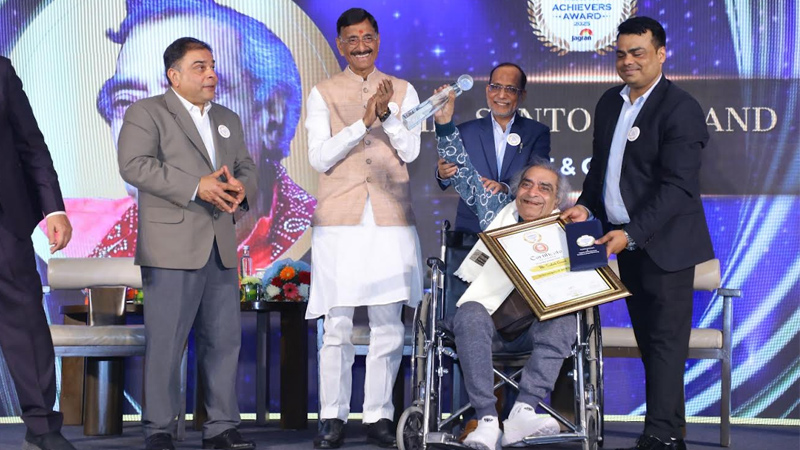
NEW DELHI: Hamdard Laboratories gathered a cross-section of India’s achievers in New Delhi on Friday, handing out the Hakeem Abdul Hameed Excellence Awards to figures who have left their mark across healthcare, education, sport, public service and the arts.
The ceremony, attended by minister of state for defence Sanjay Seth and senior officials from the ministry of Ayush, celebrated individuals whose work blends professional success with a sense of public purpose. It was as much a roll call of achievement as it was a reminder that influence is not measured only in profits or podiums, but in people reached and lives improved.
Among the headline awardees was Alakh Pandey, founder and chief executive of PhysicsWallah, recognised for turning affordable digital learning into a mass movement. On the sporting front, Arjuna Awardee and kabaddi player Sakshi Puniya was honoured for her contribution to the game and for pushing women’s participation onto bigger stages.
The cultural spotlight fell on veteran lyricist and poet Santosh Anand, whose songs have echoed across generations of Hindi cinema. At 97, Anand accepted the honour with characteristic humility, reflecting on a life shaped by perseverance and hope.
Healthcare honours spanned both modern and traditional systems. Manoj N. Nesari was recognised for strengthening Ayurveda’s place in national and global health frameworks. Padma shri Mohammed Abdul Waheed was honoured for his research-backed work in Unani medicine, while padma shri Mohsin Wali received recognition for his long-standing contribution to patient-centred care.
Education and social development also featured prominently. Padma shri Zahir Ishaq Kazi was honoured for decades of work in education, while former Meghalaya superintendent of Police T. C. Chacko was recognised for public service. Goonj founder Anshu Gupta received an award for his dignity-centred rural development initiatives, and the Hunar Shakti Foundation was honoured for empowering women and young girls through skill development.
The Lifetime Achievement Award went to former IAS officer Shailaja Chandra for her long career in public healthcare and governance, particularly in the traditional systems under Ayush.
Speaking at the event, Hamdard chairman Abdul Majeed said the awards were a tribute to those who combine excellence with empathy. “These awardees reflect Hakeem Sahib’s belief that healthcare, education and public service must ultimately serve humanity,” he said.
Minister Seth struck a forward-looking note, saying India’s young population gives the country a unique opportunity to become a global destination for learning, health and wellness by 2047.
The ceremony also featured the trailer launch of Unani Ki Kahaani, an upcoming documentary starring actor Jim Sarbh, set to premiere on Discovery on 11 February.
Instituted in memory of Unani scholar and educationist Hakeem Abdul Hameed, the awards have grown into a national platform that celebrates those building a more inclusive and resilient India. For one evening at least, the spotlight was not just on success, but on service with substance.






