News Headline
TRAI issues DTH licensing consultation paper; Dish TV given extension

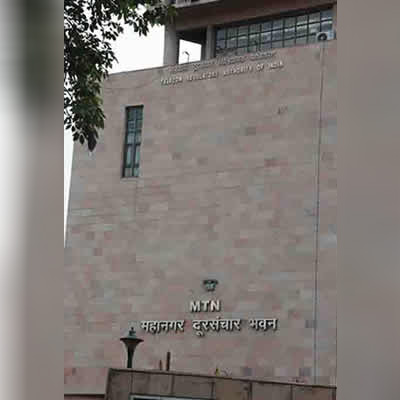
NEW DELHI : Currently, India has six pay DTH operators, apart from the free-to-air DD Direct Plus operated by Doordarshan. Dish TV, was the first DTH licencee which got the wireless operating licence (WOL) for starting its DTH services on 1 October 2003. The other five DTH operators got the WOLs during 2006 to 2008. Dish TV’s licence was due to expire on 30 September 2013. The DTH Guidelines are silent on the course of action to be adopted after expiry of the 10 year licence period.
As the time left before the due date of expiry of the licence period for the first licencee (Dish TV) was ‘simply not sufficient for TRAI to follow the due consultation process,’ it suggested some interim measures on 11 September to the Minister for the protection of the interests of consumers and keeping in view the large subscriber base of the said licencee.

It was suggested that, in the interim, the Ministry may consider allowing Dish TV to continue its operations/services on the existing terms and conditions subject to Dish TV renewing the existing bank guarantee and a suitable undertaking that once the final policy in this regard is laid down by the government, the said DTH operator will comply with that policy for the interim period also. Any financial obligations arising from the change in policy shall also be honoured.
The existing DTH Guidelines provide for the issue of a licence for 10 years. They do not explicitly provide for an extension or a renewal, implying that at the end of the 10-year period of validity, the licence expires.
TRAI has noted that ‘starting a DTH business entails a huge investment of resources. It would, therefore, be a reasonable expectation on the part of DTH licencees that, on the expiry of the initial 10 year licence, they would be eligible to apply for issue of a new licence so that they can continue their business.’
DTH broadcasting services were opened up in the country in 2001. On 15 March 2001, the government issued the ‘Guidelines for obtaining licence for providing Direct-to-Home (DTH) broadcasting service in India’ (hereinafter referred to as ‘DTH Guidelines’). These guidelines prescribe the eligibility criteria, the procedure for obtaining the licence to set up and operate DTH services in India, and the basic terms and conditions/obligations reposed in the operators.
After a company applies for a licence, the Ministry obtains the security clearance from the Home Ministry and clearance for usage of satellite from the Department of Space. Once the clearances are obtained, the player is asked to pay the entry fee of Rs 10 crore. On payment of the entry fee, the Ministry communicates its intent to the applicant to issue a licence, after which it needs to approach the Wireless Planning and Coordination (WPC) for Standing Advisory Committee for Frequency Allocation (SACFA) clearance. Once the SACFA clearance is obtained, the company has to give a bank guarantee of Rs 40 crore and sign the licence agreement with the Ministry.
After this, the company has to apply to WPC for obtaining the WOL. The duration of the DTH licence is 10 years from the date of issue of the WOL. Licences to establish, maintain and operate the DTH platform are granted under Section 4 of the Indian Telegraph Act 1885, and the Indian Wireless Telegraphy Act, 1933.






NEW DELHI: Hamdard Laboratories gathered a cross-section of India’s achievers in New Delhi on Friday, handing out the Hakeem Abdul Hameed Excellence Awards to figures who have left their mark across healthcare, education, sport, public service and the arts.
The ceremony, attended by minister of state for defence Sanjay Seth and senior officials from the ministry of Ayush, celebrated individuals whose work blends professional success with a sense of public purpose. It was as much a roll call of achievement as it was a reminder that influence is not measured only in profits or podiums, but in people reached and lives improved.
Among the headline awardees was Alakh Pandey, founder and chief executive of PhysicsWallah, recognised for turning affordable digital learning into a mass movement. On the sporting front, Arjuna Awardee and kabaddi player Sakshi Puniya was honoured for her contribution to the game and for pushing women’s participation onto bigger stages.
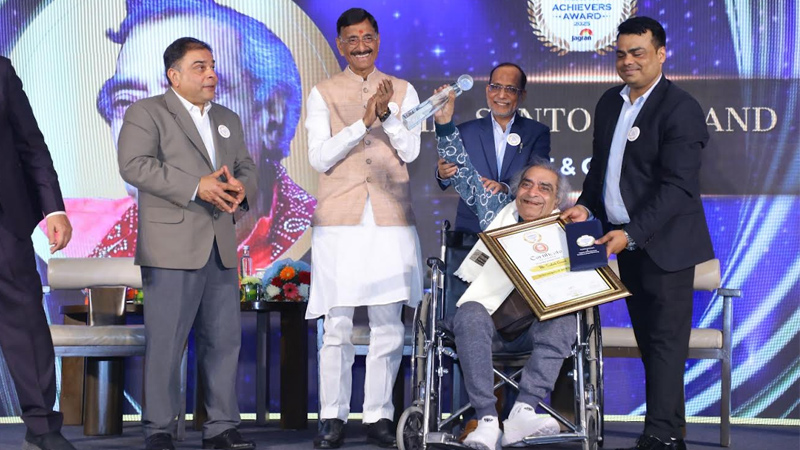
The cultural spotlight fell on veteran lyricist and poet Santosh Anand, whose songs have echoed across generations of Hindi cinema. At 97, Anand accepted the honour with characteristic humility, reflecting on a life shaped by perseverance and hope.
Healthcare honours spanned both modern and traditional systems. Manoj N. Nesari was recognised for strengthening Ayurveda’s place in national and global health frameworks. Padma shri Mohammed Abdul Waheed was honoured for his research-backed work in Unani medicine, while padma shri Mohsin Wali received recognition for his long-standing contribution to patient-centred care.
Education and social development also featured prominently. Padma shri Zahir Ishaq Kazi was honoured for decades of work in education, while former Meghalaya superintendent of Police T. C. Chacko was recognised for public service. Goonj founder Anshu Gupta received an award for his dignity-centred rural development initiatives, and the Hunar Shakti Foundation was honoured for empowering women and young girls through skill development.
The Lifetime Achievement Award went to former IAS officer Shailaja Chandra for her long career in public healthcare and governance, particularly in the traditional systems under Ayush.
Speaking at the event, Hamdard chairman Abdul Majeed said the awards were a tribute to those who combine excellence with empathy. “These awardees reflect Hakeem Sahib’s belief that healthcare, education and public service must ultimately serve humanity,” he said.
Minister Seth struck a forward-looking note, saying India’s young population gives the country a unique opportunity to become a global destination for learning, health and wellness by 2047.
The ceremony also featured the trailer launch of Unani Ki Kahaani, an upcoming documentary starring actor Jim Sarbh, set to premiere on Discovery on 11 February.
Instituted in memory of Unani scholar and educationist Hakeem Abdul Hameed, the awards have grown into a national platform that celebrates those building a more inclusive and resilient India. For one evening at least, the spotlight was not just on success, but on service with substance.







