Applications
Trai issues draft tariff package for STBs/CPEs for DTH and cable TV ops

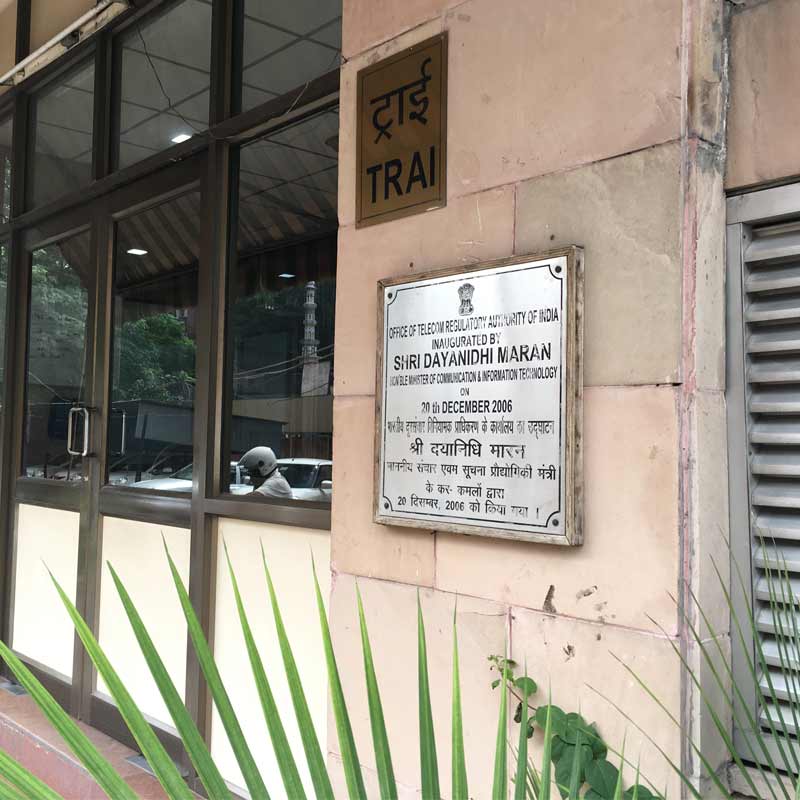
NEW DELHI: In order to ensure a smooth migration of customers from one service provider to another without having to re-invest in a new STB, the Telecom Regulatory Authority of India (Trai) today issued draft tariff orders prescribing standard tariff package for set top boxes in digital addressable cable TV systems (DAS) and consumer premises equipments (CPE) for direct-to-home services.
The standard tariff packages for STB/CPE on rental basis are to be offered mandatorily by DTH and cable TV operators. The draft tariff orders have been put on the TRAI site to seek comments of stakeholders by 26 April.
The Tariff Order also assumes significance as it attempts for the first time to give inter-operability to consumers of DTH players.

The authority is of the view that the interests of the consumers can be largely protected through the provision for commercial interoperability of STB. The commercial interoperability provides an exit option for a subscriber in case the subscriber wishes to change the operator for any reason.
Accordingly, in the relevant Regulations/ Tariff orders of Trai, it has been mandated that the operators of Digital Addressable Cable TV Systems and DTH operators shall give an option to every subscriber to procure the STB either on outright purchase basis or hire purchase basis or rental basis, or in accordance with the scheme, if any, prescribed by the Authority. The relevant provisions of various Trai Regulations/ Tariff Order in this regard are attached as Appendix-I.
While interoperability is available to customers of LCOs, Trai observed that in case of DTH services, ‘the predominant DAS platforms at the moment, the schemes for CPEs offered to the subscribers by the DTH operators, have wide variations and at times are such that no viable exit option is available to the subscribers. Instead the consumer has to re-invest in new hardware in case of migration from a particular operator or platform. The same may also hold good in case of the upcoming Digital Addressable Cable TV Systems.‘
The authority is of the view that in order to, provide an easy exit option to the subscribers, ensure availability of STBs at reasonable cost and terms and at the same time to protect the interest of the service providers a Standard Tariff Package, for STBs, as provided for in the existing Regulations/Tariff Orders be prescribed by the Authority.
Accordingly Standard Tariff Package for STBs for DAS has been worked out. In addition to offering the STB as per the Standard Tariff Package prescribed by the Authority, the operators are free to offer their own schemes for supply of STB to its subscribers in accordance with the existing Regulations/ Tariff Orders and the subscribers shall have option to choose from the Standard Tariff Package prescribed by the Authority and the alternative schemes offered by the operators.
Authority has observed that The operators are offering to its subscribers various types of STBs having different features/ capabilities such as “recording facility”, “Internet/broadband compatibility”, “High definition/ 3D reception capability” etc., in addition to the basic functionalities. Since for such STBs there would be wide variations in terms of features and cost and hence the Standard Tariff Package is provided only for the basic/ vanilla STBs meant for reception of Standard Definition TV signals (SDTV) conforming to the relevant Indian Standard set by the Bureau of Indian Standards.
The Standard Tariff Package for Cable TV operators has been worked out on the basis of the following facts and figures as provided by the Industry stakeholders/ Associations:-
a) The total cost of STB has been taken as Rs. 1750/-.
b) Life span of STB has been taken as 5 years.
c) The residual value has been taken as nil.
d) Rental per month is based on cost of STB on Equated Monthly Installment (EMI) Basis @15% per annum (@1.25% per month) for a period of 60 months.
The Standard Tariff Package for DTH operators has been worked out on the basis of the following facts and figures as provided by Industry stakeholders/ Associations;
a) The total cost of CPE has been taken as Rs. 2250/-.
b) Life span of CPE has been taken as 5 years.
c) The residual value has been taken as nil.
d) Rental per month is based on cost of CPE on Equated Monthly Installment (EMI) Basis @15% per annum (@1.25% per month) for a period of 60 months.
The authority has also noted that no monthly rentals will be payable after the period of five years and the Customer Premises Equipment will become the property of the subscriber (except smart card/viewing card) after the expiry of five years. An amount equal to the sum of security deposit to be refunded per month and interest per month on balance security deposit has been adjusted in Rent per month per Customer Premises Equipment. The Full amount of security deposit stands adjusted in a period of five years.
Up to five years, on returning of the Customer Premises Equipment, the Security Deposit shall be refunded as per attached table-B, provided that the Customer Premises Equipment is not tampered with.
In case of un-installation/discontinuance of service before the last day of the month, balance security deposit shown as refundable at the end of that month will be refunded on return of Customer Premises Equipment.
No repair or maintenance charges would be levied by DTH operator on the subscriber, towards repair or maintenance of Customer Premises Equipment up to the period of five years from activation of the Customer Premises Equipment. The subscriber, however, shall be liable to pay repair and maintenance charges from sixth year onwards.
No installation charges or re-installation charges (except in case of shifting of connection) or activation charges or smartcard/ viewing card charges is to be levied by the DTH operator on the subscriber.






Applications
With 57 per cent single new users, Ashley Madison rebrands as discreet dating platform
Platform says majority of new members now identify as single

INDIA: Ashley Madison is shedding the “married-dating” label that defined it for two decades, repositioning itself as a platform for discreet dating in what it calls the post-social media age.
The rebrand, unveiled in India on 27 February, 2026, marks a structural shift in business model and identity. Once synonymous with married dating, the company now describes itself as the “premier destination for discreet dating” under a new tagline: Where Desire Meets Discretion.
The pivot is data-driven. Internal figures show that 57 per cent of global sign-ups between 1 January and 31 December, 2025 identified as single: a notable departure from the platform’s married core. The company argues that its community has already evolved beyond its original positioning.
“In an age where our lives have been constantly put on public display, privacy has become the new luxury,” said Ashley Madison chief strategy officer Paul Keable. He framed the platform’s offering as “ethical discretion” for singles, separated, divorced and non-monogamous users seeking private connections.
The shift also taps into wider digital fatigue. A global survey conducted by YouGov for Ashley Madison, covering 13,071 adults across Australia, Brazil, Canada, Germany, India, Italy, Mexico, Spain, Switzerland, the UK and the US, found mounting discomfort with hyper-public online lives.
Among dating app users, 30 per cent cited constant swiping and messaging as a source of fatigue, while 24 per cent pointed to pressure to curate public-facing profiles and early personal disclosure. Some 27 per cent said fears of screenshots or information being shared contributed to exhaustion; an equal share cited unwanted attention.
The retreat from oversharing appears broader. According to the survey, 46 per cent of adults actively try to keep most aspects of their life private online. Only 8 per cent feel comfortable sharing most aspects publicly, while 35 per cent say they are becoming more selective about what they disclose.
Ashley Madison is betting that this cultural recalibration towards controlled visibility can be monetised. By doubling down on privacy infrastructure and reframing itself around discretion rather than infidelity, the company is attempting to convert reputational baggage into a premium proposition.






