News Headline
TRAI issues consultation paper on regulating local TV channels

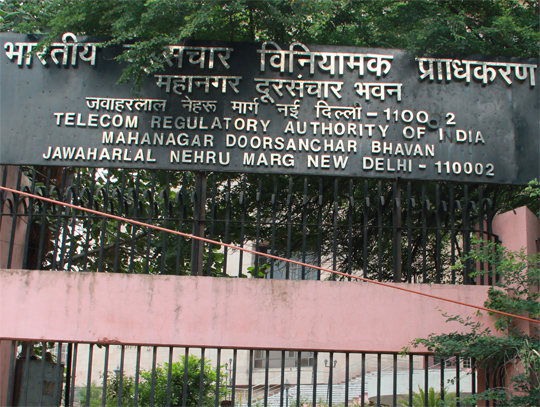
MUMBAI: The Telecom Regulatory Authority of India (TRAI) is going to look at putting in place regulations relating to local TV channels now.
In a consultation paper released today, the TRAI has sought stakeholders’ opinions on the regulatory framework that could be drawn up for local content channels in order to put them on a par with TV channels that are broadcast via satellite.

The ministry of information and broadcasting (MIB) – through its secretary Uday Kumar Verma (in January 2013) – had asked the regulator to come up with its recommendations for the same.
The TRAI consultation paper states that MSOs, LCOs, DTH operators, HITS and IPTV service providers (all called as distribution platform operators – or DPOs- henceforth) are running local channels aka platform services (PS) that don’t have the MIB’s permission. Some channels that are transmitted by the DPOs through the PS channels have content similar to regular TV channels.
TRAI has made it clear in the consultation paper that DAS has changed the context for DPOs and their PS as far as cable TV operators are concerned. The reason: with digitization, it is only the MSOs who can transmit encrypted signals from their headends on cable TV networks; LCOs can no longer transmit their own local ground based channels.
The regulator states that there has been a debate on whether PS channels can be considered as a conventional TV channel or a value added service (VAS) because broadcast TV channels are charaterised by continuous dissemination of content in a push mode to all subscribers through DPOs. On the other hand, PS channels provide content in a pull mode triggered by a specific need or demand of consumers.
TRAI has queried whether stakeholders agree with the following definition of a PS and if not then to suggest an alternative: “PS are programs transmitted DPOs exclusively to their own subscribers and does not include Doordarshan channels and TV channels permitted under downlinking guidelines.”
Programmes on PS
PS generally includes music, movies, news, devotional, entertainment, local news, live events, teleshopping, kids programs, serials, documentaries, regional programs, local plays, infotainment, market news, educational, and interactive games.
TRAI has asked stakeholders to provide their views on whether a PS channel cannot transmit news or current affairs, coverage of political events, programmes already shown on DD or other TV channels, international/national and state level sporting events or games like IPL, Ranji Trophy. Whether what it shows can include programmes such as movies, VOD, interactive games, coverage of local events and festivals, traffic, weather, educational/ academic programs (such as coaching classes), information regarding examinations, results, admissions, career counseling, availability of employment opportunities, job placement, Public announcements pertaining to civic amenities like electricity, water supply, natural calamities, health alerts etc. as provided by the local administration, Information pertaining to sporting events excluding live coverage, live coverage of sporting events of local nature i.e. sport events played by district level (or below) teams and where no broadcasting rights are required.
It has also asked the timeframe for reviewing whether a PS is trespassing into the domain of a regular TV broadcaster.
Eligibility criteria for PS
All categories of DPOs, apart from MSOs, are required to be registered under the Companies Act. To ensure uniformity in the legal status of all DPOS, TRAI suggests that a DPO offering a PS must register under the same. Therefore, the process of incorporation as a company has been simplified. Since the act allows even one person to register as a Company, small MSOs that are registered with the MIB can now register under the Companies Act.
TRAI has asked whether it is mandatory for all DPOs to be registered as companies to be allowed to operate PS or to suggest an alternative.
FDI limit for PS
Currently news channels are allowed only 26 per cent FDI and a recommendation to increase it to 49 per cent is pending with the government. On the other hand, MSOs can have FDI up to 74 per cent. The regulator states that exclusion of ‘news and current affairs’ category of programmes from a PS channel would address this unevenness. It asks views on the same.
Other issues
As per the downlinking guidelines, an applicant company needs to have a minimum net worth of Rs 5 crore to downlink of its first TV channel and Rs 2.5 crore for any additional channel. It asks if there is a need for a minimum net-worth requirement for offering PS channels. Additionally, it also seeks to know if such channels should be subject to similar security clearances as applicable to private satellite TV channels.
The TRAI also requests inputs on registration of PS channels with the MIB for which it would introduce a time bound centralised online registration system. Registration can be for 10 years with renewal for another 10 years. At the time of registration, the DPO should also declare the type of programmes it will transmit and any changes should be informed 30 days prior to a change.
Although TRAI feels market forces would compel the DPOs to restrict transmission of channels to a local geographical area, it still asks for stakeholders’ views on should there be any limit in terms of geographical area for PS channels. Also, if there should there be a limit on the number of PS channels which can be operated by a DPO.
Inputs on other obligations/restrictions that need to be imposed on DPOs for offering a PS such as non-sharing of a PS with another DPO and compliance with the programming and advertising code and TRAI’s regulations on quality of service and complaint redressal are also sought.
Certain DTH operators transmit radio channels while some radio stations provide it through the net as over the top services. It asks whether a DPO should be permitted to re-transmit already permitted and operational FM radio channels under a suitable arrangement with the FM operator and if there should be a limit on the number of such channels.
In order to monitor the kind of content that is being transmitted through the PS channels, DPOs may be mandated to keep a record of programmes for 90 days and produce it as and when required. The regulator asks for a monitoring mechanism.
Whether a PS should be penalised in a manner similar to TV broadcasters, is also asked. Lastly, it seeks a timeframe for the registration of existing PS channels once it is notified by the MIB.
Comments are required to be submitted by 14 July and counter comments by 21 July.
Click here to read the TRAI consultation paper on regulating local TV channels






NEW DELHI: Hamdard Laboratories gathered a cross-section of India’s achievers in New Delhi on Friday, handing out the Hakeem Abdul Hameed Excellence Awards to figures who have left their mark across healthcare, education, sport, public service and the arts.
The ceremony, attended by minister of state for defence Sanjay Seth and senior officials from the ministry of Ayush, celebrated individuals whose work blends professional success with a sense of public purpose. It was as much a roll call of achievement as it was a reminder that influence is not measured only in profits or podiums, but in people reached and lives improved.
Among the headline awardees was Alakh Pandey, founder and chief executive of PhysicsWallah, recognised for turning affordable digital learning into a mass movement. On the sporting front, Arjuna Awardee and kabaddi player Sakshi Puniya was honoured for her contribution to the game and for pushing women’s participation onto bigger stages.
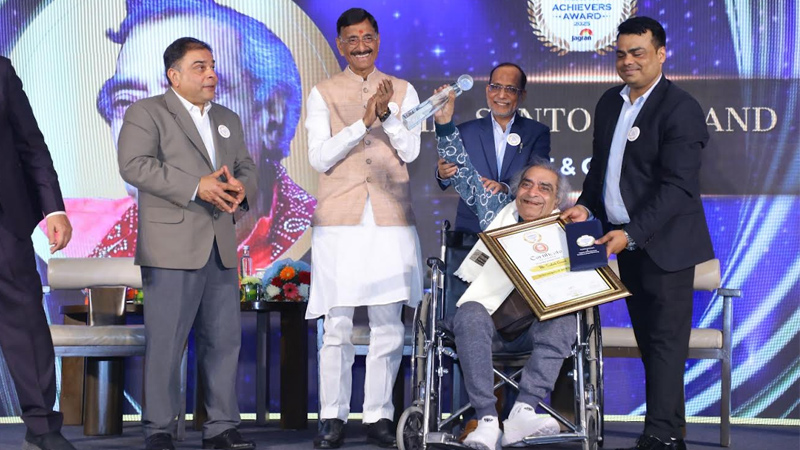
The cultural spotlight fell on veteran lyricist and poet Santosh Anand, whose songs have echoed across generations of Hindi cinema. At 97, Anand accepted the honour with characteristic humility, reflecting on a life shaped by perseverance and hope.
Healthcare honours spanned both modern and traditional systems. Manoj N. Nesari was recognised for strengthening Ayurveda’s place in national and global health frameworks. Padma shri Mohammed Abdul Waheed was honoured for his research-backed work in Unani medicine, while padma shri Mohsin Wali received recognition for his long-standing contribution to patient-centred care.
Education and social development also featured prominently. Padma shri Zahir Ishaq Kazi was honoured for decades of work in education, while former Meghalaya superintendent of Police T. C. Chacko was recognised for public service. Goonj founder Anshu Gupta received an award for his dignity-centred rural development initiatives, and the Hunar Shakti Foundation was honoured for empowering women and young girls through skill development.
The Lifetime Achievement Award went to former IAS officer Shailaja Chandra for her long career in public healthcare and governance, particularly in the traditional systems under Ayush.
Speaking at the event, Hamdard chairman Abdul Majeed said the awards were a tribute to those who combine excellence with empathy. “These awardees reflect Hakeem Sahib’s belief that healthcare, education and public service must ultimately serve humanity,” he said.
Minister Seth struck a forward-looking note, saying India’s young population gives the country a unique opportunity to become a global destination for learning, health and wellness by 2047.
The ceremony also featured the trailer launch of Unani Ki Kahaani, an upcoming documentary starring actor Jim Sarbh, set to premiere on Discovery on 11 February.
Instituted in memory of Unani scholar and educationist Hakeem Abdul Hameed, the awards have grown into a national platform that celebrates those building a more inclusive and resilient India. For one evening at least, the spotlight was not just on success, but on service with substance.