News Headline
Trai issues amendments to the regulatory framework for broadcasting and cable services

Mumbai: The Telecom Regulatory Authority of India (Trai) on Tuesday issued the telecommunication services tariff order, 2022 and the telecommunication services interconnection regulations, 2022.
In consonance with the complete digitisation of the cable TV sector, Trai on 3 March 2017 notified the new regulatory framework for broadcasting and cable services. After passing legal scrutiny in Madras High Court and Supreme Court, the new framework came into effect from 29 December 2018.
As the new regulatory framework changed quite a few business rules, many positives emerged. However, upon implementation of the new regulatory framework 2017, Trai noticed some inadequacies impacting the consumers. To address certain issues that arose after implementation of the new regulatory framework, after a due consultation process with stakeholders, Trai on 1 January 2020 notified the new regulatory framework 2020.

Some stakeholders challenged provisions of tariff amendment order 2020, interconnection amendment regulations 2020 and QoS amendment regulations 2020 in various High Courts including in the High Court of Bombay and Kerala. The court upheld the validity of the new regulatory framework 2020 except for a few provisions.
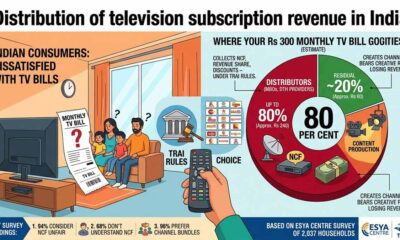
The provisions related to network capacity fee (NCF), multi-TV homes and long-term subscriptions of new regulatory framework 2020, have already been implemented and due benefits are being passed on to the consumer at large. Every consumer now can get 228 TV channels instead of 100 channels earlier, in a maximum NCF of Rs 130. It has enabled consumers to reduce their NCF for availing a similar number of channels as per 2017 framework, by an estimated cost varying Rs 40 to 50. Additionally, the amended NCF for multi-TV homes has enabled further savings to the consumers to the tune of 60 per cent on second (and more) television sets.
However, as per RIOs filed by the broadcasters in November 2021, the new tariffs reflected a common trend i.e., the prices of their most popular channels including sports channels were enhanced beyond Rs 19 per month. Complying to the extent provisions, as regards the inclusion of pay channels in a bouquet, all such channels that are priced beyond Rs 12 per month are kept out of the bouquet and are offered only on a-la-carte basis. The revised RIOs as filed indicate a wide-scale changes in composition of almost all the bouquets being offered.
Immediately after new tariffs were announced, Trai received representations from distribution platform operators (DPOs), associations of local cable operators (LCOs) and consumer organisations. DPOs highlighted difficulties likely to be faced by them in implementing new rates in the system and migrating the consumers to the new tariff regime through the informed exercise of options impacting almost all bouquets, especially due to upward revision in the rates of pay channels and bouquets declared by broadcasters. Therefore, Trai engaged with all the different associations and consumer groups including representatives of LCOs.
To deliberate on the various issues related to implementation of new regulatory framework 2020 and suggest a way forward, a committee consisting of members from Indian Broadcasting & Digital Foundation (IBDF), All India Digital Cable Federation (AIDCF) & DTH Association was constituted under the aegis of Trai.
The purpose of the committee was to facilitate discussions among various stakeholders to come out on a common agreed path for smooth implementation of Tariff Amendment Order 2020. Stakeholders were advised to come out with an implementation plan with minimum disruptions and hassles to the consumers while implementing the new regulatory framework 2020.
The committee listed several issues related to the new regulatory framework 2020 for consideration. The stakeholders, however, requested Trai to immediately address critical issues which could create impediments for smooth implementation of tariff amendment order 2020.
In order to address the issues as identified by the stakeholders’ committee; Trai issued a consultation paper for seeking stakeholders’ comments on points/issues which are pending for full implementation of the new regulatory framework 2020. The consultation paper sought comments and suggestions from various stakeholders, on issues related to discount given in the formation of the bouquet, ceiling price of channels for inclusion in bouquet, and discount offered by broadcasters to DPOs in addition to distribution fee.
The authority analysed the comments of the stakeholders and to protect the interests of consumers has notified the amendments to tariff order 2017 and interconnection regulations 2017. The main features of the amendments are as follows:
a. Continuance of forbearance on MRP of TV channels
b. Only those channels which are having MRP of Rs 19 or less will be permitted to be part of a bouquet.
c. A broadcaster can offer a maximum discount of 45 per cent while pricing its bouquet of pay channels over the sum of MRPs of all of the pay channels in that bouquet.
d. Discount offered as an incentive by a broadcaster on the maximum retail price of a pay channel shall be based on combined subscription of that channel both in a-la-carte as well as in bouquets.
All the broadcasters shall report to the authority, any change in name, nature, language, MRP per month of channels, and composition and MRP of bouquets of channels, by 16 December 2022, and simultaneously publish such information on their websites. The broadcasters who have already submitted their RIOs in compliance with the new regulatory framework 2020 may also revise their RIOs by 16 December 2022.
All the distributors of television channels shall report to the authority, DRP of pay channels and bouquets of pay channels, and composition of bouquets of pay and FTA channels, by 1 January 2023, and simultaneously publish such information on their websites. DPOs who have already submitted their RIOs in compliance with the new regulatory framework 2020 may also revise their RIOs by 1 January 2023.
All the distributors of television channels shall ensure that services to the subscribers, with effect from 1 February 2023, are provided as per the bouquets or channels opted by them.
Trai in the present amendments, addressed only those critical issues which were suggested by the stakeholders’ committee to avoid inconvenience to consumers while implementing the tariff amendment order 2020. The stakeholders’ committee also listed other issues for subsequent consideration by Trai. In addition, the authority held multiple meetings with representatives of LCOs including an online meeting which was attended by more than 200 LCOs from across the country. Several issues were put forward during these meetings. Trai has noted the suggestions and may take further suitable measures to address the ensuing issues, if the situation warrants.





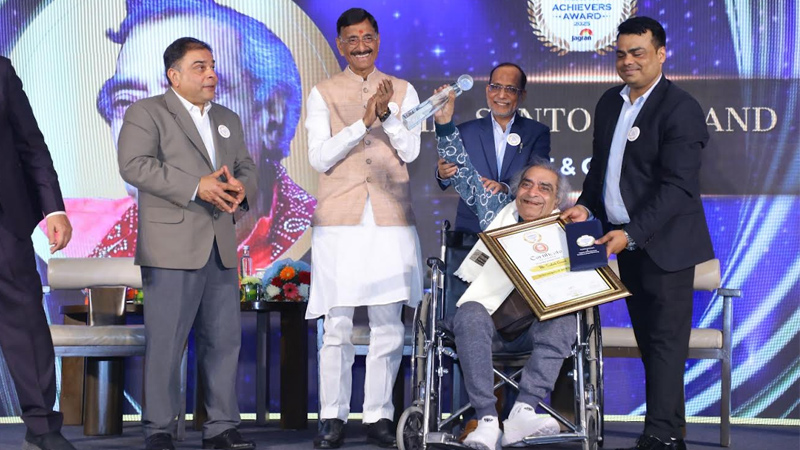
NEW DELHI: Hamdard Laboratories gathered a cross-section of India’s achievers in New Delhi on Friday, handing out the Hakeem Abdul Hameed Excellence Awards to figures who have left their mark across healthcare, education, sport, public service and the arts.
The ceremony, attended by minister of state for defence Sanjay Seth and senior officials from the ministry of Ayush, celebrated individuals whose work blends professional success with a sense of public purpose. It was as much a roll call of achievement as it was a reminder that influence is not measured only in profits or podiums, but in people reached and lives improved.
Among the headline awardees was Alakh Pandey, founder and chief executive of PhysicsWallah, recognised for turning affordable digital learning into a mass movement. On the sporting front, Arjuna Awardee and kabaddi player Sakshi Puniya was honoured for her contribution to the game and for pushing women’s participation onto bigger stages.
The cultural spotlight fell on veteran lyricist and poet Santosh Anand, whose songs have echoed across generations of Hindi cinema. At 97, Anand accepted the honour with characteristic humility, reflecting on a life shaped by perseverance and hope.
Healthcare honours spanned both modern and traditional systems. Manoj N. Nesari was recognised for strengthening Ayurveda’s place in national and global health frameworks. Padma shri Mohammed Abdul Waheed was honoured for his research-backed work in Unani medicine, while padma shri Mohsin Wali received recognition for his long-standing contribution to patient-centred care.
Education and social development also featured prominently. Padma shri Zahir Ishaq Kazi was honoured for decades of work in education, while former Meghalaya superintendent of Police T. C. Chacko was recognised for public service. Goonj founder Anshu Gupta received an award for his dignity-centred rural development initiatives, and the Hunar Shakti Foundation was honoured for empowering women and young girls through skill development.
The Lifetime Achievement Award went to former IAS officer Shailaja Chandra for her long career in public healthcare and governance, particularly in the traditional systems under Ayush.
Speaking at the event, Hamdard chairman Abdul Majeed said the awards were a tribute to those who combine excellence with empathy. “These awardees reflect Hakeem Sahib’s belief that healthcare, education and public service must ultimately serve humanity,” he said.
Minister Seth struck a forward-looking note, saying India’s young population gives the country a unique opportunity to become a global destination for learning, health and wellness by 2047.
The ceremony also featured the trailer launch of Unani Ki Kahaani, an upcoming documentary starring actor Jim Sarbh, set to premiere on Discovery on 11 February.
Instituted in memory of Unani scholar and educationist Hakeem Abdul Hameed, the awards have grown into a national platform that celebrates those building a more inclusive and resilient India. For one evening at least, the spotlight was not just on success, but on service with substance.