News Broadcasting
Trai for cut in DTH revenue share

NEW DELHI: Broadcast and cable regulator Telecom Regulatory Authority of India (Trai) is likely to come to the aid of direct-to-home television services operators in the country by suggesting a two per cent cut in an annual revenue sharing with the government.
Trai, which is increasingly coming in for criticism from the industry for delaying action on various important issues, is also likely to suggest that a clause on ‘must provide’ (making available TV channels to all platforms on a non-discriminatory basis) be first tried out in the DTH sector.
But, point out sources in Trai, a suggestion on the ‘must provide’ clause may come with a rider that to be fair to all it could be made applicable when there are two licensees in the field of DTH or two operators with operational services in the country.
This recommendation, as being anticipated by officials of the information and broadcasting ministry would also go a long way in giving a fillip to the proposed DTH service of Indian pubcaster Doordarshan. The ministry officials also expect that Trai would submit its recommendations on this subject very soon.

The regulator after having studied DTH models globally, has come to the conclusion that such business ventures have long gestation period and, therefore, some relaxation could be given by the government.
A suggestion to the government, which need not necessarily accept all recommendations from the regulator, may be that the annual revenue sharing of 10 per cent be reduced to eight per cent of the adjusted gross revenue. This would mean instead of paying the government 10 per cent on gross revenue, a DTH operator could subtract expenditure incurred on things like transponder leasing, spectrum fee and sale of hardware, if any.
According to the existing DTH guidelines, a licensee shall pay an annual fee equivalent to 10 per cent of its gross revenue as reflected in the audited accounts of the company for that particular financial year within one month of the end of that fiscal.
However, if the government agrees on this recommendation on clipping the revenue share percentage, then DTH operators would have to maintain separate records of all streams of revenue.
Considering that entertainment tax is a state issue and differs from region to region, Trai is likely to suggest that any such tax levied on a DTH service be at par with the prevalent norms in the cable industry and not put at a higher level because of niche-ness of a DTH service.
At the moment, entertainment tax is not levied on a DTH service at most places, but increasingly states like Maharashtra and Uttar Pradesh have woken up to this untapped source of revenue for the state exchequer.
As in the case of FM radio, the regulator is also likely to state, without committing anything, that the government could review the various foreign investment caps put in place for a DTH venture.
As per present DTH guidelines, total foreign equity holding, including FDI/NRI/OCB/FII in the applicant company should not exceed 49 per cent. Within the foreign equity component, foreign direct investment (FDI) is not to exceed 20 per cent. The quantum represented by that proportion of the paid up equity share capital to the total issued equity capital of the Indian promoter company, held or controlled by the foreign investors through FDI/NRI/OCB investments, shall form part of the above said FDI limit of 20 per cent.
Further, the guidelines also state that broadcasting companies and/or cable network companies shall not be eligible to collectively own more than 20 per cent of the total equity of applicant company at any time during the license period. Similarly, the applicant company cannot have more than 20 per cent equity share in a broadcasting and/or cable network company.
Trai sources, however, have pointed out that such recommendations relating to DTH and other industry issues are still being fine-tuned and changes may be effected in the final copy as “its a dynamic process where several concerns are still being addressed.”





News Broadcasting
News18 India launches Command Centre war explainer with Arya
New show shifts from debates to decoding global conflicts and impacts
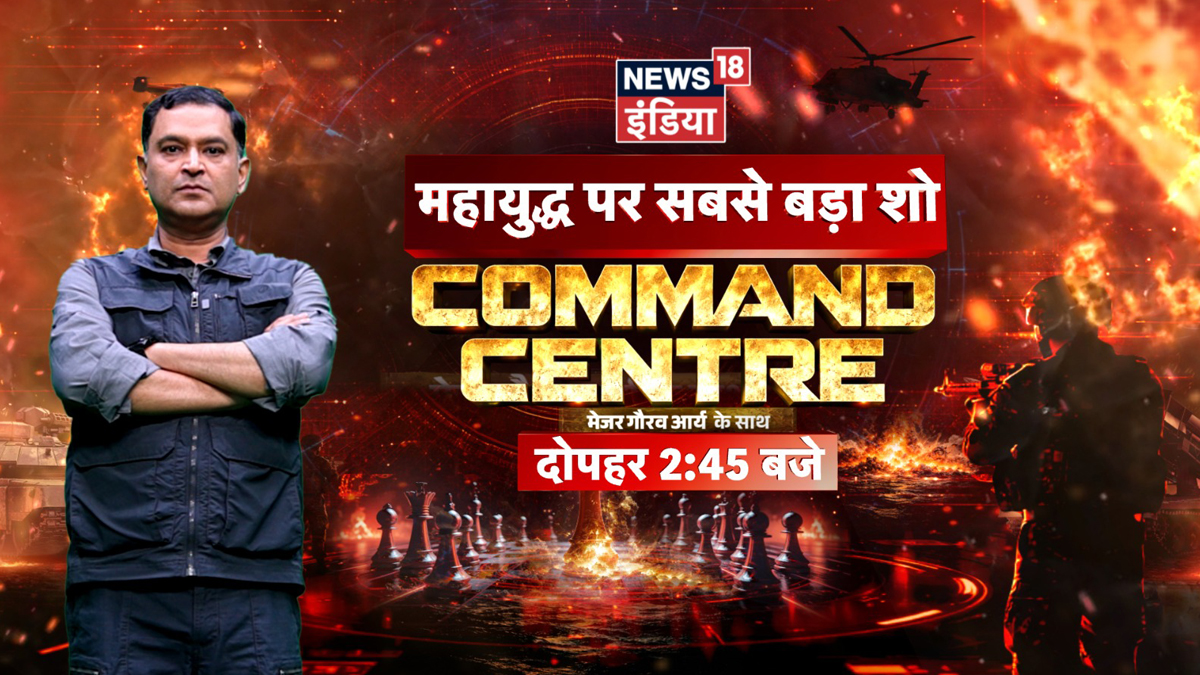
MUMBAI: News18 India has rolled out a new war-focused programme, Command Centre, featuring Gaurav Arya, as it looks to offer viewers a sharper, more grounded take on global conflicts amid rising tensions in West Asia.
Positioned as an “insider war room”, the show moves away from conventional panel debates and instead focuses on explaining military developments, decoding strategy and connecting global events to their everyday impact, from fuel prices to economic shifts.
The format leans heavily on visuals and data. The studio has been designed like a command hub, complete with large LED war maps, real-time graphics and an alert system to track developments as they unfold.
At the centre of it all is Arya, who brings his military background to simplify complex war strategies for viewers. His signature line, “Seedhi baat samjhiye”, anchors the show’s promise of clarity over noise.
News18 India managing editor Jyoti Kamal said, “Command Centre, featuring Major Gaurav Arya is designed to deliver accurate insights and a clear perspective on how evolving conflicts impact everyday life, from household budgets to national security. With expert voices analysing every development in real time, the show goes beyond headlines to decode what’s happening now, what it means, and what could come next.”
Echoing the intent, Gaurav Arya added, “In times of war, confusion is the biggest threat. With News18 India’s Command Centre, we are bringing viewers inside the war room, decoding strategies, tracking every escalation, and explaining, in the simplest terms, what it means for India and for every household. Seedhi baat samjhiye, this is where you understand not just what is happening, but what happens next.”
The weekday show will air in the afternoon slot and will also feature Gaurav Shukla, adding to its editorial depth.
With its mix of analysis, visuals and a clear focus on impact, the show reflects a broader shift in news consumption. Viewers are no longer just watching events unfold, they are looking to understand what those events mean for them.







