News Headline
TRAI extends date for stakeholders’ views on AGR and on licensing of NSOs and SDOs

NEW DELHI: The Telecom Regulatory Authority of India (TRAI) has extended till 7 October the date for written submissions on a pre-consultation paper on ‘delinking of license for networks from delivery of services by way of virtual network operators’.
In this paper, stakeholders have been asked by the TRAI to give their views on their definition of adjusted gross revenue.

The paper is on what the model of agreement is between network service operator (NSO) license and service delivery (SDO) operator license created under the draft National Telecom Policy 2011 will be.
It has asked if this would be left to the market or regulated like mandating NSOs to provide services to SDO licensees and mandating charges etc.
In its policy, the Department of Telecom (DoT) had said that NSOs would be licensed to set up and maintain converged networks capable of delivering various types of services such as voice, data, video, broadcast, IPTV, VAS etc in a non-exclusive and non-discriminatory manner.
SDOs would be licensed to deliver the services such as teleservices (voice, data, video), internet/broadband, broadcast services, IPTV, VAS and content delivery services etc.
In its latest reference to TRAI, the DoT has envisaged the entry of virtual network operators (VNOs) for delivery of services by delinking them from licensing of networks.
VNOs are SDO licensees who do not own the underlying network(s) but rely on the network and support of the infrastructure providers, telecommunications operators (who are owner(s) of towers, radio access networks, spectrum etc) for providing telecom services to end users/customers. As these operators do not have their own networks, they are termed as VNOs. They can provide any telecom service being provided by network providers viz teleservices (voice, data, video), internet/broadband, IPTV, VAS, content delivery services etc. The most popular among VNOs are mobile virtual network operators (MVNOs).
India is a diverse country, large in size and had very poor telecom networks when the Government decided to open the sector to private participation. Therefore, in order to ensure development and proliferation of telecom infrastructure across the length and breadth of the country, the Government took a conscious decision that all TSPs would have their own network for providing services to their customers. To meet this end, each TSP was mandated to comply with certain roll-out obligations and even sharing of infrastructure was not permitted initially. To encourage tower sharing amongst operators, the Government initiated a project ‘Mobile Operator Shared Tower (MOST)’ in March 2006, and later on, in April 2008 sharing of active infrastructure, except spectrum, was also permitted.
At present, most access providers are integrated operators who have their own infrastructure for both access and long distance services. Having already established their networks, the issue to deliberate upon is whether delinking the network from service delivery will have any effect on the working of these TSPs. The new licence regime has come into existence only about a year back.
In the proposed licencing framework, based on the VNO model, one issue could be whether the existing TSPs, will have to obtain an NSO licence or both NSO and SDO licences on migration to the new licensing regime.
A linked issue for deliberation will be about the necessity of changing the licensing regime at all, at such a short interval since unified licencing (UL) was introduced.
At present, there are 7-13 licensees in various service areas. Therefore, another issue for deliberation could be about the need for introduction of more competition in the form of VNOs.
Apart from access services, for other services like V-SAT, PMRTS/CMRTS, GMPCS, it needs to be deliberated whether any business case/revenue potential exists for a standalone virtual operator for these services.
In India, the TSPs have infrastructure, including spectrum, which is just about sufficient to cater to their own requirements. Would they really be able to spare their infrastructure for new SDOs, TRAI wants to know.
It can also be deliberated whether the reference of DoT envisaged an entirely new licensing regime or could be considered to mean that a chapter may be added to the existing UL for facilitating licenses to the VNO.





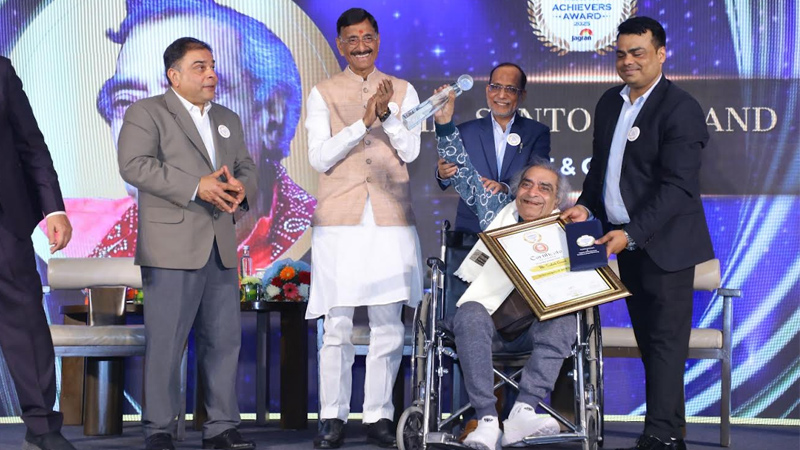
NEW DELHI: Hamdard Laboratories gathered a cross-section of India’s achievers in New Delhi on Friday, handing out the Hakeem Abdul Hameed Excellence Awards to figures who have left their mark across healthcare, education, sport, public service and the arts.
The ceremony, attended by minister of state for defence Sanjay Seth and senior officials from the ministry of Ayush, celebrated individuals whose work blends professional success with a sense of public purpose. It was as much a roll call of achievement as it was a reminder that influence is not measured only in profits or podiums, but in people reached and lives improved.
Among the headline awardees was Alakh Pandey, founder and chief executive of PhysicsWallah, recognised for turning affordable digital learning into a mass movement. On the sporting front, Arjuna Awardee and kabaddi player Sakshi Puniya was honoured for her contribution to the game and for pushing women’s participation onto bigger stages.
The cultural spotlight fell on veteran lyricist and poet Santosh Anand, whose songs have echoed across generations of Hindi cinema. At 97, Anand accepted the honour with characteristic humility, reflecting on a life shaped by perseverance and hope.
Healthcare honours spanned both modern and traditional systems. Manoj N. Nesari was recognised for strengthening Ayurveda’s place in national and global health frameworks. Padma shri Mohammed Abdul Waheed was honoured for his research-backed work in Unani medicine, while padma shri Mohsin Wali received recognition for his long-standing contribution to patient-centred care.
Education and social development also featured prominently. Padma shri Zahir Ishaq Kazi was honoured for decades of work in education, while former Meghalaya superintendent of Police T. C. Chacko was recognised for public service. Goonj founder Anshu Gupta received an award for his dignity-centred rural development initiatives, and the Hunar Shakti Foundation was honoured for empowering women and young girls through skill development.
The Lifetime Achievement Award went to former IAS officer Shailaja Chandra for her long career in public healthcare and governance, particularly in the traditional systems under Ayush.
Speaking at the event, Hamdard chairman Abdul Majeed said the awards were a tribute to those who combine excellence with empathy. “These awardees reflect Hakeem Sahib’s belief that healthcare, education and public service must ultimately serve humanity,” he said.
Minister Seth struck a forward-looking note, saying India’s young population gives the country a unique opportunity to become a global destination for learning, health and wellness by 2047.
The ceremony also featured the trailer launch of Unani Ki Kahaani, an upcoming documentary starring actor Jim Sarbh, set to premiere on Discovery on 11 February.
Instituted in memory of Unani scholar and educationist Hakeem Abdul Hameed, the awards have grown into a national platform that celebrates those building a more inclusive and resilient India. For one evening at least, the spotlight was not just on success, but on service with substance.






