News Headline
TRAI draft tariff order skewed in favour of DPOs, will harm industry: IBF


NEW DELHI: The Indian Broadcasting Foundation (IBF), an apex body of broadcasting companies, has criticised sector regulator TRAI for over-regulating and proposing draft guidelines on tariff and interconnection that are skewed in favour of distribution platform operators (DPOs).
Responding to Telecom Regulatory Authority of India (TRAI) draft orders relating to tariff, inter-connections and quality of service, IBF said the new regime will lead to “de-growth” of the industry and discourage investments and production of good quality content in the television industry.
Pointing out that the proposed regulatory regime “regresses rather than advances”, IBF in a lengthy reply has said with over 830 channels for consumers to choose from and a large pubcaster offering of over 100 private and public TV channels, whether there a “need to regulate all aspects of a set of 200 odd pay TV channels”.

“The question for the Authority would be, is there proven evidence of market failure that a dire need has arisen to over-regulate these 200 odd pay TV channels(?). We are of the firm belief that there is no compelling reason to regulate these channels and, accordingly, only a light touch regulation, if at all, ought to have been proposed,” IBF has submitted justifying its criticism of draft guidelines.
Contending that pay TV channels (read cable and DTH services) were not essential services IBF counters there was no compelling reason to regulate these channels. “The present tariff order is based on the ‘erroneous premise’ that pay TV channels are essential services,” the broadcasting industry body said.
Citing international copyrights and IPR laws, IBF pointed out that whole exercise undertaken by TRAI was in direct conflict with the provisions of the Indian Copyright Act, 1957.
According to IBF, the proposed tariff and inter-connect orders conflict with the Copyright Act in the following ways and need to be “harmonised”:
a. The proposed tariff order(s) that impose restrictions on nature of content, prices of channels, mandated discount caps and commissions, manner of offering, etc have to be reviewed and modified in the light of specific copyright laws providing freedom to broadcast organisations to charge royalties and any other consideration/fees for their works and BRR in accordance with the market demands and contract laws.
b. The draft interconnect regulations issued by TRAI that take away the broadcast organisations’ exclusive rights to deal and imposes restrictions on their contractual abilities and takes away their ability to negotiate the terms of trade need to be reviewed and modified to harmonise the same with the provisions of the Copyright Act pertaining to voluntary licensing and assignments by Broadcast Organisations by permitting mutual negotiations.
c. The existing commercial tariff orders and regulations issued by TRAI in relation to commercial establishments is also at odds with copyright laws in as much as the Copyright Act clearly provides broadcast organisations the right to charge differential rates of royalties and license fees on commercial establishments vis-a-vis domestic/residential subscribers.
Going a step further, IBF has raised questions over transparency and the manner in which draft guidelines were issued: “The draft consultations also do not meet the threshold of transparency mandated by Section 11(4) of the TRAI Act 1997, which requires that the Authority will ensure transparency while exercising its powers and discharging its functions.”
Also Read:






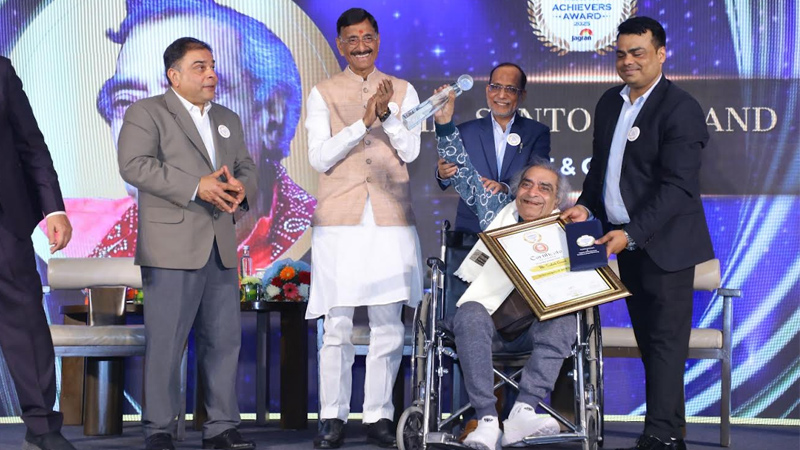
NEW DELHI: Hamdard Laboratories gathered a cross-section of India’s achievers in New Delhi on Friday, handing out the Hakeem Abdul Hameed Excellence Awards to figures who have left their mark across healthcare, education, sport, public service and the arts.
The ceremony, attended by minister of state for defence Sanjay Seth and senior officials from the ministry of Ayush, celebrated individuals whose work blends professional success with a sense of public purpose. It was as much a roll call of achievement as it was a reminder that influence is not measured only in profits or podiums, but in people reached and lives improved.
Among the headline awardees was Alakh Pandey, founder and chief executive of PhysicsWallah, recognised for turning affordable digital learning into a mass movement. On the sporting front, Arjuna Awardee and kabaddi player Sakshi Puniya was honoured for her contribution to the game and for pushing women’s participation onto bigger stages.
The cultural spotlight fell on veteran lyricist and poet Santosh Anand, whose songs have echoed across generations of Hindi cinema. At 97, Anand accepted the honour with characteristic humility, reflecting on a life shaped by perseverance and hope.
Healthcare honours spanned both modern and traditional systems. Manoj N. Nesari was recognised for strengthening Ayurveda’s place in national and global health frameworks. Padma shri Mohammed Abdul Waheed was honoured for his research-backed work in Unani medicine, while padma shri Mohsin Wali received recognition for his long-standing contribution to patient-centred care.
Education and social development also featured prominently. Padma shri Zahir Ishaq Kazi was honoured for decades of work in education, while former Meghalaya superintendent of Police T. C. Chacko was recognised for public service. Goonj founder Anshu Gupta received an award for his dignity-centred rural development initiatives, and the Hunar Shakti Foundation was honoured for empowering women and young girls through skill development.
The Lifetime Achievement Award went to former IAS officer Shailaja Chandra for her long career in public healthcare and governance, particularly in the traditional systems under Ayush.
Speaking at the event, Hamdard chairman Abdul Majeed said the awards were a tribute to those who combine excellence with empathy. “These awardees reflect Hakeem Sahib’s belief that healthcare, education and public service must ultimately serve humanity,” he said.
Minister Seth struck a forward-looking note, saying India’s young population gives the country a unique opportunity to become a global destination for learning, health and wellness by 2047.
The ceremony also featured the trailer launch of Unani Ki Kahaani, an upcoming documentary starring actor Jim Sarbh, set to premiere on Discovery on 11 February.
Instituted in memory of Unani scholar and educationist Hakeem Abdul Hameed, the awards have grown into a national platform that celebrates those building a more inclusive and resilient India. For one evening at least, the spotlight was not just on success, but on service with substance.






