News Headline
TRAI defends key recommendations on telecom service authorisations framework

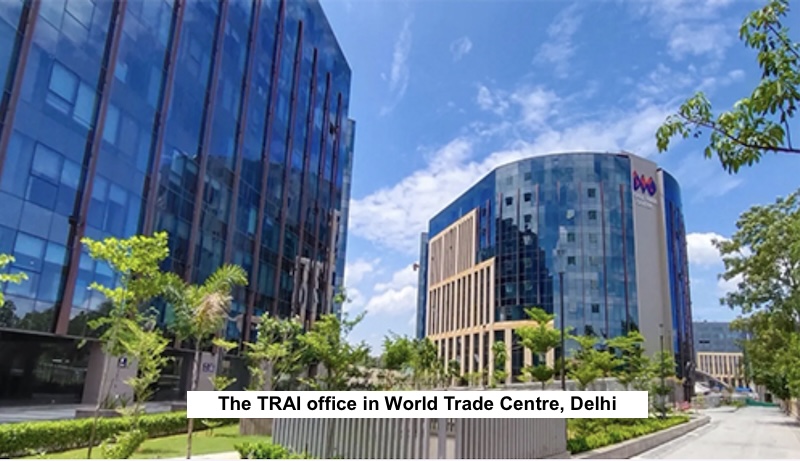
Department of Telecommunications (DoT) regarding several aspects of its September 2024 recommendations on the framework for service authorisations under the Telecommunications Act, 2023.
The response follows a back-reference from the DoT dated 14 January 2025, in which the government indicated several of TRAI’s original recommendations from September 2024 may require modification or might not be accepted.
The regulatory exchange began in June 2024 when the DoT requested TRAI’s input on terms, conditions and charges for telecommunications service authorisations under the new Act. After consultations with industry stakeholders, TRAI submitted its initial recommendations in September last year.

Having examined the government’s concerns, TRAI has now finalised its reconsidered position. The complete response has been published on the TRAI website.
In a detailed document, TRAI has stood firm on several key recommendations that the DoT had expressed reservations about, particularly regarding the structure of service authorisations.
The regulator defended its position on introducing separate authorisations for satellite-based telecommunications and Machine-to-Machine (M2M) services, rejecting the DoT’s suggestion to integrate these within broader service categories. TRAI argued that separate authorisations would better promote investment and operational focus in these niche segments.
“To attract business entities to enter the relatively underdeveloped satellite-based telecommunication service segment in the country, and to preserve the business focus of such entities, a separate service authorisation is necessary,” TRAI stated in its response.
The authority also reiterated its recommendation that for any substantive changes to authorisation terms and conditions, the Central Government should seek TRAI’s recommendations, emphasising the importance of regulatory stability in a capital-intensive sector.
Additionally, TRAI maintained its position on the need for sub-circle level authorisations to enable smaller service providers to operate efficiently within limited geographic areas.
To read the full TRAI rebuttal please click here.







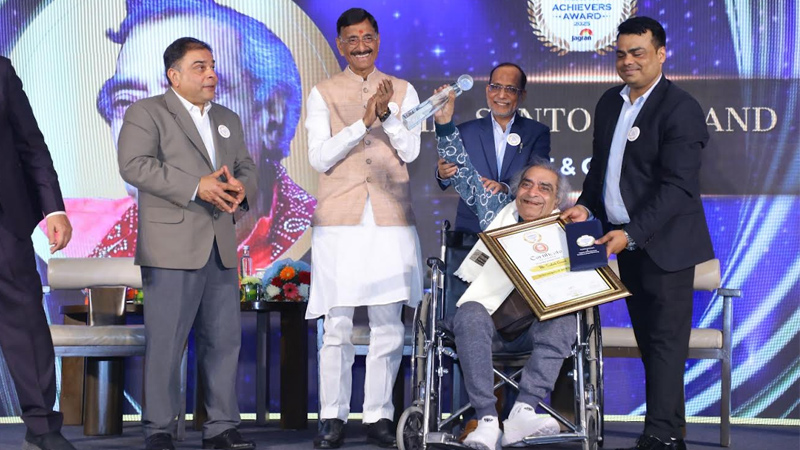
NEW DELHI: Hamdard Laboratories gathered a cross-section of India’s achievers in New Delhi on Friday, handing out the Hakeem Abdul Hameed Excellence Awards to figures who have left their mark across healthcare, education, sport, public service and the arts.
The ceremony, attended by minister of state for defence Sanjay Seth and senior officials from the ministry of Ayush, celebrated individuals whose work blends professional success with a sense of public purpose. It was as much a roll call of achievement as it was a reminder that influence is not measured only in profits or podiums, but in people reached and lives improved.
Among the headline awardees was Alakh Pandey, founder and chief executive of PhysicsWallah, recognised for turning affordable digital learning into a mass movement. On the sporting front, Arjuna Awardee and kabaddi player Sakshi Puniya was honoured for her contribution to the game and for pushing women’s participation onto bigger stages.
The cultural spotlight fell on veteran lyricist and poet Santosh Anand, whose songs have echoed across generations of Hindi cinema. At 97, Anand accepted the honour with characteristic humility, reflecting on a life shaped by perseverance and hope.
Healthcare honours spanned both modern and traditional systems. Manoj N. Nesari was recognised for strengthening Ayurveda’s place in national and global health frameworks. Padma shri Mohammed Abdul Waheed was honoured for his research-backed work in Unani medicine, while padma shri Mohsin Wali received recognition for his long-standing contribution to patient-centred care.
Education and social development also featured prominently. Padma shri Zahir Ishaq Kazi was honoured for decades of work in education, while former Meghalaya superintendent of Police T. C. Chacko was recognised for public service. Goonj founder Anshu Gupta received an award for his dignity-centred rural development initiatives, and the Hunar Shakti Foundation was honoured for empowering women and young girls through skill development.
The Lifetime Achievement Award went to former IAS officer Shailaja Chandra for her long career in public healthcare and governance, particularly in the traditional systems under Ayush.
Speaking at the event, Hamdard chairman Abdul Majeed said the awards were a tribute to those who combine excellence with empathy. “These awardees reflect Hakeem Sahib’s belief that healthcare, education and public service must ultimately serve humanity,” he said.
Minister Seth struck a forward-looking note, saying India’s young population gives the country a unique opportunity to become a global destination for learning, health and wellness by 2047.
The ceremony also featured the trailer launch of Unani Ki Kahaani, an upcoming documentary starring actor Jim Sarbh, set to premiere on Discovery on 11 February.
Instituted in memory of Unani scholar and educationist Hakeem Abdul Hameed, the awards have grown into a national platform that celebrates those building a more inclusive and resilient India. For one evening at least, the spotlight was not just on success, but on service with substance.






