News Headline
TRAI clears platform services offered by local cable ops, subject to conditions and payments

NEW DELHI: The Telecom Regulatory Authority of India (TRAI) has recommended the establishment of an online system by the Information and Broadcasting Ministry to register all the platform services being offered and the registration is on the basis of a simple set of information and at a nominal registration fee of Rs 1000 per channel.
According to the recommendations on the ‘Regulatory Framework for Platform Services’ issued by it, TRAI said distribution platform operators (DPOs) desirous of providing platform services must be incorporated as a company under the Indian Companies Act 2013.
TRAI had issued a consultation paper on ‘Regulatory framework for Platform Services’ on 23 June and the recommendations are based on the responses received from stakeholders. TRAI said there is an urgent need to ensure that these programming services are brought within the four corners of a robust and fair regulatory system that addresses all concerns adequately.

The Ministry in a letter to TRAI on 17 January 2013 sought recommendations of TRAI under section 11 (1) (a) (ii), (iii) and (iv) of TRAI Act, 1997 on the issues related to local ground-based channels of cable TV operators. In addition, through an earlier letter of 2 February 2009, the Ministry had also sought TRAI’s recommendations about such kind of programming services being offered by DTH service providers to their subscribers as well as on the issue of carriage of FM radio channels on the DTH platform.
The Regulator also issued a letter in this connection to the secretary in the Ministry, Bimal Julka.
TRAI has also said a time of 12 months should be given to the DPOs to comply with the guidelines to be issued by the Ministry in this regard.
Prior clearance is required from the district authorities of any local information and local affairs bulletins that may be transmitted.
Platform Services (PS) are programming services/ channels that are owned by the DPO; available only to the subscribers of the DPO’s network; advertisements, if any, on these channels is inserted by the DPO and ad-revenues, therefore, accrue to it. Regular TV channels, howsoever transmitted, and Doordarshan channels which appear on the TV networks, cannot be included in PS. Further, foreign TV channels not registered in India cannot be included in PS.
A maximum number of five PS channels may be offered by the cable operators in non-DAS areas. In DAS areas and for all other platforms, a maximum of 15 PS channels may be offered by the DPOs. These numbers are the number of PS channels to be made available at the subscribers’ end.
In addition to the recommendations on Platform services, the Authority has suo motu made recommendations for a regulatory framework for ground based broadcasters as well. This has been done to ensure that any TV channel that is distributed on any TV network in India is covered by a regulatory framework, whether it is obtained from a satellite-based broadcaster; produced by the network operator or sourced from a terrestrial broadcaster.
The recommendations for the ground-based broadcasters are largely the same as that for the satellite broadcasters, barring the requirements of seeking spectrum and approvals in that regard from Department of Telecom and the Department of Space.
Retransmission of FM radio channels on TV channel distribution networks has been recommended provided that all the legal rights to do so are obtained. However, the Authority has said that this matter will be revisited at a later point in time, once the FM radio industry fully develops in India.
These recommendations have been issued in view of ground based channels being operated at the level of cable TV operators and regarding the kind of programming services being offered by the DTH service providers to their subscribers.
The Authority recommends that no change in the existing FDI limits and Net-worth requirements be made for DPOs offering PS.
In so far as carrying local news and current affairs bulletins on PS is concerned, the following categories will be treated as non-news and current affairs broadcast and will, therefore, be permissible:
(i) Information about local events and other local affairs, sourced locally and not obtained from news agencies or from broadcast news channels/ sources;
(ii) Information pertaining to sporting events, excluding live coverage. However live commentaries of sporting events of local nature may be permissible, if broadcasting rights for the same are not held by anyone else;
(iii) Information pertaining to Traffic and Weather;
(iv) Information pertaining to and coverage of cultural events, festivals;
(v) Coverage of topics pertaining to examinations, results, admissions, career counseling;
(vi) Availability of employment opportunities; and
(vii) Public announcements pertaining to civic amenities like electricity, water supply, natural calamities, health alerts etc. as provided by the local administration.
There are four distinct kinds of channels, though variously described, and with a variety of content, that are being carried on DPO networks. For analytical ease and simplicity these are classified in terms of the source of the channel:
(a) Private Satellite Channels: These are the traditional satellite broadcast channels, governed by the Uplinking/ Downlinking Guidelines of the Ministry. They carry all genres of programme content.
(b) Doordarshan Channels: These are the Public Broadcaster’s channels, some of which the TV networks are mandated to carry under the Cable Television Networks (Regulation) Act 1995.
(c) Platform Services (PS) Channels: These are channels owned and operated by the DPOs and distributed to their own subscribers. They are of several kinds and, depending on the design of the network, may or may not be interactive. They offer a fairly wide variety of content to their subscribers. Content generally offered includes local affairs information/news; movies; general entertainment; music; education and religion. The DTH networks offer on-demand services for which the subscriber has to pay extra. These channels include movies/ video on demand, educational channels, interactive channels, etc. While such on-demand channels are at present distributed only by the DTH operators, in the DAS environment MSOs too can provide them.
(d) Ground-based Channels: These channels are akin to the traditional broadcast channels, but with a strong local focus. In the comments received they have generally been referred to as ‘local-channels’ and the producers of such channels have been described as ‘local-channel operators’. In reality they are ground-based broadcasters. These channels offer a variety of content such as local news and information; regional movies and music; religious content, etc. The ground-based broadcaster channels are an integral part of most cable TV networks. Like traditional TV channels, these channels may also be carried on more than one DPO network simultaneously. The owners of these channels transmit the content terrestrially to the headend of the cable TV network, i.e., there is no uplinking or downlinking of the channel and the DPOs retransmit them on commercial terms to the subscribers. Like traditional TV channels, these local-channels also carry advertisements and the ad-revenue obtained usually accrues to the ground-based broadcaster. Consequently, they own the rights for the content carried and are responsible for the same. At present, such channels are not specifically covered under any regulatory framework and the ground-based broadcasters are not formally recognised as a ‘broadcaster’.
The Authority recommended that any DPO offering PS retain, with itself, a recording of all PS channel programmes for a period of 90 days; a written log/register should also be maintained about such programme for a period of one year from the date of broadcast. The recording and the register can be examined by the Authorised Officer and the State/District Monitoring Committee appointed by the MIB as, when and if required. For PS distributed on a pan-India basis MIB should be the monitoring agency.
The Authority recommends that the first violation of the PS Guidelines should lead to prohibition on transmission of the PS channel for a period of up to 30 days; for the second violation, the prohibition on transmission of the PS channel should be for a period of up to 90 days; for the third violation the registration of the PS should be revoked and the PS channel concerned should not be allowed to be transmitted. Consequently, the number of PS channels that the DPO can transmit thereafter will be appropriately reduced.
Considering the smaller reach of some of the ground-based broadcasters, the Authority recommends that a State should be taken as a unit and a reach in 15 or more States should be taken as a pan-India presence. The States that are members of the North Eastern Council (NEC) could be considered to be equivalent to one State, for this purpose.







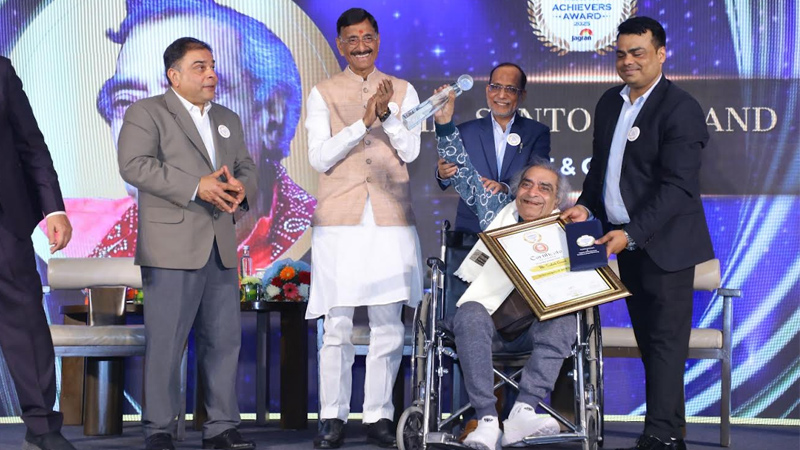
NEW DELHI: Hamdard Laboratories gathered a cross-section of India’s achievers in New Delhi on Friday, handing out the Hakeem Abdul Hameed Excellence Awards to figures who have left their mark across healthcare, education, sport, public service and the arts.
The ceremony, attended by minister of state for defence Sanjay Seth and senior officials from the ministry of Ayush, celebrated individuals whose work blends professional success with a sense of public purpose. It was as much a roll call of achievement as it was a reminder that influence is not measured only in profits or podiums, but in people reached and lives improved.
Among the headline awardees was Alakh Pandey, founder and chief executive of PhysicsWallah, recognised for turning affordable digital learning into a mass movement. On the sporting front, Arjuna Awardee and kabaddi player Sakshi Puniya was honoured for her contribution to the game and for pushing women’s participation onto bigger stages.
The cultural spotlight fell on veteran lyricist and poet Santosh Anand, whose songs have echoed across generations of Hindi cinema. At 97, Anand accepted the honour with characteristic humility, reflecting on a life shaped by perseverance and hope.
Healthcare honours spanned both modern and traditional systems. Manoj N. Nesari was recognised for strengthening Ayurveda’s place in national and global health frameworks. Padma shri Mohammed Abdul Waheed was honoured for his research-backed work in Unani medicine, while padma shri Mohsin Wali received recognition for his long-standing contribution to patient-centred care.
Education and social development also featured prominently. Padma shri Zahir Ishaq Kazi was honoured for decades of work in education, while former Meghalaya superintendent of Police T. C. Chacko was recognised for public service. Goonj founder Anshu Gupta received an award for his dignity-centred rural development initiatives, and the Hunar Shakti Foundation was honoured for empowering women and young girls through skill development.
The Lifetime Achievement Award went to former IAS officer Shailaja Chandra for her long career in public healthcare and governance, particularly in the traditional systems under Ayush.
Speaking at the event, Hamdard chairman Abdul Majeed said the awards were a tribute to those who combine excellence with empathy. “These awardees reflect Hakeem Sahib’s belief that healthcare, education and public service must ultimately serve humanity,” he said.
Minister Seth struck a forward-looking note, saying India’s young population gives the country a unique opportunity to become a global destination for learning, health and wellness by 2047.
The ceremony also featured the trailer launch of Unani Ki Kahaani, an upcoming documentary starring actor Jim Sarbh, set to premiere on Discovery on 11 February.
Instituted in memory of Unani scholar and educationist Hakeem Abdul Hameed, the awards have grown into a national platform that celebrates those building a more inclusive and resilient India. For one evening at least, the spotlight was not just on success, but on service with substance.







