News Headline
TRAI chief: Pending DAS tariff, interconnect, QoS norms by year-end

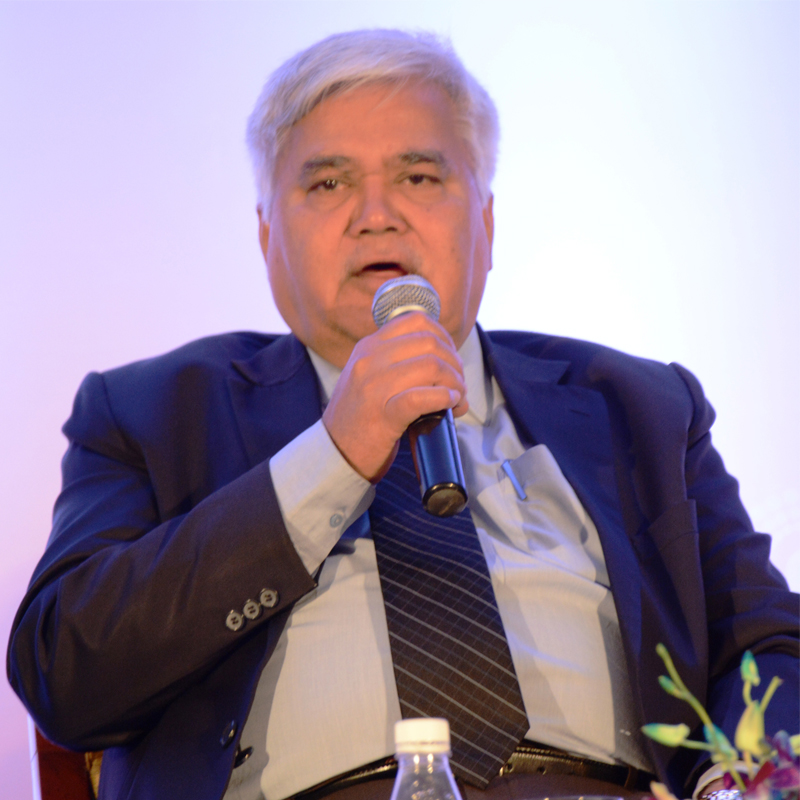
NEW DELHI: India’s telecoms and broadcast carriage regulator Telecom Regulatory Authority of India (TRAI) has said it would issue final guidelines relating to broadcast tariff, interconnect and quality of service issues by this month-end and reiterated its overall aim is to “harmonise” norms so as to facilitate growth of the industry in an ambiguity-free regulatory environment.
“We are bringing out a comprehensive and common framework for all platforms relating to quality of service (QoS), tariff and interconnect. We have been working on it for many months now,” TRAI chairman RS Sharma told indiantelevision.com in an exclusive interview, adding that criticism of draft guidelines were part of a democratic consultation process.
According to Sharma, the final recommendations of the regulator, which are being framed after a lengthy process of consultation with all stakeholders spread over several months, will be “issued by the end of this month (2016 end).”

Sharma, who spoke on a whole range of issues on telecoms and broadcast sectors that it oversees, said the overall effort of TRAI was to create a framework for industry players that will boost digitization making the dream of Digital India come true. “We are working towards an environment that will reduce ambiguity in regulations and help all stakeholders, including the consumer,” he added.
Last week, the Delhi High Court removed almost all legal hurdles to complete digital rollout of TV services in the country by vacating all interim court orders that had been passed by other courts in the country extending the deadline for implementation of Phase III of digital addressable system (DAS).
Though Sharma pointed out that the legal cases (taken care by Delhi HC on direction from Supreme Court) had no direct bearing on TRAI’s efforts to bring about a comprehensive regulatory framework for digital TV services in India, Sharma said, “It is the Ministry of Information and Broadcasting (MIB) that will have to enforce the (digitization) schedule, but we are ready to provide any assistance to MIB if needed.”
On the entry of new technologies in India, which give window to innovations, the TRAI chief opined new technologies should be actively promoted without an attempt to throttle them through regulations.
“We should not try to throttle them (new technologies) just because there are legacy business models. Business models must adapt to technology rather that technology being stifled in order to protect business models,” Sharma said.
Quizzed, on the issue of Net Neutrality and new techs like OTT, Sharma explained, “We have already dealt with the issue of Net Neutrality from the tariff perspective (TRAI banned zero-tariff plans by telcos earlier this year). But as the government has asked us to provide it with comprehensive recommendations on the issue, we are in the final stages… (but) it may take a couple of months more.”
While agreeing with the broad idea that time has arrived for India to have a comprehensive convergence law and regulator, Sharma made it clear that TRAI was not a competent authority to take a call on such policy matters and it was the government’s prerogative. “What should be the methods of regulatory structure (for a convergence law)? How will it be governed? Who will do it? I am not the competent person (on such issues) as it’s for the government to decide. But I certainly agree that because of technological developments, lot of convergence is happening in various sectors.”
Asked to comment on a common criticism that India is an over-regulated market, Sharma disagreed and said, “We don’t believe in unnecessary regulations. However, at the same time, some regulation is necessary for an orderly growth of the industry; especially so consumers don’t suffer because of ambiguities in rules.”
Keep tuned in to read the full interview of TRAI chief, which is coming soon.
ALSO READ:
Delhi HC removes legal hurdles to implement DAS IV by 1 Jan 2017






NEW DELHI: Hamdard Laboratories gathered a cross-section of India’s achievers in New Delhi on Friday, handing out the Hakeem Abdul Hameed Excellence Awards to figures who have left their mark across healthcare, education, sport, public service and the arts.
The ceremony, attended by minister of state for defence Sanjay Seth and senior officials from the ministry of Ayush, celebrated individuals whose work blends professional success with a sense of public purpose. It was as much a roll call of achievement as it was a reminder that influence is not measured only in profits or podiums, but in people reached and lives improved.
Among the headline awardees was Alakh Pandey, founder and chief executive of PhysicsWallah, recognised for turning affordable digital learning into a mass movement. On the sporting front, Arjuna Awardee and kabaddi player Sakshi Puniya was honoured for her contribution to the game and for pushing women’s participation onto bigger stages.
The cultural spotlight fell on veteran lyricist and poet Santosh Anand, whose songs have echoed across generations of Hindi cinema. At 97, Anand accepted the honour with characteristic humility, reflecting on a life shaped by perseverance and hope.
Healthcare honours spanned both modern and traditional systems. Manoj N. Nesari was recognised for strengthening Ayurveda’s place in national and global health frameworks. Padma shri Mohammed Abdul Waheed was honoured for his research-backed work in Unani medicine, while padma shri Mohsin Wali received recognition for his long-standing contribution to patient-centred care.
Education and social development also featured prominently. Padma shri Zahir Ishaq Kazi was honoured for decades of work in education, while former Meghalaya superintendent of Police T. C. Chacko was recognised for public service. Goonj founder Anshu Gupta received an award for his dignity-centred rural development initiatives, and the Hunar Shakti Foundation was honoured for empowering women and young girls through skill development.
The Lifetime Achievement Award went to former IAS officer Shailaja Chandra for her long career in public healthcare and governance, particularly in the traditional systems under Ayush.
Speaking at the event, Hamdard chairman Abdul Majeed said the awards were a tribute to those who combine excellence with empathy. “These awardees reflect Hakeem Sahib’s belief that healthcare, education and public service must ultimately serve humanity,” he said.
Minister Seth struck a forward-looking note, saying India’s young population gives the country a unique opportunity to become a global destination for learning, health and wellness by 2047.
The ceremony also featured the trailer launch of Unani Ki Kahaani, an upcoming documentary starring actor Jim Sarbh, set to premiere on Discovery on 11 February.
Instituted in memory of Unani scholar and educationist Hakeem Abdul Hameed, the awards have grown into a national platform that celebrates those building a more inclusive and resilient India. For one evening at least, the spotlight was not just on success, but on service with substance.