News Headline
TRAI amends new tariff order rules for a-la-carte channel pricing and NCF

MUMBAI: The Telecom Regulatory Authority of India (TRAI) has ushered in the new year with some welcoming changes to the new tariff order framework that came into effect on 29 December 2018. Some of the major concerns found it was regarding the cap on maximum discount permissible to broadcasters while forming a bouquet, number of channels permitted in network capacity fee (NCF), applicable NCF for multi TV homes, flexibility to distribution platform operators (DPOs) in offering long term subscription plans and carriage fee payable by broadcasters to DPOs.
In order to “protect the interests of consumers," TRAI has modified certain provision of the new regulatory framework.
A-la-carte prices

TRAI has addressed the issue of huge discounts in the formation of bouquets by broadcasters vis-a-vis sum of a-la-carte channels – in the new dispensation it has prescribed following twin conditions to ensure that the price of a-la-carte channels does not become "illusionary":
i) the sum of the a-la-carte rates of the pay channels (MRP) forming part of a bouquet shall in no case exceed one and half times the rate of the bouquet of which such pay channels are a part
ii) the a-la-carte rates of each pay channel (MRP), forming part of a bouquet, shall in no case exceed three times the average rate of a pay channel of the bouquet of which such pay channel is a part.
Additionally, the authority decided that only those channels with an MRP of Rs 12 or less will be permitted to be part of the bouquet offered by broadcasters.
New NCF rules
NCF related issues were another area of concern for consumers, says the TRAI. It has examined various provisions in detail and accordingly mandated the provision of 200 channels in maximum NCF of Rs 130 excluding taxes per month. In addition, it has also been decided that channels declared mandatory by the Ministry of Information and Broadcasting will not be counted in the number of channels in the NCF. DPOs have also been mandated that they will not charge more than Rs 160 per month for giving all channels available on their platform.
Consumers have also highlighted huge charges taken by DPOs in the form of NCF for a multi-TV home. TRAI has decided that in case of multi-TV home where more than one TV connection is working in a home in the name of one person, will charge maximum 40 per cent of declared NCF for second and additional TV connections. The authority has also permitted DPOs to offer discounts on long term subscriptions which is for six months or more.
Carriage Fee
TRAI also considered the concern of broadcasters regarding huge carriage fees being charged by DPOs. The authority has mandated that MSOs, HITS operators, IP TV service providers will not havea target market bigger than state or union territory as the case may be. In addition, a cap of Rs 4 lakh per month has been prescribed on carriage fee payable by a broadcaster to a DPO in a month for carrying a channel in the country.
Flexibility to DPOs
The authority has also considered giving more flexibility to DPOs to place the TV channels in electronic programme guides (EPG) and mandated that channel of a language in a genre will be kept together while placing channels on the guide. Such EPG layout is to be mandatorily reported to TRAI and no change in this can be done without prior approval of the authority. This will address the concerns of the broadcasters to a great extent to protect them as it will not allow DPOs to frequently change the LCN of the television channel in case they do not agree to their mandates.
Regulator speak
“The amendments carried out through the consultation process has left the basic contours of the new regime untouched and the broadcasters/DPOs will continue to enjoy the flexibility in carrying out their businesses. The review exercise has been limited to certain consumer-friendly measures and to balance the interest of stakeholders. The revisions strive to ensure that the objectives of the existing framework get fulfilled to great extent,” TRAI said in a release.
TRAI went on to say that the NTO framework is quite successful in establishing harmonised business processes in the sector, level-playing-field, bringing-in transparency in TV channel pricing, reducing litigations among stakeholders and providing equal opportunities to smaller MSOs. “As a result, there is a pronounced reduction in disputes among stakeholders as well as entry barriers. The transparency has ushered better tax compliance thereby improving government revenue. However, the intended choice to consumers to select what they want has got scuttled due to various issues during the implementation,” it said.
The amendments provide appropriate time to stakeholders for implementation. Broadcasters are required to publish revised MRP of a-la-carte channels and bouquets on their website by 15 January 2020 and DPOs are required to publish revised DRP of a-la-carte channels and bouquets on their website by 30 January 2020. Consumers will be able to benefit as per the amended provisions with effect from 1 March 2020. The authority is of the view that the amendments will usher in better consumer offerings, more flexible tariff schemes and more choices for consumers. Overall, the amendments are expected to result in healthier & structured growth of the Broadcasting and Cable Services sector.
Two consultation papers were issued on 16 August 2019 and 25 September 2019 in order to address concerns regarding pricing of channels in the new tariff order era.







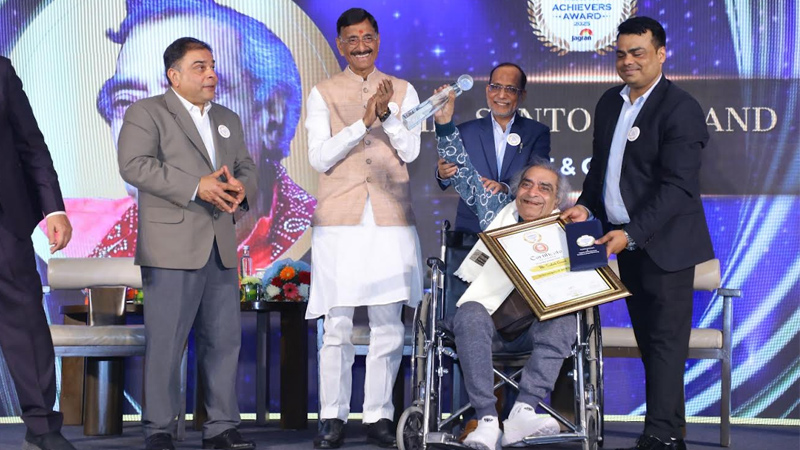
NEW DELHI: Hamdard Laboratories gathered a cross-section of India’s achievers in New Delhi on Friday, handing out the Hakeem Abdul Hameed Excellence Awards to figures who have left their mark across healthcare, education, sport, public service and the arts.
The ceremony, attended by minister of state for defence Sanjay Seth and senior officials from the ministry of Ayush, celebrated individuals whose work blends professional success with a sense of public purpose. It was as much a roll call of achievement as it was a reminder that influence is not measured only in profits or podiums, but in people reached and lives improved.
Among the headline awardees was Alakh Pandey, founder and chief executive of PhysicsWallah, recognised for turning affordable digital learning into a mass movement. On the sporting front, Arjuna Awardee and kabaddi player Sakshi Puniya was honoured for her contribution to the game and for pushing women’s participation onto bigger stages.
The cultural spotlight fell on veteran lyricist and poet Santosh Anand, whose songs have echoed across generations of Hindi cinema. At 97, Anand accepted the honour with characteristic humility, reflecting on a life shaped by perseverance and hope.
Healthcare honours spanned both modern and traditional systems. Manoj N. Nesari was recognised for strengthening Ayurveda’s place in national and global health frameworks. Padma shri Mohammed Abdul Waheed was honoured for his research-backed work in Unani medicine, while padma shri Mohsin Wali received recognition for his long-standing contribution to patient-centred care.
Education and social development also featured prominently. Padma shri Zahir Ishaq Kazi was honoured for decades of work in education, while former Meghalaya superintendent of Police T. C. Chacko was recognised for public service. Goonj founder Anshu Gupta received an award for his dignity-centred rural development initiatives, and the Hunar Shakti Foundation was honoured for empowering women and young girls through skill development.
The Lifetime Achievement Award went to former IAS officer Shailaja Chandra for her long career in public healthcare and governance, particularly in the traditional systems under Ayush.
Speaking at the event, Hamdard chairman Abdul Majeed said the awards were a tribute to those who combine excellence with empathy. “These awardees reflect Hakeem Sahib’s belief that healthcare, education and public service must ultimately serve humanity,” he said.
Minister Seth struck a forward-looking note, saying India’s young population gives the country a unique opportunity to become a global destination for learning, health and wellness by 2047.
The ceremony also featured the trailer launch of Unani Ki Kahaani, an upcoming documentary starring actor Jim Sarbh, set to premiere on Discovery on 11 February.
Instituted in memory of Unani scholar and educationist Hakeem Abdul Hameed, the awards have grown into a national platform that celebrates those building a more inclusive and resilient India. For one evening at least, the spotlight was not just on success, but on service with substance.







