News Broadcasting
TRAI ad cap: Why news channels want concessions?

MUMBAI: News channels have been rather miffed with TRAI’s ruling that advertising air time should be restricted to just 12 minutes per hour. And they have been seeking some succor from government. Two weeks ago they got a lifeline when the Telecom Disputes Settlement Appellate Tribunal (TDSAT) allowed them to appeal against the TRAI mandate.
And apparently, if sources are to be believed that appeal was filed with the TDSAT today, the hearing for which will be on 19 September.

“In a democracy you have the legal right to approach the court against injustice and that is what we are doing,” says one of the broadcasters who wished to remain unnamed.
Certain issues that news providers are grappling with are high carriage fees, falling advertising revenues, an unfavourable economy and low subscription rates. These have already nearly crippled the broadcast news industry with all of them being forced to cut back ad time per hour to 20 minutes from 1 July.
Those in the know say the News Broadcasters Association (NBA) perspective is that other genres can cope with the ad restriction better because their shows are pre-produced. News-based and news-oriented shows which are live are unpredictable.
“In news, generally there are discussions. What will we do if a discussion ends a minute early or a minute late?” asks the news broadcasting executive. “Sometimes, news channels cover incidents without even a break. In such cases, it puts a lot of strain on news channels as they either violate the rule or fall short of fulfilling it. Also in the case of natural disasters where death has occurred we find it difficult to carry advertising. And this could continue for days. What about the loss of air time then?”
Lowering of advertising air time will work better in a digitised cable TV universe, is the news broadcasters view, as substantial subscription revenues will kick in (most news channels run as free to air services now) and carriage fees will drop to almost zilch. But that is in the future, they say, as digitisation has still some way to go nationally and has happened in only a limited number of cities.
“We had asked TDSAT to phase it out in such a way that it comes into effect at the same time that digitisation takes place in the country,” says another broadcaster.
Sources indicate that TRAI is unlikely to relent on allowing any increases in air time as chairman Rahul Khullar is pretty clear that quality of services is something which is the regulator’s responsibility. But they add that one area where he may give concessions is when round the clock news reportage is forced upon news channels by natural or manmade disasters or events.
“We believe there has been an informal agreement with the TRAI agreeing to the news broadcasters’ demands that if they don’t consume the air time within the day because of live coverage they will be allowed to consume it in the next 24 hours,” says a source.”Now that has to be written into law.”
It’s over to the two Ts – TDSAT and TRAI – now.






News Broadcasting
CNN-News18 to host Fury in the Gulf conclave on West Asia crisis
Three-hour summit to unpack geopolitical fallout and impact on India
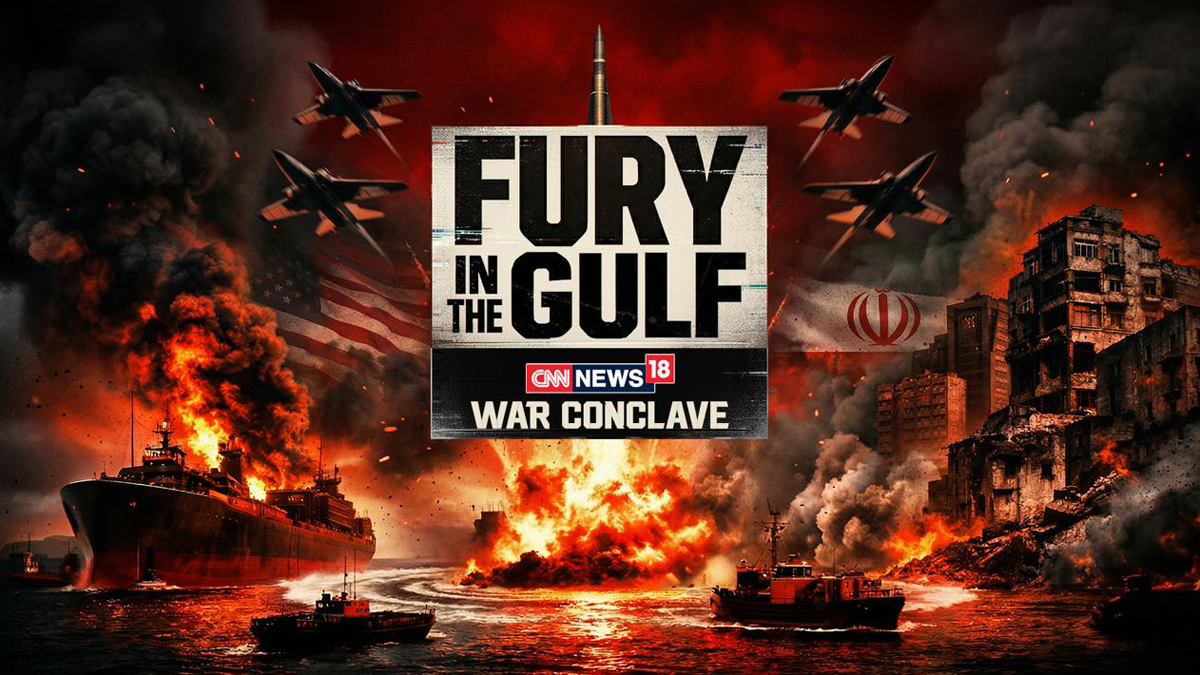
MUMBAI: CNN-News18 is set to host a special three-hour broadcast, Fury in the Gulf – War Conclave, on April 7, aiming to decode the escalating West Asia crisis and its far-reaching implications for India.
Scheduled from 4:00 PM to 7:00 PM, the conclave comes at a time when tensions between Iran and the United States are reshaping global geopolitics and triggering economic uncertainty. With India’s deep energy ties, trade links and large diaspora in the Gulf, the developments carry significant domestic relevance.
Built around the theme ‘Conflict, Consequences, and The Future,’ the programme will feature six curated sessions combining one-on-one interviews and panel discussions. The focus is to cut through the clutter and offer viewers a clearer understanding of the fast-evolving situation.
Key sessions include ‘Diplomacy in Times of War’ featuring Shashi Tharoor, and ‘World After the Iran Conflict’ with voices such as Ram Madhav, Reuven Azar, representatives from the European Union and the Iranian Deputy Envoy. Another session titled ‘Another Dunkirk?’ will bring together K. J. S. Dhillon and Jitin Prasada among others.
CNN-News18 editorial affairs director Rahul Shivshankar said, “In times of war, clarity becomes the most powerful tool. Fury in the Gulf – War Conclave brings together credible voices to address the questions and confusion that arise amid an overwhelming influx of information.”
He added that the initiative is aimed at delivering “facts, perspective, and insight” at a time when misinformation can easily cloud public understanding.
Echoing the sentiment, CNN-News18 CEO– English and business news Smriti Mehra said the conflict marks a defining global moment, with consequences that extend well beyond the region. She noted that the conclave seeks to present the crisis with “depth, nuance and responsibility” so audiences can better grasp its real-world impact.
As geopolitical tensions continue to dominate headlines, the conclave positions itself as an attempt to bring order to the noise, offering viewers a structured, insight-led look at a complex and rapidly shifting global situation.






