News Broadcasting
Total Sports Asia going mobile with WWE


MUMBAI: The recently launched integrated sports marketing company Total Sports Asia (TSA) is trying its level best to tap a growing revenue stream for entertainment products – The mobile.
The company has signed a deal with a major Indian content provider for mobile telephony rights for World Wrestling Entertainment (WWE).
TSA is the WWE Asian representative for television distribution, licensing, merchandising and event management. Speaking to indiantelevision.com Total Sports & Entertainment India MD, Indian Subcontinent and Middle East Navneet Sharma said, “An official announcement of the deal will be made in about a month’s time. Our partner will negotiate deals with all the service providers whether it is hutch or Airtel. Customers, for a fee, will be able to download wallpaper, text news headlines ringtones and ringback tones. As of now we have not decided as to when we will also offer audio and video services. This will depend on the available bandwith. The deal will work in the form of a minimum gurantee along with revenue sharing.”

Sharma added that the company was adopting a 360 degree approach to pushing and marketing the WWE. It has also signed a deal with Weekender for a line of apparel. “Since WWE is synonymous with finely sculpted physiques, health food brands see a big opportunity here. We are talking to several parties in this category. In this way we have been able to segementalise the different categories. In the watch category we have a deal with Impact Promotions. WWE has an enormous cachet in India when you examine the fact that it gets highest TRPs in sports after cricket.”
One major deal that is already in place is with Ultra for VCDs. Sharma added that TSA is hoping to bring down the WWE to India early next year. As far as other sports are concerned it is also looking at organising running events like marathons in the country early next year. For this purpose it is talking to major FMCGs to come on board as partners and sponsors.
This sounds like a sound move. It may be recalled that the Mumbai Marathon (sponsored by Standard Chartered) in January drew an excellent response. The profile of the marathon in India has risen a great deal as the Mumbai marathon saw celebrities and people in the public limelight like Anil Ambani taking part and treating it as a serious part of their lives.
TSA is also into television distribution of different sports. It will appoint a head for TV distribution for the Indian subcontinent next month. Sharma added that one property that they are looking at pitching to the likes of Star, Sony and Zee in a big way is Latin American soccer. That is because it has a deal with Traffic Sports which virtually owns Latin American football.
“We would be looking to market World Cup qualifying matches in Latin America. We also see an opportunity to work with new channels that are coming up and which will be looking for content (read Zee Sports). We will also approach regional channels.”




News Broadcasting
CNN-News18 to host Fury in the Gulf conclave on West Asia crisis
Three-hour summit to unpack geopolitical fallout and impact on India
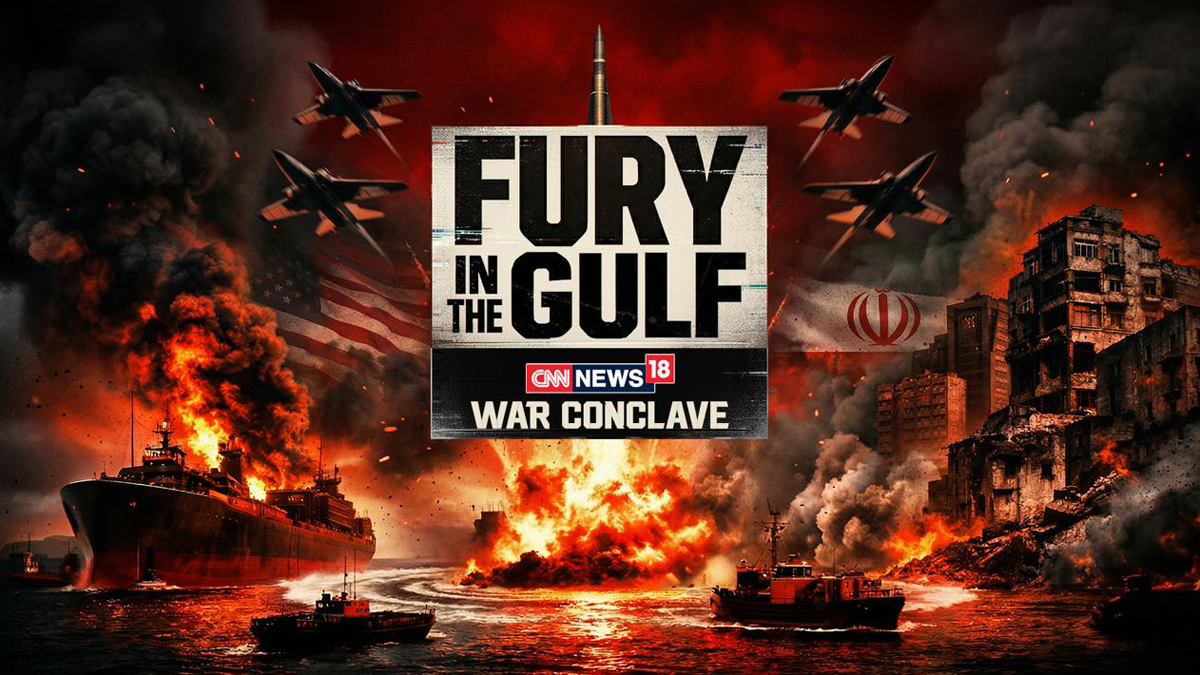
MUMBAI: CNN-News18 is set to host a special three-hour broadcast, Fury in the Gulf – War Conclave, on April 7, aiming to decode the escalating West Asia crisis and its far-reaching implications for India.
Scheduled from 4:00 PM to 7:00 PM, the conclave comes at a time when tensions between Iran and the United States are reshaping global geopolitics and triggering economic uncertainty. With India’s deep energy ties, trade links and large diaspora in the Gulf, the developments carry significant domestic relevance.
Built around the theme ‘Conflict, Consequences, and The Future,’ the programme will feature six curated sessions combining one-on-one interviews and panel discussions. The focus is to cut through the clutter and offer viewers a clearer understanding of the fast-evolving situation.
Key sessions include ‘Diplomacy in Times of War’ featuring Shashi Tharoor, and ‘World After the Iran Conflict’ with voices such as Ram Madhav, Reuven Azar, representatives from the European Union and the Iranian Deputy Envoy. Another session titled ‘Another Dunkirk?’ will bring together K. J. S. Dhillon and Jitin Prasada among others.
CNN-News18 editorial affairs director Rahul Shivshankar said, “In times of war, clarity becomes the most powerful tool. Fury in the Gulf – War Conclave brings together credible voices to address the questions and confusion that arise amid an overwhelming influx of information.”
He added that the initiative is aimed at delivering “facts, perspective, and insight” at a time when misinformation can easily cloud public understanding.
Echoing the sentiment, CNN-News18 CEO– English and business news Smriti Mehra said the conflict marks a defining global moment, with consequences that extend well beyond the region. She noted that the conclave seeks to present the crisis with “depth, nuance and responsibility” so audiences can better grasp its real-world impact.
As geopolitical tensions continue to dominate headlines, the conclave positions itself as an attempt to bring order to the noise, offering viewers a structured, insight-led look at a complex and rapidly shifting global situation.






