News Broadcasting
Total Number Of Frequencies That An Entity May Hold: Containing Monopoly

The total number of frequencies that an entity may hold, directly or indirectly, nationally in each phase should not be more than 25 per cent of the total number of frequencies being tendered during the phase. The bidder should at the time of submitting a bid furnish a declaration to the effect that it shall not accept bids for more than 25 per cent of the frequencies offered in any phase.
An undertaking should be said to be in a dominant position, if it holds more than 25 per cent of the total operationalised licenses in the country and in the event of abuse of dominance by such dominant undertakings, the Government or the regulator, as the case may be, should have the power to order the sale of the licenses, through a tender process, to other undertakings that are not connected in any manner whatsoever, with any dominant undertaking. This condition of reserving the right of the Government or the regulator (as the case may be) to break up a monopoly should be part of the tender documents so as to minimize the chances of litigation.

The content plan for each separate frequency at the same center being bid for, by the same bidder must be different to ensure wider availability of choices to the listeners.
The licensees would neither be permitted to network among the multiple channels in one center, nor would they be allowed to network with another licensee in the same center.
Each license should constitute a separate undertaking and licensees should maintain separate accounts for each frequency allocated to them. It should be the endeavour of each licensee to properly segment the expenditure with reference to each license in accordance with the applicable accounting standards or guidelines issued by Institute of Chartered Accountants of India.


News Broadcasting
Kamlesh Singh receives Haldi Ghati Award from MMCF
India Today Group editor honoured for three decades of journalism at Udaipur ceremony.
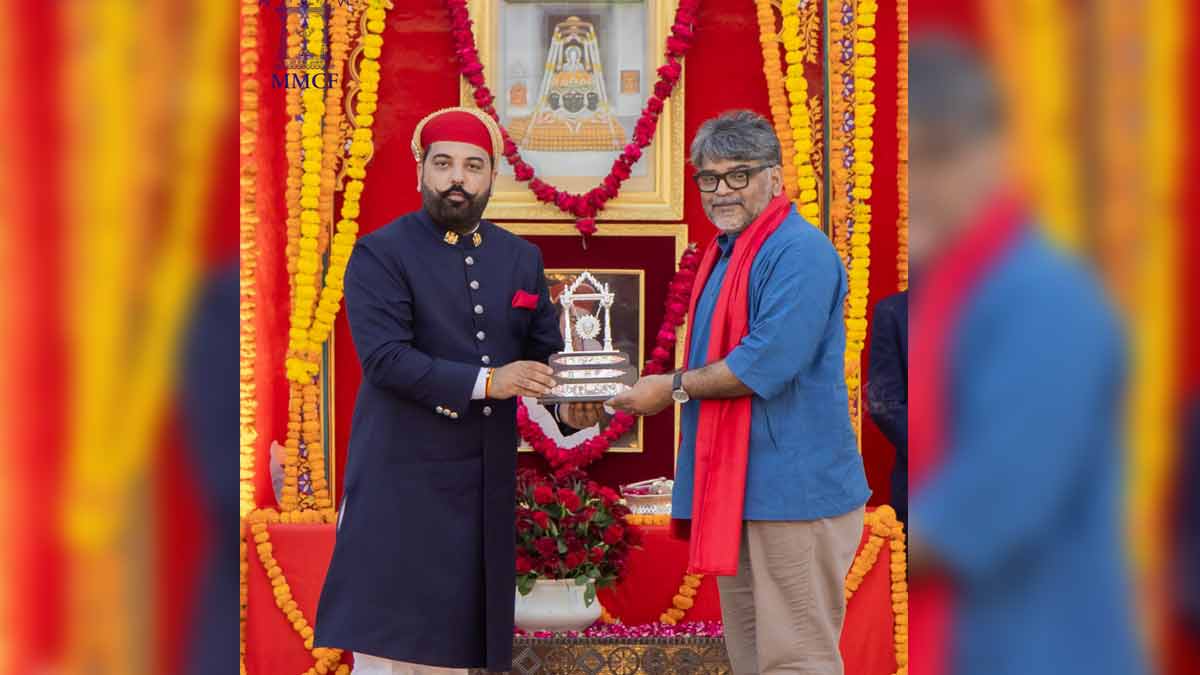
MUMBAI- Kamlesh Singh just turned a lifetime of sharp words into a shiny shield because when journalism wakes up a society, even the Maharana of Mewar wants to pin a medal on it.
The Maharana of Mewar Charitable Foundation (MMCF) conferred its prestigious Haldi Ghati Award on Kamlesh Singh, a senior editor at the India Today Group, during a ceremony in Udaipur on 15 March 2026. The national award, instituted in 1981-82, recognises “work of permanent value that initiates an awakening in society through the medium of journalism.”
Singh, who leads several editorial initiatives including Aaj Tak Radio, the Teen Taal community and The Lallantop, was presented the honour by Lakshyaraj Singh Mewar, Managing Trustee of MMCF. The citation highlighted his three decades of contributions to Indian media, innovations in digital journalism, mentoring young reporters, and his popular podcast persona “Tau” on Teen Taal, which fosters thoughtful public discourse.
The Haldi Ghati Award, named after the historic Battle of Haldighati symbolising valour and resilience, is one of four national awards given annually by MMCF. Past recipients include Tavleen Singh, Piyush Pandey and Raj Chengappa.
Other honourees this year included Padma Vibhushan Pt Hari Prasad Chaurasia, Vedamurti Devvrat Rekhe, Treeman of India Marimuthu Yoganathan, Vir Chakra Capt Rizwan Malik, and US-based researcher Molly Emma Aitken, who received the Colonel James Tod Award for contributions to understanding Mewar’s spirit and values.
In an era where headlines often shout louder than substance, the MMCF quietly reminded everyone that real journalism isn’t about noise, it’s about the quiet, persistent work that stirs society awake, one thoughtful story at a time.







