International
Top five shark movies ahead of Meg 2: The Trench, as per IMDb

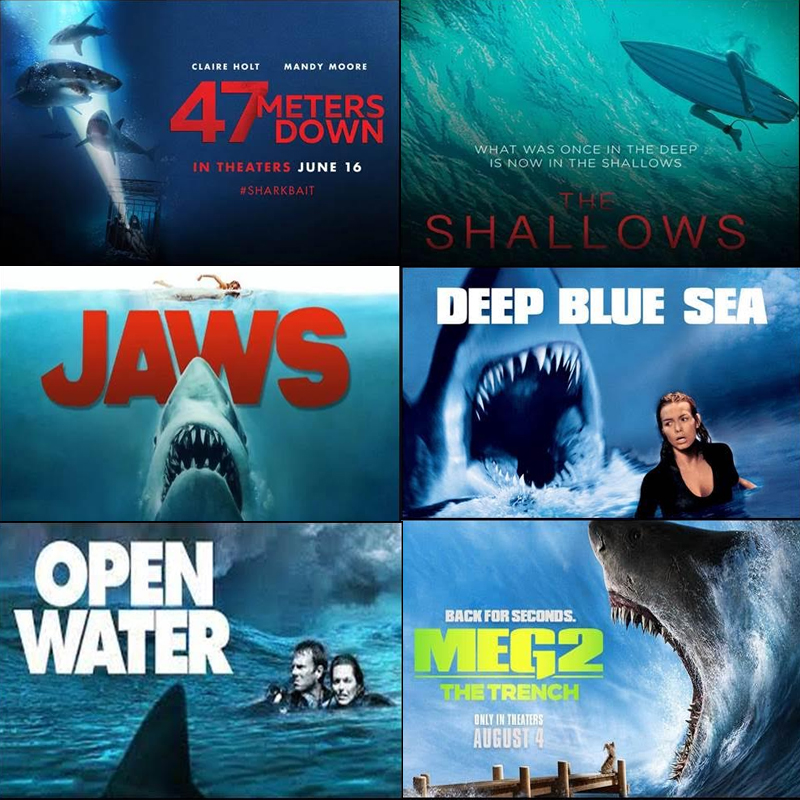
Mumbai: One of the greatest fears of beachgoers has always been that of being attacked by a huge white shark. It doesn’t help that these deadly predators can be found swimming the coastal waters of practically all major oceans. But, despite our fear of great whites, we can’t help but be fascinated by them. Franchises centred around these creatures such as Jaws and The Meg have been highly successful at the global box office. The Meg which released in 2018 created quite the stir and was widely praised by audiences and critics. The makers are now back with its sequel Meg 2: The Trench that can be watched this Friday onwards at your nearest PVR INOX cinemas. Ahead of its launch, here are five top rated thriller shark films to watch based on IMDb ratings.
1. Jaws (1975) – rated 8.1 on IMDb
One can say that Steven Spielberg’s Jaws is the OG shark film, the one that started our unending fascination around sharks. Everyone knows the film Jaws, but do you know it’s based on a novel? Adapted from author Peter Benchley’s bestseller by the same name, Jaws is centred on the series of shark attacks that occurred off the coast of New Jersey which drove a police officer, a marine biologist and a fisherman into a terrifying shark hunt.

2. Shallows – rated 6.3 on IMDb
Imagine being in the jaws of death despite safety being just a few meters away. This is the story of Shallows, starring Blake Lively as Nancy Adams. Post her mother’s demise, Nancy travels to a secluded beach to surf in peace but soon comes face to face with death. Stranded on a rock, her short but horrifying escape to safety will have you anxiously biting your nails.
3. Deep Blue Sea (1999) – rated 5.9 on IMDb
People say old is gold and we agree! 1999’s Deep Blue Sea is unique, even in its time, for combining the danger of genetic engineering with shark attacks. The story follows an Alzheimer’s study gone wrong when a group of researchers, in their quest for developing a cure, end up being hunted by the sharks they altered genetically during their experiments. Well, there’s a reason why you shouldn’t mess with mother nature.
4. Open Water – rated 5.8 on IMDb
A horror thriller becomes scarier when it’s based on true events and Open Water is one such film. It’s based on the tragic disappearance of Thomas and Eileen Lonergan who vanished while scuba diving and are speculated to have succumbed to a shark attack in the open waters. The film imagines the turmoil they may have faced, stranded in the middle of nowhere.
5. 47 Meters Down – rated 5.6 on IMDb
This film will drill aquaphobia, claustrophobia and galeophobia (fear of sharks) into your minds. It may also make you paranoid on vacations. The film follows two sister’s fight for survival on their vacation. Trapped in a shark cage at the bottom of the ocean with just an hour’s worth of oxygen and hungry circling sharks, the sisters must find a way to swim to the surface alive and in one piece.
6. Meg 2: The Trench (releasing on 4 August 2023)
If you haven’t watched the trailer already, please do so a glimpse of the fiercely entertaining upcoming sci-fi thriller Meg 2: The Trench. The film further explores an ancient behemoth shark, The Megalodon and its hold over the food chain, both on and offshore. Jonas Taylor (Jason Statham) and his team are once again thrown into mortal peril as they try to outrun the ace predator they are trying to study and also a few more ancient giants.

International
Russia-India cinematic spectacle Persimmon of My Love set for grand Moscow debut
Hindi cinema style musical revives Indo-Soviet cinema ties for today

MUMBAI: A new chapter in cross-border storytelling is set to unfold as Persimmon of My Love gears up for its premiere in Moscow on 1 April 2026, marking the first large-scale cinematic collaboration between Russia and India in decades.
Positioned as a modern nod to the cultural exchange that once brought Indian classics to Soviet audiences, the film blends Hindi cinema flair with Russian storytelling, aiming to rekindle a long-standing cinematic friendship.
Directed by Marius Weisberg, the musical comedy follows two brothers navigating a lively world of music, family and romance. The lead roles are played by Demis Karibidis and Mikhail Galustyan, with Karibidis also contributing as a screenwriter.
Shot entirely in India, the production leans heavily into Hindi cinema style spectacle. Filming took place across Mumbai studios and the cities of Udaipur and Jodhpur, whose architecture was used to create the fictional setting of Khurmada. A crew of over 350 worked on the project, with large-scale sequences featuring up to 1,000 extras.
The film also brings Indian creative talent into the mix. Dance sequences are choreographed by Jay Kumar, while music by Zurab Matua features songs in both Hindi and Russian, adding to its cross-cultural appeal.
Backed by TNT channel, MyWayStudio and the Russian Cinema Fund, the project reflects a broader push to strengthen cultural ties between the two countries.
With its mix of colour, comedy and cross-border collaboration, Persimmon of My Love is not just a film release but a reminder that cinema, much like music, travels well across borders.






