Hindi
Today, entertainment is finally about business: Manmohan Shetty


MUMBAI: Even as the Indian Merchants Chamber (IMC) gears up for the third edition of its ‘IMC FUSION’ under the auspices of its Entertainment Committee, for the first time, the committee will be chaired by film producer-entrepreneur Manmohan Shetty.
Apparently, Shetty was egged on by good friend and construction magnate Niranjan Hiranandani to accept the position. In a candid chat with indiantelevision.com, he spoke of what the conference would be all about this time…

Congratulations on your appointment as chair of IMS FUSION 2014. What will be your prime focus as far as the entertainment industry is concerned?
This time, we are focusing on two aspects of the entertainment industry. One being the business aspect and the other one being the technology used in entertainment. We have invited Tamil superstar Rajinikanth’s daughter, Soundarya and Dr Murali, who will talk about the technology deployed in creating stunning visuals in their upcoming film Kochadaiiyaan.
Please elaborate on the business aspect the conference will be touching upon. Who will be talking about the business of entertainment at the conference?
Today, entertainment is finally about business. Big stars are turning producers because they are not only inclined creatively but also want to ensure their movie does good business. I would say the business aspect is more important than the creative aspect. Even students graduating out of film schools like Whistling Woods and others are ultimately looking to make money and do good business.
Answering the second part of your question, we have invited Mukesh Bhatt to expound on the business aspect of entertainment. He will deliberate on how it is possible to make a small-budget film and still reap profits from it. After the success of Vishesh Films’ Aashiqui 2, I think he is the best person to speak on this subject (smiles).
This time, IMS FUSION has tied up with IES Management College and Research Centre. What do you intend to achieve through this collaboration?
The intention is to have a greater interaction with students. We have also invited students of cinema and media. To interact with them, we have invited captains of industry who will share their experiences and insights with them. We believe this will be fruitful for those who want to make a career in the entertainment industry.
Last but not the least, what is the one thing you intend to achieve as chair this year?
I feel people are rather private and personal in this industry. For every production company churning out films through the year, there are many which are unable to produce the same number of movies. So, what kind of talent goes into making commercially viable or financially viable films or any other financially viable projects? I want this information to be disseminated which can happen either by reading or listening to people who’ve already been there, done that… I will be happy if such information is passed on by people who have the knowledge and experience to rank newcomers who will be soon entering the industry. If that happens through IMC FUSION, I will be happy.


Hindi
Zee5 and Applause Entertainment team up for whodunnit ‘Everybody Loves Sohrab Handa’
Rajat Kapoor directs star-studded murder mystery streaming from 10 April.
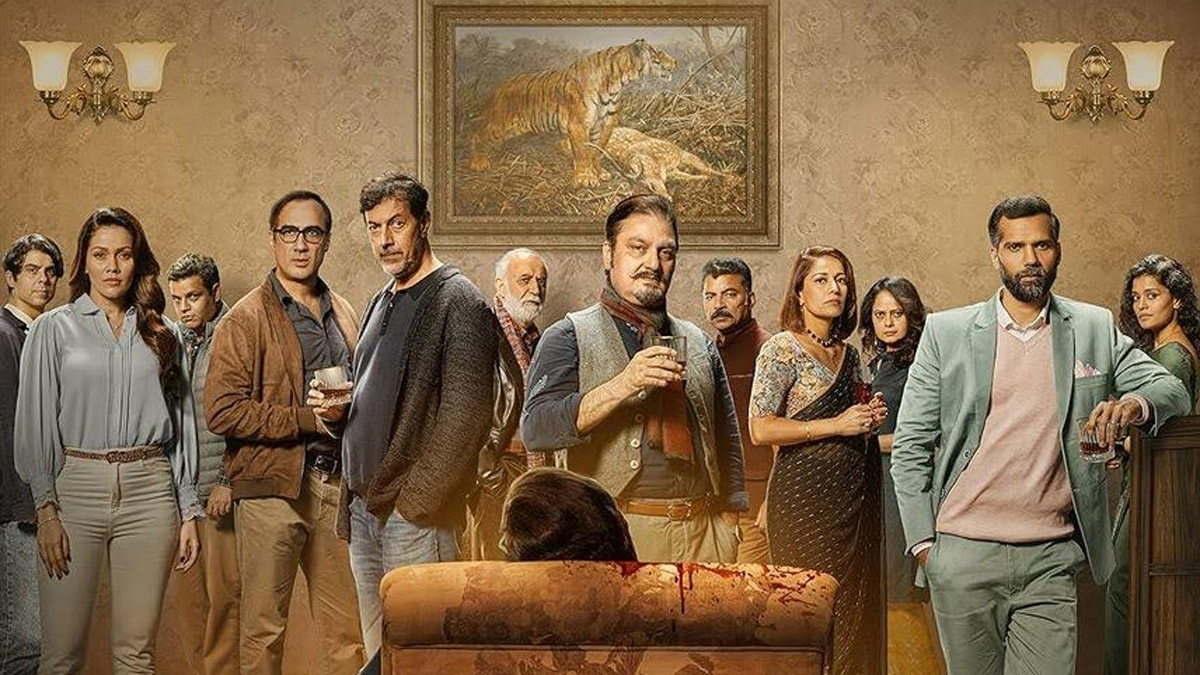
MUMBAI: Zee5 is serving up another killer collaboration and this time, the murder mystery comes with a generous side of dark humour and family dysfunction. The streaming platform has partnered with Applause Entertainment and Mithya Talkies to bring Everybody Loves Sohrab Handa, a fresh, twisted whodunnit written and directed by acclaimed filmmaker and actor Rajat Kapoor. The film will stream exclusively on Hindi Zee5 from 10 April.
The movie reimagines the classic murder mystery genre with a contemporary, darkly comic edge. It revolves around a group of friends and family who smile, drink, and celebrate together until the silence snaps and long-buried secrets spill out. The stellar ensemble cast includes Vinay Pathak, Ranvir Shorey, Waluscha De Sousa, Saurabh Shukla, Chandrachoor Rai, Neil Bhoopalam, Koel Purie, Palomi Ghosh, and Rajat Kapoor himself.
This latest offering continues the successful partnership between Zee5 and Applause Entertainment, which has previously delivered diverse hits such as Mithya, Bloody Brothers, and Jab Khuli Kitaab.
&TV Business Head of hindi Zee5 and chief channel officer Kaveri Das said, “Our collaboration with Applause Entertainment has consistently delivered distinct, high-impact storytelling. Everybody Loves Sohrab Handa is a natural progression, reinforcing our focus on genre-led content with a compelling whodunnit premise and a strong ensemble cast.”
Applause Entertainment business head for movies Sunil Chainani added, “This film adds yet another compelling layer to our slate with Rajat Kapoor’s unmistakable voice.”
Rajat Kapoor shared, “What interested me was not just the mechanics of a whodunnit, but the emotional violence that precedes physical violence. These are people who smile at each other, but there’s so much that is not said.”
The film promises razor-sharp writing, layered performances, and simmering tension, inviting viewers not just to solve the crime but to unravel the complex relationships at its heart.
If you love a good murder mystery served with wit and emotional depth, Everybody Loves Sohrab Handa looks set to be your next addictive watch. Mark your calendars, the whodunnit drops on Hindi Zee5 from 10 April.






