Cable TV
Time Warner’s operating income for first quarter rises 10 per cent

MUMBAI: Media conglomerate Time Warner has reported financial results for the first quarter ended 31 March 2005.
Operating income climbed by 10 per cent to $1.8 billion. Net debt totalled $15.1 billion, down $1.1 billion from $16.2 billion at the end of 2004.
The growth in operating income was driven by increases at the Cable, AOL and Networks segments, as well as lower corporate expenses. Cash provided by operations totalled $1.9 billion, and free cash flow grew to $1.2 billion. Revenue rose by three per cent to $10.5 billion.

The Networks segement (Turner Broadcasting, HBO and The WB Network) saw revenues increase by four per cent to $2.3 billion. This reflects growth in subscription and ad revenues. Subscription revenues rose by nine per cent due mainly to higher rates and increased subscribers at both Turner and HBO.
Time Warner Cable managed 10.9 million basic video cable subscribers, which included nearly 1.6 million subscribers in unconsolidated joint ventures. Basic video cable subscribers increased 26,000 since the end of the fourth quarter of 2004. Digital video subscribers rose 103,000 over the previous quarter for a total of 4.9 million, which represented 45 per cent of basic video cable subscribers.
In the same period, Digital Video Recorder subscribers climbed by 136,000 to 998,000 subscribers, and Subscription Video On Demand subscribers grew by 108,000 to more than 1.6 million subscribers.
Film Division Struggles: On the flip side revenues from movies increased by just one per cent by $27 million to $3.0 billion, due to growth at Warner Bros. from such home video releases as Harry Potter and the Prisoner of Azkaban and Troy and higher international television revenues.
Offsetting this growth were difficult comparisons to the prior-year quarter. This included revenues related to the third-cycle syndication of Seinfeld, as well as the theatrical results of Warner Bros.’ The Last Samurai and New Line’s blockbuster The Lord of the Rings: The Return of the King.
Time Warner chairman and CEO Dick Parsons said, “I am pleased that our businesses delivered such a solid performance this quarter — underscoring our broad-based strength and the success of our strategy to run our businesses as best in class. Driven by growth across our Cable, AOL and Networks segments, these results, particularly our substantial Free Cash Flow generation, give us a great start to meeting our full-year financial objectives.
“As we continue to move our businesses forward, our pending acquisition of Adelphia’s assets gives us a unique opportunity to grow our company in a disciplined way. Time Warner Cable’s robust growth this quarter in high-speed data and Digital Phone subscribers, as well as its strong showing in enhanced digital video services, reinforces our confidence in the cable industry’s promising future. With our progress on these and other fronts, we have positioned Time Warner strategically, operationally and financially for sustained, superior growth and improved shareholder returns.”
Time Warner pocketed $940 million in the quarter from the sale of its Google stock, bringing the company’s total payout from its investment in the flourishing search engine giant to $1.1 billion. Time Warner used the proceeds to pare debt.
Media analysts were quoted in reports saying that they were impressed with solid subscriber gains in the company’s cable operations and signs that the online advertising boom generally is helping to offset deepening subscriber losses at AOL.




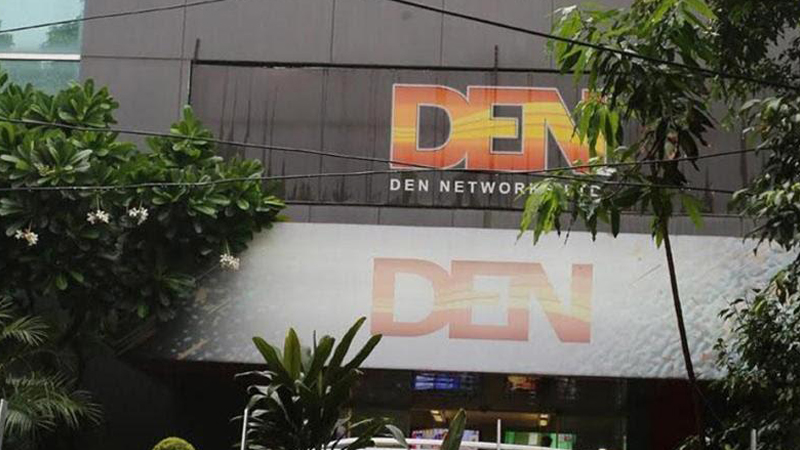
MUMBAI: When margins wobble, liquidity talks and in Q3 FY25-26, cash did most of the talking. Den Networks Limited closed the December quarter with consolidated revenue of Rs.251 crore, marginally higher than the previous quarter but down 4 per cent year-on-year, even as profitability stayed resilient on the back of strong cash reserves and disciplined cost control.
Subscription income softened to Rs.98 crore, slipping 3 per cent sequentially and 14 per cent from last year, while placement and marketing income offered some cheer, rising 15 per cent quarter-on-quarter to Rs.148 crore. Total costs climbed faster than revenue, up 7 per cent QoQ to Rs.238 crore, driven largely by higher content costs and operating expenses. As a result, EBITDA dropped sharply to Rs.13 crore from Rs.19 crore in Q2 and Rs.28 crore a year ago, pulling margins down to 5 per cent.
Yet, the bottom line refused to blink. Profit after tax stood at Rs.40 crore, up 15 per cent sequentially and only marginally lower than last year’s Rs.42 crore. A healthy Rs.57 crore in other income helped cushion operating pressure, keeping profit before tax at Rs.48 crore, broadly stable quarter-on-quarter despite the tougher cost environment.
The real headline-grabber, however, sits on the balance sheet. The company remains debt-free, with cash and cash equivalents swelling to Rs.3,279 crore as of December 31, 2025. Net worth rose to Rs.3,748 crore, while online collections accounted for 97 per cent of total receipts, underscoring strong cash discipline across operations, including subsidiaries.
In short, while Q3 showed signs of operating strain, the financial backbone remains solid. With zero gross debt, steady profits and a formidable cash war chest, the company enters the next quarter with flexibility firmly on its side proving that in uncertain markets, balance sheet strength can be the best growth strategy.






