News Headline
Three years after post fell vacant, UR Rao is Prasar Bharati chairman

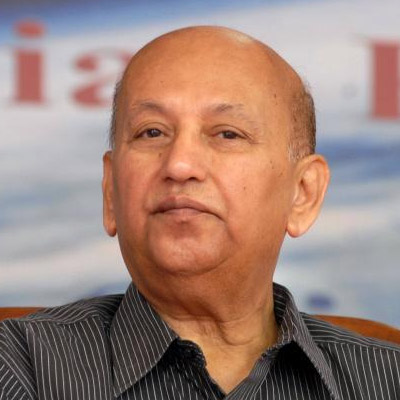
Prasar Bharati has a chairman again, after a gap of three years.
Prof UR Rao, former chief of the Indian Space Research Organisation (ISRO), took over as the head of the pubcaster late last week. The post had been lying vacant since the demise of eminent journalist Nikhil Chakravarty, who passed away in July 1998. Chakravarty had taken over the reins of the fledgling Prasar Bharati in 1997, when it was entrusted with the modalities of granting autonomy to the state-run All India Radio and Doordarshan.
Getting down to business almost immediately, Rao, who is an acknowledged expert in the field of satellite technology, announced yesterday that state run Doordarshan would provide uplinking facilities to private television channels, opening up new revenue streams for the national broadcaster. The proposal comes in the wake of anticipated policy changes from the government allowing private channels to have uplinking facilities from the country.

Rao, who was previously a part-time member on the Prasar Bharati Board, also said the corporation was trying to shut down DD channels that were not doing very well. Rao said at least two channels, which he did not name, would definitely be closed down. An internal analysis was going on and channels, whose “reach is not high” will have to go off the air, Rao has been quoted as saying.
Rao, who started his career as a cosmic ray scientist at MIT, has carried out extensive work in high energy astronomy and has published over 250 scientific and technical papers in various journals. Convinced of the imperative need to use space technology for rapid development, Rao took responsibility for the establishment of satellite technology in India and guided the design, fabrication and launch of the first Indian satellite ‘Aryabhata’ in 1975. Prof. Rao and his team followed this with the launch of two experimental remote sensing satellites, Bhaskara-1 and Bhaskara-11, the first experimental geostationary communication satellite APPLE, two Rohini satellites on India’s launch vehicle SLV-3, the INSAT-1 series of four satellites (revolutionising the communication scenario in the country) and IRS-1A and 1B, two state-of-art remote sensing satellites. These have since been followed by the launch of INSAT-2A and 2B, IRS-1C and 1D.
Prof Rao became chairman, Space Commission and secretary, Department of Space in 1984, and during a decade when he also enjoyed tenure as chairman of the Indian Space Research Organisation (ISRO), was responsible for accelerating the development of rocket technology within India for launching satellites into low Earth, polar and geostationary orbits. During this time he was also vice-president of the International Astronautical Federation (IAF) where he stimulated initiatives in promoting the use of space technology in developing countries.
The development and deployment of the INSATs have initiated a total communication revolution in India, providing human connectivity even to the remotest corners of India, through business communication, emergency communication, nation-wide radio networking, information networking services and rural telegraphy.
His predecessor at Prasar Bharati, Nikhil Chakravarty, on the other hand, was a media personality in his own right, though not as technology-savvy.
As founding editor of Mainstream, the journal whose gloss was in its deliberative content rather than on its cover, he expressed the insights that come from quiet contemplation of serious themes.





NEW DELHI: Hamdard Laboratories gathered a cross-section of India’s achievers in New Delhi on Friday, handing out the Hakeem Abdul Hameed Excellence Awards to figures who have left their mark across healthcare, education, sport, public service and the arts.
The ceremony, attended by minister of state for defence Sanjay Seth and senior officials from the ministry of Ayush, celebrated individuals whose work blends professional success with a sense of public purpose. It was as much a roll call of achievement as it was a reminder that influence is not measured only in profits or podiums, but in people reached and lives improved.
Among the headline awardees was Alakh Pandey, founder and chief executive of PhysicsWallah, recognised for turning affordable digital learning into a mass movement. On the sporting front, Arjuna Awardee and kabaddi player Sakshi Puniya was honoured for her contribution to the game and for pushing women’s participation onto bigger stages.
The cultural spotlight fell on veteran lyricist and poet Santosh Anand, whose songs have echoed across generations of Hindi cinema. At 97, Anand accepted the honour with characteristic humility, reflecting on a life shaped by perseverance and hope.
Healthcare honours spanned both modern and traditional systems. Manoj N. Nesari was recognised for strengthening Ayurveda’s place in national and global health frameworks. Padma shri Mohammed Abdul Waheed was honoured for his research-backed work in Unani medicine, while padma shri Mohsin Wali received recognition for his long-standing contribution to patient-centred care.
Education and social development also featured prominently. Padma shri Zahir Ishaq Kazi was honoured for decades of work in education, while former Meghalaya superintendent of Police T. C. Chacko was recognised for public service. Goonj founder Anshu Gupta received an award for his dignity-centred rural development initiatives, and the Hunar Shakti Foundation was honoured for empowering women and young girls through skill development.
The Lifetime Achievement Award went to former IAS officer Shailaja Chandra for her long career in public healthcare and governance, particularly in the traditional systems under Ayush.
Speaking at the event, Hamdard chairman Abdul Majeed said the awards were a tribute to those who combine excellence with empathy. “These awardees reflect Hakeem Sahib’s belief that healthcare, education and public service must ultimately serve humanity,” he said.
Minister Seth struck a forward-looking note, saying India’s young population gives the country a unique opportunity to become a global destination for learning, health and wellness by 2047.
The ceremony also featured the trailer launch of Unani Ki Kahaani, an upcoming documentary starring actor Jim Sarbh, set to premiere on Discovery on 11 February.
Instituted in memory of Unani scholar and educationist Hakeem Abdul Hameed, the awards have grown into a national platform that celebrates those building a more inclusive and resilient India. For one evening at least, the spotlight was not just on success, but on service with substance.







