News Broadcasting
There is a need for self-correcting mechanisms in media: Pranab Mukherjee

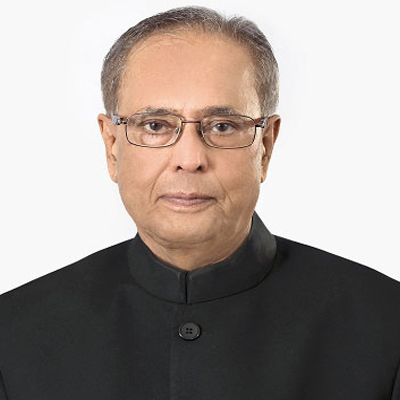
NEW DELHI: President Pranab Mukherjee today said there was need for self-correcting mechanisms to check ‘aberrations’ like the malaise of paid news in the media.
Inaugurating the Platinum Jubilee celebrations of the Indian Newspaper Society (INS), the President said, “It is distressing to note that some publications have resorted to “Paid News” and other such marketing strategies to drive their revenues.”

The temptation to “dumb down” news should also be resisted, he said, stressing that the nation faces critical challenges that go well beyond the pressure of ‘Breaking News’ and immediate headlines. While newspapers must continue to be effective raconteurs, they must also be visionary nation builders.
But he said India’s ‘vast, varied and vibrant media is a national asset and the media as a whole not only keeps people informed but also performs a very crucial function of presenting ideas and alternatives in the domain of policy formulation and implementation.’
The President said these are changing times and it is not possible for newspapers to be spared from the consequences of the evolution of ideas and the embrace of technology. It is essential for newspapers to be alive to the challenges of technology and to harness responsibly the opportunities that present themselves.
He said the influence, credibility and quality of the Indian media is well recognised. Newspapers must be keepers of the conscience of the country. They have to be active participants in the continuing endeavour to nurture a democratic republic committed to achieving justice and fundamental freedoms for all citizens. Journalists must bring to public notice the array of ills and deprivations that continue to beset large numbers of our people – be it malnourishment, continuance of discriminatory practices against sections of society, particularly dalits, or the burdens and tragic consequences of indebtedness. They must shape and influence public opinion even as they provide objective and balanced coverage of news.
He said the Indian Newspaper Society has over the years met the challenges of time even as it has represented the most influential of India’s newspapers and periodicals. “75 years ago, the world was a very different place. Newspapers of the time not only survived the shortages that war brought in its wake, but also engaged themselves in the difficult task of informing people of the momentous events of a contentious period in our history. It took resolve, vision and a sense of destiny on the part of the founding fathers to have formed a society that could take up issues of common interest for its members. INS members have played a vital role in nurturing a free Press which is a critical component of our democracy,” he added.
The President stressed that over the years, INS members have informed society and promoted debate on the important questions that confront the nation. “Be it the ravages wrought by war or those inflicted by the man-made Bengal famine, the trials and tribulations of a nation torn by partition or the building of modern day India, newspapers have played a crucial role in educating Indians and giving expression to the diversity of views in our society, upholding thereby the fundamental right to freedom of speech and expression,” he concluded.





News Broadcasting
UDF poised to return to power in Kerala, says Manorama-CVoter survey
Massive opinion poll projects shift in Kerala politics ahead of 2026 Assembly elections.
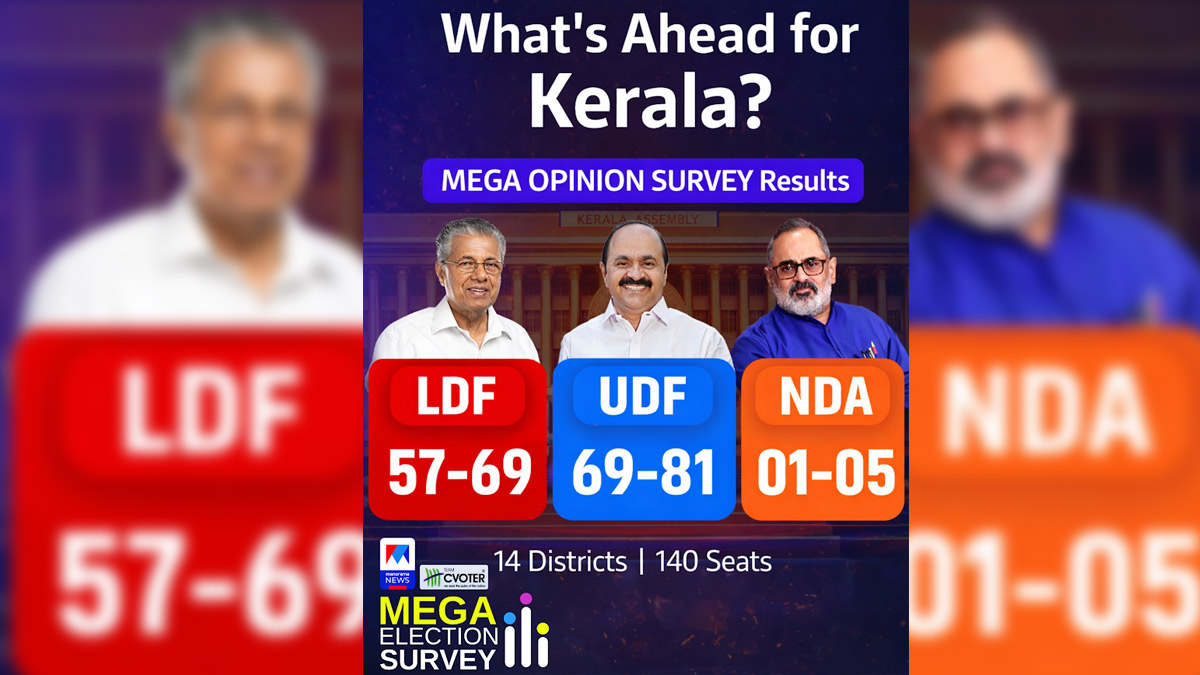
MUMBAI: The winds of change appear to be blowing through Kerala’s political landscape and this time, they seem to favour the United Democratic Front. A comprehensive mega opinion survey conducted by Manorama News in partnership with CVoter projects a potential comeback for the UDF in the upcoming Kerala Legislative Assembly Elections 2026. The survey, covering all 140 constituencies with a massive sample size of nearly 90,000 respondents, predicts the UDF could win between 69 and 81 seats.
The ruling Left Democratic Front (LDF) is expected to secure 57 to 69 seats, a significant drop from the 99 seats it won in the 2021 elections. This would mean the LDF losing 30 to 42 of its sitting seats. Meanwhile, the National Democratic Alliance (NDA), which drew a blank in 2021, is projected to open its account with 1 to 5 seats.
Region-wise, the UDF is expected to make strong gains in Malabar, winning 25 to 34 out of 48 seats, and in Central Kerala, where it could bag 29 to 33 out of 53 seats. In South Kerala, the LDF is likely to retain an edge with 21 to 25 seats, while the UDF may improve to 12 to 16 seats. The NDA could pick up 1 to 3 seats in the southern region.
The survey was conducted between 14 and 26 March 2026, with additional tracker and snap polls carried out from December 2025 to March 2026. A total of 89,693 respondents participated, ensuring representation across all demographics and social segments.
Manorama News has a strong track record of accuracy, with its previous projections closely matching the actual results of the 2019 and 2024 Lok Sabha elections as well as the 2021 Kerala Assembly polls.
In Kerala’s famously fierce political battles, this survey suggests the pendulum may be swinging back. Whether the final verdict matches these numbers or throws up another surprise, one thing is clear, the 2026 Assembly elections are shaping up to be one of the most keenly watched contests in the state’s history.






