Hindi
Theatres seek govt aid for re-opening; film producers observe global footfall trends

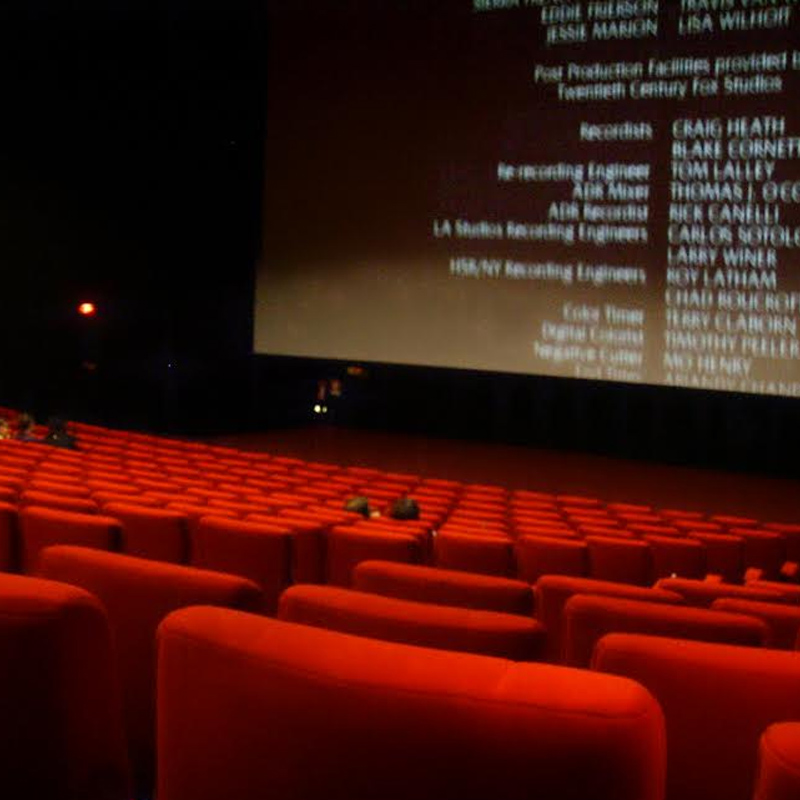
MUMBAI: Social distancing might continue to be the norm even when lockdowns are lifted completely. Theatre owners around the country are in planning mode to resume business as soon as the government gives permission. While Multiplex Association of India (MAI) has expressed displeasure over cinema halls not getting a place in the Unlock 2.0 phase. Producers, theatres owners, distributors and exhibitors are positive that movie theatres will be part of the unlock 3.0 phase which might happen in August.
In FICCI’s E-Frames virtual event, experts from the cinema industry discussed various topics ranging from how are exhibitors preparing for the new viewing experience? What are the changes and impact on distribution economics by virtue of an anticipated lower occupancy across halls, lack of content and challenges for OTT?
The panellists included Telugu film producer, distributor, exhibitor and studio owner Sureshbabu Daggubati, Inox Leisure Limited CEO Alok Tandon, Cinepolis India CEO Devang Sampat, Reliance Entertainment content, digital and gaming group CEO and CEO Shibashish Sarkar, Rathi Cinema film exhibitor and distributor Akshaye Rathi. The session was moderated by UFO Moviez joint MD Kapil Agarwal.

While speaking about the action plan and different planning methods, Sampat mentioned that Cinepolis is rigorously disinfecting auditoriums and washrooms and has completely stopped using paper tickets. Apart from that, it is working on contactless payment methods and QR codes. Cinepolis India has partnered with a company named Vista to create a software for social distancing within the auditorium.
He added, “Nearly 25 major cities in the world have started operating cinemas. Exhibition space is unlike any other retailer industry. We have different stakeholders with the government. Firstly, we will have to convince the government that we will not do anything that will harm us. We have also presented a detailed SOP document to the government which has been approved by the health ministry itself. We are just waiting for their nod to resume operations. I strongly see that cinema will be part of Unlock 3.0 which might happen in August.”
Considering the infrastructure of cinema, high cost and zero revenue from sale of ticket, food and beverage, advertising, the question arises that will this impact the liability of cinema industry?
Tandon said that due to the pandemic, all revenues have come to a grinding halt, whether it is the sale of tickets, food and beverage or even advertising. “The times are difficult, but the short aberration will not change the viability of the cinema business. All the challenges that cinema has faced in 100 years of existence we have come back smarter. It is a battle between apprehension and passion for cinema. I personally see the resurgence happening from Q3 onwards and apprehensions will settle, release dates will be back on track,” he said.
Another challenge before the exhibition industry is to grapple with the issue of less content. This might not be immediate, but this issue will arise when things resume as new production and postproduction are not happening. While the TV industry has resumed shooting, the film industry hasn’t.
According to Sureshbabu Daggubatti, both Hyderabad and Telangana government gave permission to resume shooting but full-fledged shoots didn’t happen because the crew and technicians are scared to come back on the set. He said that while the creativity quotient is removed from the films and people are scared about SOP measures it is difficult to come out with creative products. Film shooting involves a lot of conversation and discussion with actors, dancers and crew which will not be possible with the rule of 50 people and social distancing measures. He believes that there is no point in starting a film with just two actors in a scene or not doing a dance sequence or crowd scene. Due to this, the people who have started shooting also stopped it.
“After all the scenarios, even if I finish the film, when do I take it to the cinema? The government might talk about the reduced capacity in the auditorium. The question arises that will enough people come to the cinema hall? Will producers be able to recover the cost of the film? Will the actors and financiers take a financial cut when the film is released? If I am going to get a hit of 20 or 30 per cent on theatrical revenue, will I be able to take that burden? We are also waiting to see what other films will do when they come in July and August. Will they get 50 per cent of what they expected or where they will stand? All of this will take a lot of courage. We have to see if the curve is going up or down. South Korea is the country where the curve has flattened and people in Japan and Korea are disciplined, but Americans are not that disciplined. America is a very good case study; it is similar to India. So, are the collections going to be good or average that will help me to make the call whether I should release the film or not,” he further explained.
He also mentioned that the post-production work can only start a few months before people really decide to do the shooting. He is also of the opinion that even if good VFX work and dubbing is happening it will not give the end product. Daggubati suggests waiting for three months so that shooting can happen comfortably. Post this, movie theatres can open when there is good availability of content.
Daggubati quipped, “More scripts are getting ready, better planning is happening now. In the long run, I am very confident cinema will be back on track. If you go theatrical and then OTT, then the value of OTT falls drastically. So, this economic calculation is there in every producer’s mind. The government also needs to help. Wherever theatres have opened there is a reduction in VAT, GST and benefit from the government. They have to support us, especially in GST and power tariff for at least one year."
Rathi also said that there are a lot of things that will change post Covid2019 such as vendor-buyer relationships and collaborative work. He said, “To bring things together from talent, production, distribution and exhibitor we will have to demolish the linguistic barrier existing in the cinema.”
Shibashish concluded, “After South Korea, German cinemas opened up and according to the poll conducted 87 per cent of the people are satisfied by SOP measures. If cinema opens and we are able to strictly adhere to all rules and regulations people will get the confidence to come back to theatres. Because 60 to 70 per cent revenue of films come from theatres.”






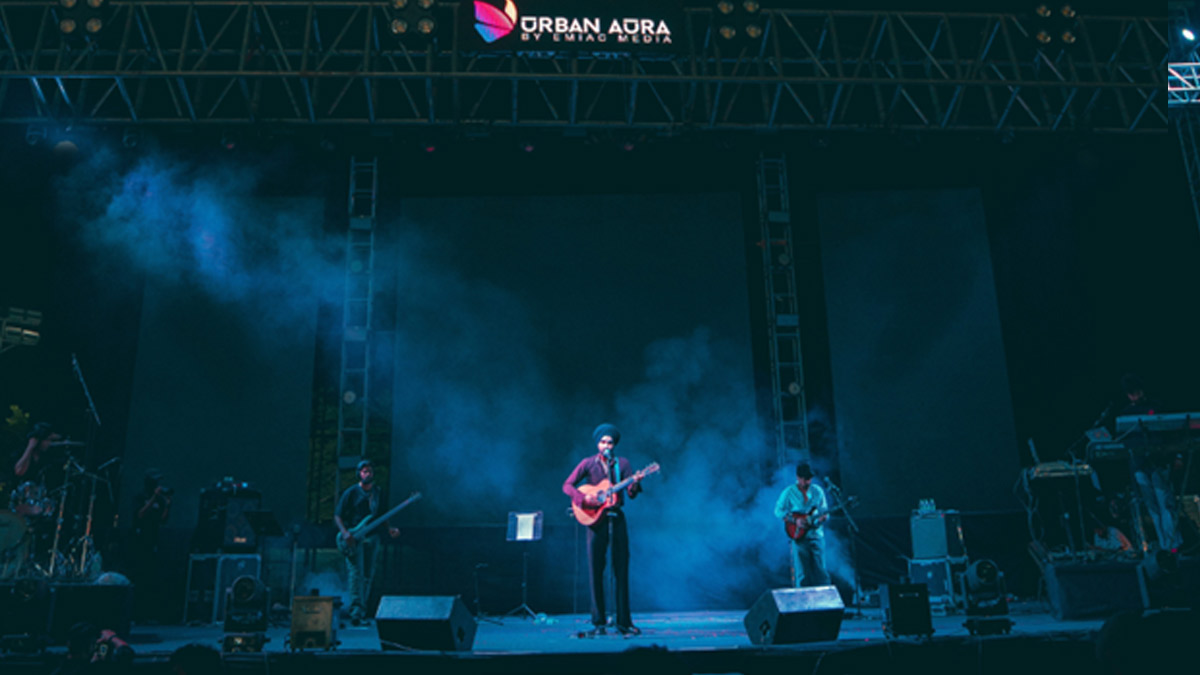
In a music industry that often rewards speed, spectacle, and instant recall, Navjot Ahuja’s journey feels refreshingly different. His story is not built on noise. It is built on patience, discipline, emotional honesty, and a quiet commitment to becoming better with every passing year. After 14 years of struggle, learning, performing, and writing, Navjot stands today as an artist whose success has not changed his centre. If anything, it has only made his purpose clearer.
For Navjot, music has never been about chasing fame alone. It has always been about expression. It is about writing more truthfully, singing more skillfully, understanding himself more deeply, and becoming a kinder human being in the process. That rare clarity is what gives his journey its beauty.
Where It All Began: A Writer Before a Singer
Indian singer and songwriter Navjot Ahuja’s musical journey began in the most familiar of places: school assemblies. But even then, what was growing inside him was not only the desire to sing. It was the need to write.
Long before he saw himself as a performer, he had already discovered the emotional release that writing offered him. For Navjot, words became the first true channel for feeling. Songwriting came before singing because writing was the only way he could let emotions flow through him fully. That inner pull shaped his artistic identity early on.
Like many young musicians, he sharpened his craft by creating renditions of popular songs.
Those experiments became his training ground. But the turning point came in 2012, when he wrote his first original song. That moment did not just mark the beginning of songwriting. It marked the beginning of self-definition.
A Calling He Did Not Chase, But Accepted
What makes the latest Indian singer-songwriter Navjot’s story especially compelling is the way he describes his relationship with music. He does not frame it as a career he aggressively pursued. In his own understanding, music was not something he chose. It was something that chose him.
There was a time when he imagined a very different future for himself. He wanted to become a successful engineer, like many young people shaped by ambition and conventional expectations. But life had a different script waiting for him. During his college years, around 2021, music entered his life professionally and began taking a firmer shape.
That shift was not driven by image-building or industry ambition. It came from acceptance. Navjot embraced the fact that music had claimed him in a way no other path could. That sense of surrender continues to define the artist he is today.
An Artist Guided by Instinct, Not Influence
Unlike many singers who speak openly about idols, icons, and musical role models, Navjot’s creative world is built differently. He does not believe his music comes from imitation or inherited influence. He listens inward.
He has never considered himself shaped by ideals in the traditional sense. In fact, he admits that he does not particularly enjoy listening to songs, especially his own. His decisions as a songwriter and singer come from instinct. He writes what feels right. He trusts what his inner voice tells him. He positions his music according to what he honestly believes in, not what trends demand.
That creative independence gives his work a distinct emotional sincerity. His songs do not feel calculated. They feel alive.
The Long Years of Invisible Struggle
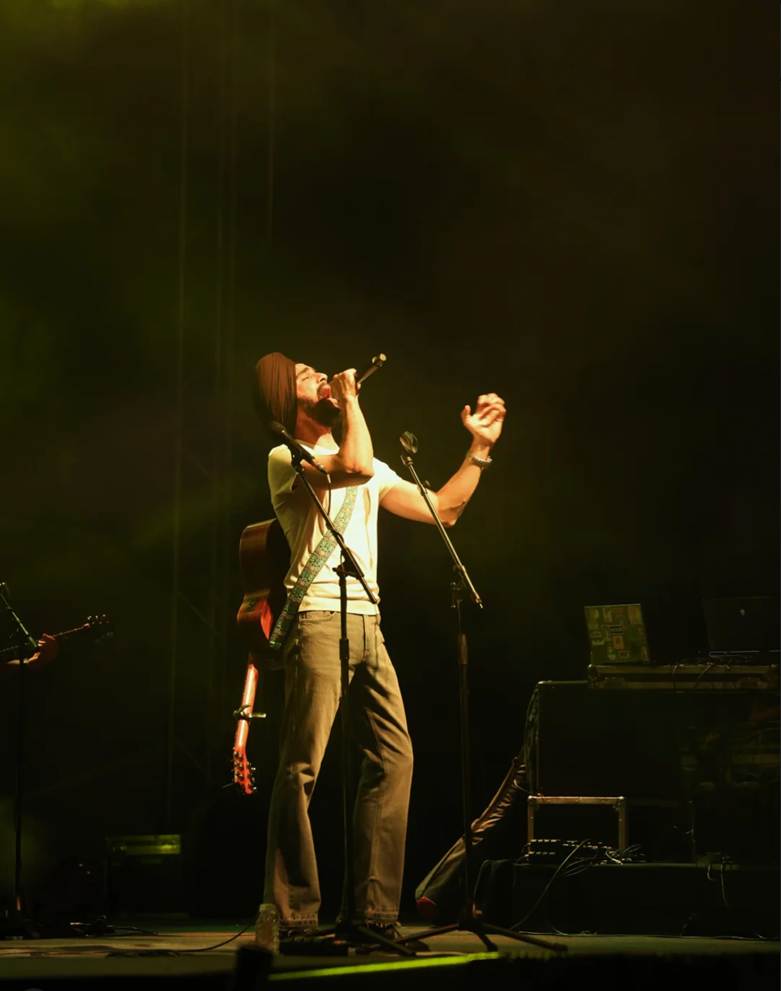
Every artist carries a chapter of struggle, and Navjot’s was long, demanding, and deeply formative. One of the biggest challenges he faced was building continuity as the best new indian singer songwriter in an era where musical collaboration is increasingly fluid.
For emerging singers, especially those trying to build with a band, consistency can be difficult. Instrumentalists today have more opportunities than ever to freelance and perform with multiple artists. While that growth is positive and well deserved, it can make things harder for singers who are still trying to establish a steady team and sound around their work.
For Navjot, one of the most difficult phases came during 2021 and 2022, when he was doing club shows almost every day. It was a period of relentless performance, but not always personal fulfillment. He was largely singing covers because clubs were not open to original songs that audiences did not yet know.
For a new Indian singer and songwriter, that can be a painful compromise. To perform constantly and still not have the freedom to share your own voice requires not just resilience, but restraint.
“Khat” and the Grace of Staying Unchanged
After 14 years of effort, Navjot’s new love song Khat became a defining milestone. Professionally, he acknowledges that the song changed how society viewed him as a musician. It strengthened his place in the public eye and altered his standing in meaningful ways.
Yet personally, he remains unchanged.
That is perhaps the most striking part of his story. Navjot says his routine is still the same. His calm is still the same. His writing process is still the same. He does not want success or failure to interfere with the purity of his art. For him, emotional detachment from public outcomes is essential because the moment an artist becomes too attached to validation, the writing begins to shift.
His joy comes not from numbers, but from the attempt. If he has tried to improve his skill today, if he has written his heart out more honestly than before, then he is at peace.
Growth, Not Glory, Remains the Real Goal
Even now, Navjot is not consumed by labels such as singles artist, performer, or digital success story. His focus remains deeply personal. He wants to sing better. He wants to play instruments better. He wants to understand himself more. And he wants to become a kinder person.
That is what makes Navjot Ahuja’s journey so moving. It is not simply the story of a musician finding recognition. It is the story of an artist who continues to grow inward, even as the world begins to look outward at him. In an age obsessed with applause, Navjot reminds us that the most meaningful success often begins in silence, honesty, and the courage to remain true to oneself.






