Gaming
The world of Indian e-sports, according to Nodwin Gaming’s Akshat Rathee

MUMBAI: Perhaps because people have been stuck in their homes due to the Covid2019 pandemic, the e-sports industry is bigger and bolder than ever before. For many gaming platforms, user engagement was at an all-time high during the lockdown and even now, the revenues are continuing to pour in.
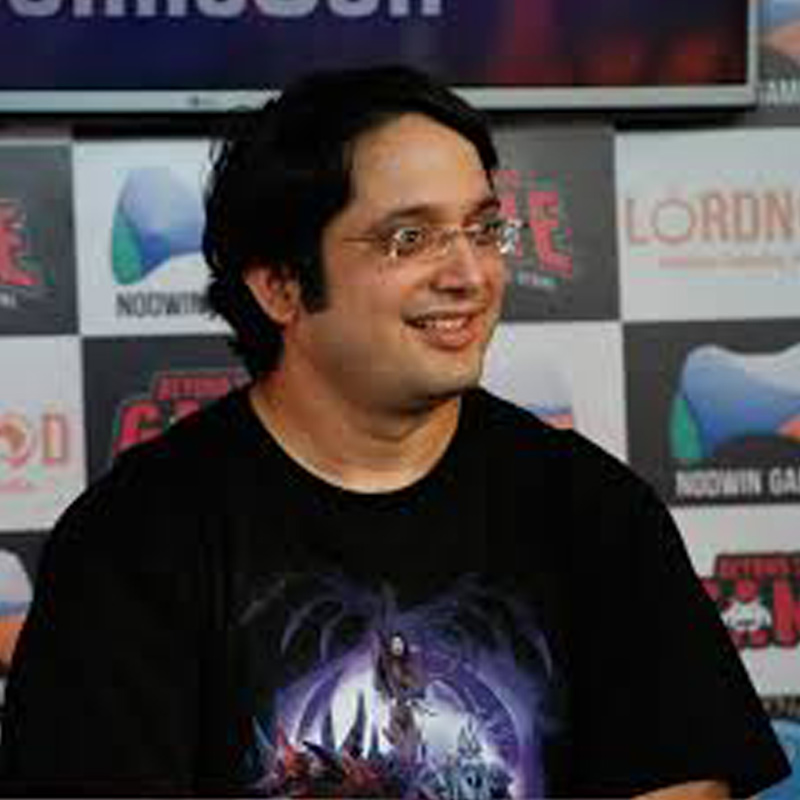
Nodwin Gaming MD Akshat Rathee, an avid e-athlete himself has revolutionized the e-sports industry in India and has almost single-handedly expanded the company to the middle east and south Africa. In a virtual fireside chat with indiantelevision.com founder, CEO and editor-in-chief Anil Wanvari, Rathee spoke at length about e-sports in India and the international market and the challenges faced by the industry.

Online games have three key segments: casual games, e-sports, and real money games (RMG) that are basically skill-based online games played for stakes. However, Rathee said that there is no clear bifurcation between games in India, anything that is digital and has competition is termed as e-sports by people. This is not the case in the US or UK.
He also highlighted that outside India, the law is clearer on what constitutes gambling, skill-based games and real money gaming. He explained: “In terms of practical implications, an American or European customer is worth far more than the Indian one. But during the pandemic, physical events were cancelled and that impacted the value of sponsorship more in the western world.”
In India online viewership counts for a lot, said Rathee, citing PUBG live streams that millions tune into. “Even after the ban, the entire segment has grown… In the 45 days since the downfall of PUBG in India, a lot of other games have cropped up,” he observed.
According to Rathee, game publishers did really well during the Covid2019 pandemic. “New games were being discovered, games like The Fall Guy started becoming very popular. Apart from this, game casters benefited a lot but the algorithms did not favour the smaller players in the market,” he added.
Read more news on Gaming Industry
Answering Wanvari’s question on how to clear the clutter and mess that has mucked up the e-sports and gaming ecosystem, Rathee opined that bringing in clear and well-defined regulatory measures is the only option.
“Having a differentiated definition of the word e-sports that is as per Indian regulation and doesn’t apply to the rest of the world will not work. E-sports is a speed competition. Just because a person has more money doesn’t mean he can play twice. The e-sports game needs to be fair as well so that everyone gets equal opportunity to win the competition,” he explained.
Rathee defined e-sports as something that has physicality of results. It is the physicality of moves and actions that is the differentiator between the results of the participants. For instance, chess.com clearly mentions that chess is not a sport but a game. He further added,
“E-sports are and need to be dependent on publishers. We are the world’s first sports category that is owned by someone from the very beginning. Owner of Kings belongs to Tencent, Bluehole owns PUBG, while Call of Duty is an Activision entity. So it is someone’s property – everything about the game, from the IP, data, rules, players and to the systems belongs to them,” he clarifies.
Rathee went on to say: “Another important thing is to understand the business of sports. The question arises – is e-sports a B2C business anywhere in the world without the publisher?” In his opinion, e-sports has always been a B2B business, for the simple reason that a sports organization is making money from sponsorship and media rights.
The gaming industry is at a watershed moment where the youth, information and technology, finance and IT ministry are actively making plans to regulate the sector. But there exists the roadblock of censorship and data privacy. The gaming industry is also stuck between the state and central government over GST issues. Rathee asserted that while the gaming industry is valued at less than Rs 10,000 crores, it’s like the goose with the golden egg for the government – precisely because it holds sway over the millennials and Gen Z, as well as the future of social media.
Rathee argued that it is not easy to remove one country from the ecosystem. China also has a regulatory body that makes it mandatory for companies to license the games.
“China is in a position to ban many e-sports and games because they run the ecosystem. China already has a regulatory body which could say that you have to license games through us without which we won’t let you do it. Due to the fragmentation of the internet, the Middle East is raising concern over their cultural sensibilities. So, it is a very thin line if you put a regulatory framework in place that can be exploitative,” he shared.
At the end, the question raised is whose interest you are working for. “It is important to have a proper regulatory body in place so that the industry grows,” he emphasised.
It is high time the industry developed a strident voice of its own, declared Rathee, because most of the world outside India often looks at mobile gaming and mobile e-sports as second-class citizens to the e-sports ecosystem.





Gaming
MTG gaming chief Benninghoff joins NODWIN board as esports firm primes for IPO
The Gurugram-based esports firm is pursuing a public listing, has returned to profitability and is growing revenues by 42 per cent
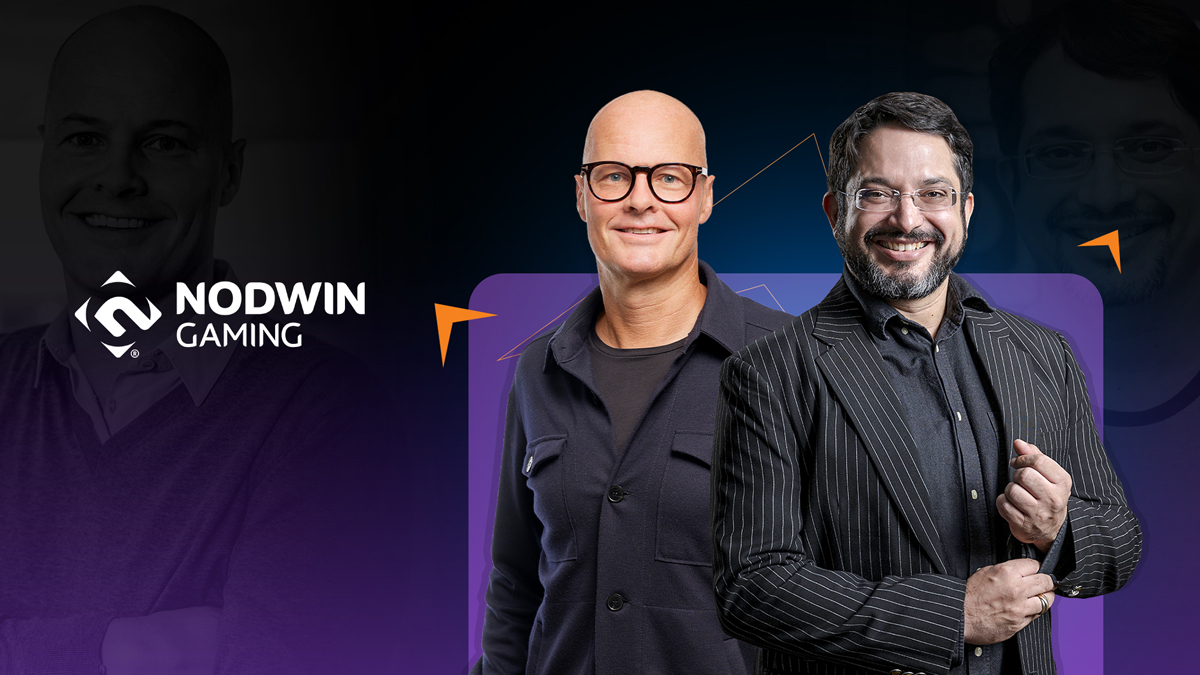
GURUGRAM: NODWIN Gaming is moving fast. The Gurugram-based gaming and esports company has launched a pre-IPO fundraising round, appointed UBS as lead adviser for both the round and a subsequent public listing, and landed a heavyweight board director, all in one go.
The new board member is Arnd Benninghoff, executive vice president of gaming at Stockholm-listed Modern Times Group (MTG), who has overseen the group’s strategic investments and portfolio growth since 2014. He is no stranger to building things: Benninghoff has founded and built fifteen companies, served as chief digital officer at ProSiebenSat.1 Media AG, managing director of SevenVentures, and chief executive of Holtzbrinck eLAB. He began his career as a journalist at Deutsche Presse Agentur and various TV networks, holds a Diplom-Kaufmann in business and administration from the University of Münster, and previously sat on the board of Edgeware AB.
The numbers back the ambition
NODWIN is not pitching a story without substance. The company has returned to EBITDA profitability and posted a 42 per cent year-on-year revenue surge, reaching $58.5m in the first nine months of FY2026. The pre-IPO round will combine a primary issuance to fund global expansion through organic growth and acquisitions, alongside a secondary sale to give existing shareholders some liquidity.
Akshat Rathee, co-founder and managing director of NODWIN Gaming, said Benninghoff understands “the entire lifecycle of the gaming and media ecosystem, from the boots-on-the-ground reality of building startups to the strategic complexity of managing multi-billion dollar global portfolios.”
Benninghoff, for his part, said the company “sits at the intersection of sports, entertainment, and technology, making it one of the most exciting players in the global gaming landscape today.”
A portfolio built for the global south
Founded in 2014 by Rathee and Gautam Virk, NODWIN has quietly assembled one of the more compelling esports portfolios outside the Western hemisphere. Its properties include DreamHack India and Comic Con India, and it recently acquired StarLadder, the Ukraine-based tournament organiser behind premier events in CS:GO and Dota 2. The company also serves as a long-term strategic marketing partner for the Evolution Championship Series (EVO), the world’s most prominent fighting game tournament, helping push it into new geographies.
Its geographic focus spans South Asia, Central Asia, Southeast Asia, the Middle East and Africa. Backers include Nazara Technologies, KRAFTON, Sony Group Corporation, JetSynthesys, and the founders’ investment vehicle Good Game Investments.
What comes next
With UBS running the books, a board freshly reinforced with European media and gaming expertise, and revenue heading in the right direction, NODWIN is laying the groundwork deliberately. The esports industry has burned investors before with big promises and thin margins. NODWIN’s return to profitability, combined with a real portfolio of owned intellectual properties across gaming, music and youth culture, gives it a more credible runway than most. The IPO clock is now ticking.







