GECs
The secret sauce behind long-running Hindi GEC shows

MUMBAI: India has a history of long-running soap operas right from Kyunki Saas Bhi Kabhi Bahu Thi to latest ones like Yeh Rishta Kya Kehlata Hai and Taarak Mehta Ka Ooltah Chashma. In the urban market, both the shows continue to remain in the top five programming list of BARC India in primetime slots.
How is it that these shows are continuing to thrive in the era of seasonal content and high impact limited episode show on OTT platforms?
The prime reason for their high attraction is the ability to reinvent and stay relevant. A decade ago, when these shows launched, there were no signs of OTT platforms. As the shows progressed, the creators kept changing the plotlines to suit the evolving tastes of the audiences.

One key reinvention strategy that has kept Yeh Rishta Kya Kehlata Hai on top of the ratings charts is its youth appeal.
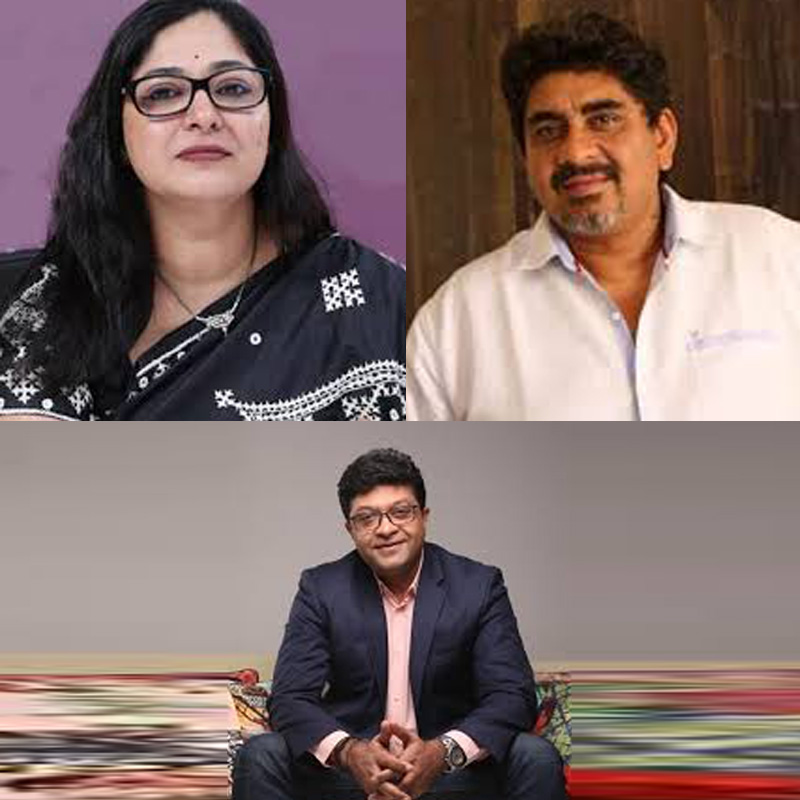
“We wanted to show Kartik and Niara as real couples and be connected to the reality of life. This was the most calculated risk that I took as a maker. We did not want to sugarcoat reality and keep them perfect. They make mistakes and learn from them and that’s what the audiences like. Imperfection is the new mantra that resonates well with them,” explains Director's Kut Production founder Rajan Shahi.
Zee TV business head Aparna Bhosle explains that long-running shows are the hallmark of a creative team that truly understands their channel’s audience and tells them stories that hold their attention over a sustained period of time.
“Having properties on air that people want to keep coming back to is crucial to any broadcaster as it is this viewer behaviour that defines brand loyalty," she says.
Sony SAB business head Neeraj Vyas points out that character affinity is one of the key reasons for the popularity of Taarak Mehta. "People watch television not because of the shows, but because of the characters. The characters’ action, relatability and empathy are what drive viewership.”
Long-running shows also increase the confidence of advertisers in the show. "Advertisers are interested in reaching out to the largest demographics through our platforms and long-running shows with a dedicated viewership serve this purpose most effectively and hence command a premium," says Bhosle.
Apart from Yeh Rishta Kya Kehlata Hai and Taarak Mehta Kaa Ooltah Chashma, Zee TV's longest-running show Kumkum Bhagya has crossed 1500 episodes. "Kumkum Bhagya is one of our longest-running shows in the current context. Ever since the show launched in 2014, it has consistently found its place amongst the top five fiction shows across GECs week-on-week," says Bhosle.
Vyas adds that the new TV channel pricing regime on account of the New Tariff Order (NTO) has made it essential for channels to have marquee shows with a loyal audience base. Unfortunately, it’s difficult to do that today. The earlier shows are still surviving because they were launched when appointment viewing was the norm and OTT did not exist.
Shahi concurs with Vyas on OTT posing challenges. But Star India’s OTT platform Hotstar is aiding the growth of Yeh Rishta. “On Hotstar as well as TV, the show is highly rated. Keen audiences can watch the show early in the morning at 7 am on Hotstar while primetime viewers catch up at night with the family on TV,” he explains.
Another key aspect has been to keep the production team consistent. Shahi says, "Yeh RishtaKya Kehlata Hai is a success for the entire television industry. In this chaotic and unstable market, keeping the team together and getting the show to stay on course for years is an achievement. Our teamhas 90 per cent of the same unit today since the show was launched. My biggest achievement is to have people who would team up for such a long-running show. Over the 11 years, they have been through phases of setbacks and achievements so to keep up the spirit and morale of the team is a challenge."
With multiple choices available, producers have a hard task to keep shows running. To compete with shows on OTT, TV shows need to understand changing trends and adapt quickly.
About the future, Bhosle says it’s not about a show being finite or infinite shows that will determine success. “It is a story that touches a chord, a character that grows on you or that palpable chemistry between two endearing characters that make people return to watch more,” she says.






GECs
Sahara One reports financial results, notes director exit and business realignment
Muted revenues, steady expenses and strategic adjustments shape company’s current phase
MUMBAI: In a tale where the sands seem to be slipping faster than they can be gathered, Sahara One Media and Entertainment Limited has reported another quarter of wafer-thin income and widening losses, even as a boardroom exit adds to the unease.
The company informed the Bombay Stock Exchange that its board, in a meeting held on April 4, approved its unaudited financial results for the quarter ended September 30, 2025. The numbers paint a stark picture. Total income for the quarter stood at just Rs 0.13 lakh, unchanged sequentially and sharply down from Rs 0.26 lakh a year earlier.
Losses, meanwhile, deepened. The company posted a net loss of Rs 24.16 lakh for the quarter, compared to Rs 18.81 lakh in the June quarter and Rs 39.69 lakh in the same period last year. For the six months ended September 2025, the cumulative loss stood at Rs 39.69 lakh, while the full-year loss for FY25 was reported at Rs 60.72 lakh.
Expenses continued to outweigh income by a wide margin. Total expenses for the quarter came in at Rs 24.30 lakh, led by employee benefit costs of Rs 6.51 lakh and other expenses of Rs 17.78 lakh. Earnings per share remained in the red at Rs (0.11) for the quarter.
The balance sheet reflects a company with significant assets on paper but limited operational momentum. Total assets stood at Rs 23,065.57 lakh as of September 30, 2025, broadly unchanged from March 2025. Equity share capital remained steady at Rs 2,152.50 lakh, while total equity was reported at Rs 18,004.85 lakh.
Cash and cash equivalents saw a modest uptick to Rs 6.75 lakh from Rs 4.68 lakh earlier, supported by a positive operating cash flow of Rs 180.01 lakh for the period.
Yet, beneath these numbers lies a more complex narrative. The company’s auditors flagged their inability to obtain sufficient evidence to form a conclusion on the financial statements, citing lack of access to records. They also raised concerns over the company’s ability to continue as a going concern, pointing to insufficient funds, delayed recoveries, and stalled content investments.
Adding to the governance overhang, the company disclosed that Rana Zia has resigned as whole-time director, effective October 16, 2025, citing other professional commitments. The resignation, noted and accepted by the board, also brings an end to her role across company committees.
Regulatory pressures continue to loom large. The Securities and Exchange Board of India has already initiated penal actions for non-compliance with listing norms, with trading in the company’s shares remaining suspended. There is also a risk of promoter demat accounts being frozen.
Legacy legal issues remain unresolved. A substantial deposit of Rs 694,027.88 thousand linked to the long-running OFCD dispute involving Sahara group entities is still under the purview of the Supreme Court of India. Restrictions on asset disposal continue to weigh on the company’s financial flexibility.
Operationally, challenges persist across multiple fronts. Advances worth Rs 1,92,916 thousand given for film content remain stuck, with delays in project completion and uncertain recoverability. The company’s YouTube channel, despite being operational, has generated no revenue for over three years due to compliance lapses. In a further twist, management has indicated that revenues may have been fraudulently diverted through unauthorised changes to its AdSense account, with a police complaint in the works.
There are also missed revenue opportunities. Television content rights continue to be used by a related party despite the expiry of the licence agreement, with fresh negotiations still underway.
For now, Sahara One Media and Entertainment Limited appears caught between legacy disputes and present-day operational hurdles. As losses linger and governance questions mount, the road to recovery looks less like a sprint and more like a slow trudge through shifting sands.






