eNews
The Screenwriter’s Association (SWA) endorses global initiative for ethical AI use in scriptwriting

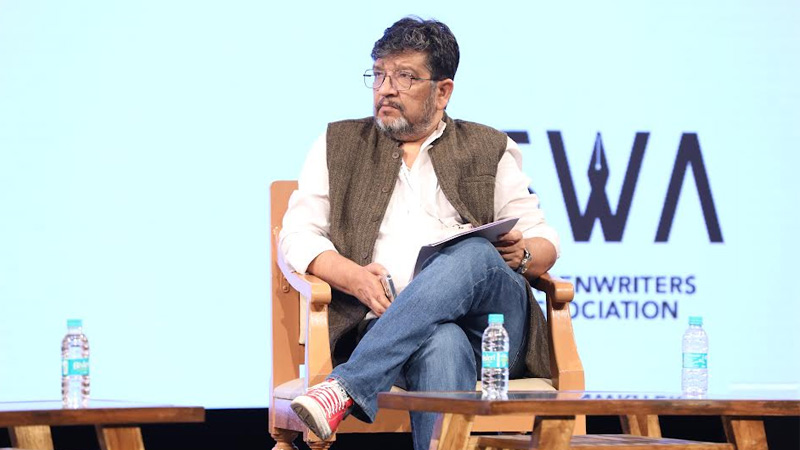
Mumbai: The Screenwriter’s Association (SWA), a collective voice for the rights and welfare of screenwriters in India, has expressed its support for the collaborative efforts of the Federation of Screenwriters in Europe (FSE) and the International Affiliation of Writers Guilds (IAWG). The organisations recently came out with a joint resolution outlining a set of guidelines to establish an ethical framework for the use of AI in scriptwriting.
The resolution, consisting of five key principles, affirms the role of writers as the sole creators of literary material and advocates for mechanisms to ensure transparency, informed consent, and fair compensation in the use of writers’ intellectual property. The FSE brings together 32 screenwriters’ organizations from 26 European countries and the IAWG has 14 members from 12 countries.
These organizations are committed to advocating for fair contracts and ensuring the protection and fair compensation of writers. SWA currently has over 65,000 members operating across India including prominent writers-filmmakers like Raj Shekhar, Anjum Rajabali, Zama Habib, Saket Chaudhary, Preeti Mamgain, Hitesh Kewalya, Sriram Raghavan, Sujoy Ghosh, Ashwiny Iyer Tiwari, among many others.

Speaking about this, SWA general secretary Zama Habib said, “SWA stands firmly with IAWG and FSE in championing ethical standards for AI integration in scriptwriting. Only human creativity can craft genuine screenwriting works. We advocate for transparency, consent, and fair remuneration to uphold writers’ rights in the ever-evolving landscape of storytelling.”
Adding further, German screenwriter and FSE president Carolin Otto said, “While we applaud the work of the EU to enact the AI Act, there are unresolved issues with respect to the unauthorized use of our intellectual property for training large language models, and uncertainty regarding authorship and copyright of machine-generated script material. We intend to voice our concerns in both national and global policy arenas, as well as develop standard language film and television writers can demand in their contracts.”
Irish screenwriter and IAWG chair, Jennifer Davidson, said, “The members of the IAWG seek to build on the hard-won protections our sister Guilds in America, the WGAE and the WGAW, were able to achieve during their strike: namely that it should be a tool to enhance our writing process, not diminish the value of our work or replace us. Last year, we campaigned at UNESCO and this year we will take our position to WIPO, support each other during collective bargaining, and invite representatives of the tech community to the 6th World Conference of Screenwriters in Galway.”
A joint resolution passed by IAWG and FSE states that their member guilds will:
1) Affirm that only writers create literary material and that large language models (LLMs) or any other present or future forms of artificial intelligence (AI), cannot be used in place of writers;
2) Work to create mechanisms for obligatory transparency and accountability and to ensure writers are informed if AI generated material is used to write, rewrite, polish or perform any additional writing services;
3) Advocate for robust licensing mechanisms that require explicit and informed consent for the use of writers’ intellectual property in AI training data with a goal to ensure only intellectual property that has been licensed for such use be included in the datasets of commercialized LLMs, or any other present or future forms of AI;
4) Ensure that only human beings are entitled to authors rights and recognized under copyright law in the context of machine generated material;
5) Advocate for fair remuneration for the use of writers’ intellectual property in LLMs or any other present or future forms of AI.



eNews
Paisabazaar launches Credit Premier League 2.0
Nationwide campaign rewards highest credit scores with Rs 1 lakh top prize.

MUMBAI: When credit scores become a national league, even your CIBIL report starts feeling like it’s playing in the IPL and Paisabazaar has just kicked off the second season. Paisabazaar, India’s leading marketplace for financial products and the country’s largest free credit score platform, has announced the return of the Credit Premier League (CPL) 2.0, a fun, nationwide initiative to recognise and reward individuals with the highest credit scores.
Building on the success of the first edition, CPL 2.0 introduces higher rewards and broader participation. The individual(s) with the highest credit score in the country will win Rs 1 lakh, while state champions will each receive Rs 10,000. Additionally, all participants from the winning state, the one with the highest average credit score will also be rewarded.
All winnings will be credited directly to winners’ PB Wallet, allowing them to pay credit card bills, recharge mobiles, or settle utility bills seamlessly on the Paisabazaar platform.
Paisabazaar CEO Santosh Agarwal said the campaign aims to make credit awareness more engaging and mainstream. “With CPL, we are bringing together engagement, gamification and rewards to make conversations around credit scores more mainstream,” he noted. “Our focus remains on building a financially aware and credit-healthy Bharat.”
The first edition of CPL saw over 5.5 million participants, with the highest individual score touching 861. Delhi recorded the highest average credit score of 746.
Consumers can participate simply by checking their free credit score on the Paisabazaar platform or app. The CPL leaderboard and rankings will be available exclusively on the Paisabazaar App.
In a country where financial dreams are serious business, Paisabazaar has found a smart way to turn credit scores into an exciting game – because when your financial health gets rewarded, everyone wants to play.







