News Headline
The makeover that’s transforming Prasar Bharati

Contrary to what used to generally happen in the past, these days not all the TV sets in Doordarshan are tuned into private satellite channels all the time. The mandarins of DD have been beaming while watching their own network’s programmes too – especially when cricket has been beaming. But, importantly, this is also a process of change in the mindset of people within and outside DD. Especially where professionalism is concerned. Whether it is the stridency in marketing of programmes or in strategising distribution.
And this, in short, has been one of the biggest achievements of Prasar Bharati, the world’s biggest pubcaster in the world in terms of infrastructure and coverage area. In 2005, DD has been on a rollercoaster ride with broadcasting windfalls (read, cricket) coming its way by default and the federal government playing Santa Claus towards the end of the year by bringing in legislation heavily loaded in its favour.

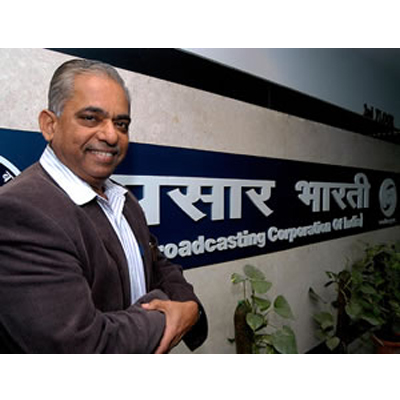
No wonder, an upbeat Prasar Bharati CEO KS Sarma told Indiantelevision.com in a recent interview that 2005 was turning out to be a “decent year” with hopes of increased revenue collection soaring.
Though Prasar Bharati in recent times has attempted to downplay the revenues flowing in from cricket matches – the net gain for DD from four years of Indian cricket rights till 2004 was mere Rs 600 million after having invested Rs 4 billion in rights fees and other sundry costs – the new media norms do give it an advantage over private sports broadcasters.
There is also no denying that Prasar Bharati lobbied unabashedly this year with policymakers to insert certain favourable clauses in downlink and uplink guidelines. Some critics like Ten Sports and ESPN Star Sports have termed the government mandate as the handing of an unfair advantage to the pubcaster, but this hasn’t fazed Prasar Bharati officials who have been trying to do a Kaun Banega Crorepati with cricket in 2005.
Admits Sarma, “Cricket helps DD in retaining viewership for other programmes. The chances of a viewer sticking around after a cricket match to check out the programme following it is high.”
New Indian media norms state that all sporting events of national importance will have to be shared with the pubcaster on a mandatory basis irrespective of the fact of who’s holding the rights.
This criticism apart, Prasar Bharati should be credited with few positive – and aggressive – moves too in 2005. The most important was the decision to stop the outsourcing of marketing of DD programmes. Instead, mid-2005, DD decided to undertake all such marketing activities in-house. And, more aggressively too.
Moves like this – another one was to play the movie card effectively to garner higher advertising money – did start bearing financial fruits towards the end of the year. Prasar Bharati is expected to end the present financial year (April-March) with Rs 10 billion in total revenue. By end October, it had managed to mop up revenues worth about Rs 6 billion.
In FY 2004-05, Prasar Bharati raked in Rs 7.88 billion in revenues. DD’s share being approximately Rs 6.53 billion and sibling All India Radio’s Rs 1.35 billion.
To make things more effective the marketing team, under Vijayalaxmi Chhabra (the mastermind behind the self-marketing initiatives) has been strengthened. The thrust on marketing, which moved into top gear this year, attains significance because of its timing. DD is presently in the last leg of attaining self-sufficiency in marketing its content through innovations – like doing away with the slot system and reducing the role of private producers and middle men.
The shift also highlights the can-do attitude being flaunted by the pubcaster in the face of a severe funds crunch from the government, which wants to reduce the pubcaster’s financial dependence on public money.
With CEO Sarma on the last leg of his tenure – he attains the age of superannuation in June-July 2006 – Prasar Bharati successfully marketed its subscription free DTH service in 2005 by expanding its subscriber base to over 1.1 million on last count and blunted criticism that such a service, minus mass general entertainment from private channels, would fall flat.
This also strengthened the resolve of Prasar Bharati that it has to get on its networks good entertainment content too without sacrificing its role as a pubcaster in a country where the cable TV base is spreading, but still leaves uncovered over 40 million homes out of an approximately 100 million all-TV households.
What is needed to cash in on this 2005 momentum is to start strategising by thinking like a corporate organization. As part of this game plan there has to be a greater synergy amongst the content, ad sales and marketing teams. One small step was taken when DD decided earlier this year to make the existence of all the serials on its network ratings-related: the higher the ratings, more the chances of a programme being on air for a longer period of time.
Another step in this direction is to start retaining intellectual property rights (IPR) over programmes, which is a departure from the past when outside producers used to own the rights over content for bartering time slots, and go in for increased digitalisation. With a government panel studying various options of a financial restructuring of Prasar Bharati, including holding a part equity stake in the autonomous broadcasting organization, such IPR-related initiatives will go a long way in taking it closer to the model that had been envisaged for it when the relevant Act was enforced in 1997 – that of the British Broadcasting Corporation.
Like Sarma, many others too believe after seeing the 2005 performance, that Prasar Bharati has the potential of turning into a profitable organisation. But for that to happen, the government has to give up control over this mammoth organisation, which has a work force of over 40,000.





NEW DELHI: Hamdard Laboratories gathered a cross-section of India’s achievers in New Delhi on Friday, handing out the Hakeem Abdul Hameed Excellence Awards to figures who have left their mark across healthcare, education, sport, public service and the arts.
The ceremony, attended by minister of state for defence Sanjay Seth and senior officials from the ministry of Ayush, celebrated individuals whose work blends professional success with a sense of public purpose. It was as much a roll call of achievement as it was a reminder that influence is not measured only in profits or podiums, but in people reached and lives improved.
Among the headline awardees was Alakh Pandey, founder and chief executive of PhysicsWallah, recognised for turning affordable digital learning into a mass movement. On the sporting front, Arjuna Awardee and kabaddi player Sakshi Puniya was honoured for her contribution to the game and for pushing women’s participation onto bigger stages.
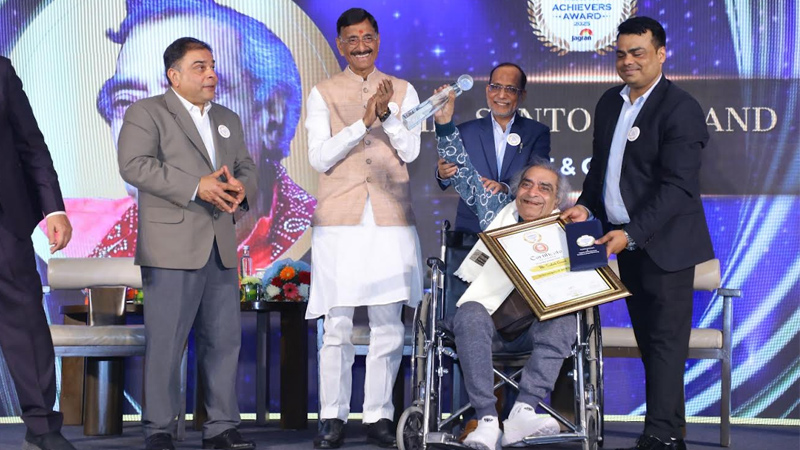
The cultural spotlight fell on veteran lyricist and poet Santosh Anand, whose songs have echoed across generations of Hindi cinema. At 97, Anand accepted the honour with characteristic humility, reflecting on a life shaped by perseverance and hope.
Healthcare honours spanned both modern and traditional systems. Manoj N. Nesari was recognised for strengthening Ayurveda’s place in national and global health frameworks. Padma shri Mohammed Abdul Waheed was honoured for his research-backed work in Unani medicine, while padma shri Mohsin Wali received recognition for his long-standing contribution to patient-centred care.
Education and social development also featured prominently. Padma shri Zahir Ishaq Kazi was honoured for decades of work in education, while former Meghalaya superintendent of Police T. C. Chacko was recognised for public service. Goonj founder Anshu Gupta received an award for his dignity-centred rural development initiatives, and the Hunar Shakti Foundation was honoured for empowering women and young girls through skill development.
The Lifetime Achievement Award went to former IAS officer Shailaja Chandra for her long career in public healthcare and governance, particularly in the traditional systems under Ayush.
Speaking at the event, Hamdard chairman Abdul Majeed said the awards were a tribute to those who combine excellence with empathy. “These awardees reflect Hakeem Sahib’s belief that healthcare, education and public service must ultimately serve humanity,” he said.
Minister Seth struck a forward-looking note, saying India’s young population gives the country a unique opportunity to become a global destination for learning, health and wellness by 2047.
The ceremony also featured the trailer launch of Unani Ki Kahaani, an upcoming documentary starring actor Jim Sarbh, set to premiere on Discovery on 11 February.
Instituted in memory of Unani scholar and educationist Hakeem Abdul Hameed, the awards have grown into a national platform that celebrates those building a more inclusive and resilient India. For one evening at least, the spotlight was not just on success, but on service with substance.







