iWorld
The Lord of the Rings: The Rings of Power to release globally on 23 August

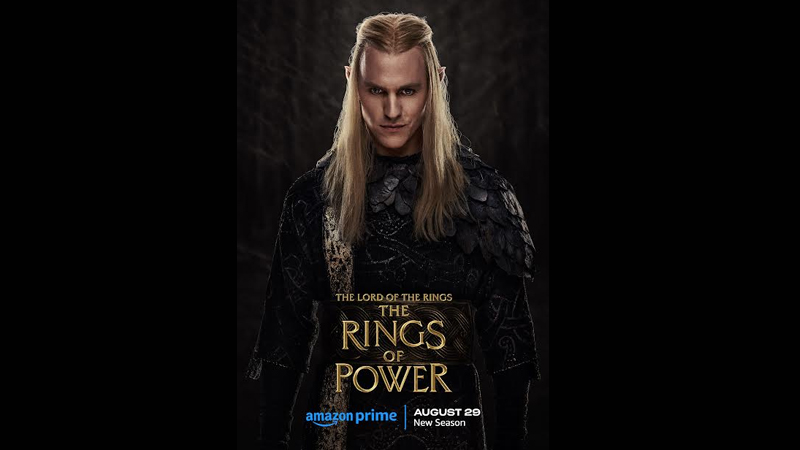
Mumbai: Amazon MGM Studios announced The Lord of the Rings: The Rings of Power (Season Two: Amazon Original Series Soundtrack) will be released worldwide on 23 August, tied to the highly-anticipated return of the series later this month. Available across all music streaming services, the full episodic score for the second season of the Amazon Original series was composed by Emmy Award-winner Bear McCreary (Da Vinci’s Demons). The soundtrack will also include two new songs featuring renowned vocalists Rufus Wainwright and Jens Kidman.
Digital and streaming of the Season Two soundtrack will be available on August 23rd, and on that same date, vinyl can be pre-ordered at Amazon Music and HERE. A special Collector’s Edition will also be available for pre-order exclusively on Amazon Music. Following each episode, Amazon Music will release a weekly soundtrack album containing the score for that episode, which is only available on Amazon Music.
For the epic first season of Prime Video’s The Lord of the Rings: The Rings of Power, composer Bear McCreary wove a tapestry of symphonic orchestra, bombastic percussion, and folk instruments from across Europe and North Africa, combined with solo vocalists and choirs singing in the iconic languages of J.R.R. Tolkien’s books. For the gripping second season, McCreary has built atop that foundation with dynamic new themes and colours, including Bulgarian women’s choir and gadulka for Rhûn, children’s choir for the pastoral city of Eregion, Hardanger fiddle for new character Estrid, and deathly whispers for the terrifying Barrow-wights.

After collaborating with the iconic Fiona Apple for the first season’s “Where the Shadows Lie,” McCreary continues the tradition by inviting two featured vocalists to join him on new songs for the Season Two score. Grammy-nominated artist Rufus Wainwright brings thoughtful introspection to his rendition of “Old Tom Bombadil.” “The Last Ballad of Damrod,” a song about a vicious Hill-troll, is brought to terrifying, screaming life by Jens Kidman, the unforgettable lead singer of Grammy-nominated Swedish extreme-metal band Meshuggah. While balancing these diverse and eclectic musical influences, McCreary always refers to Tolkien’s writings for inspiration. “I am honoured to continue forward on this journey, bringing the events of Tolkien’s Second Age to life on the screen,” says McCreary.
Series stars Sophia Nomvete, Benjamin Walker, Rory Kinnear, and Daniel Weyman also lend their vocal talents to several songs on the soundtrack. Nomvete’s dwarven character of Princess Disa is a lead resonator who sings to the mountain, while Walker, who plays an Elven king, sings a sorrowful tune in J.R.R. Tolkien’s Elvish language. Kinnear, who joins the show this season as the first live-action version of the fan-favourite character Tom Bombadil, and Weyman, who portrays the mysterious Stranger, also collaborate on a reprise of “Old Tom Bombadil.”
“This new soundtrack is a stunning companion to the series’ continued exploration of the Second Age” said Bob Bowen, worldwide head of music for Amazon MGM Studios. “With the debut of Season Two on the horizon, we’re excited to give fans a further glimpse into the epic series.”
Season Two of The Lord of the Rings: The Rings of Power will debut on Prime Video on August 29, 2024, in more than 240 countries and territories around the world, and in multiple languages.
In Season Two of The Rings of Power, Sauron has returned. Cast out by Galadriel, without an army or ally, the rising Dark Lord must now rely on his own cunning to rebuild his strength and oversee the creation of the Rings of Power, which will allow him to bind all the peoples of Middle-earth to his sinister will. Building on Season One’s epic scope and ambition, the new season plunges even its most beloved and vulnerable characters into a rising tide of darkness, challenging each to find their place in a world that is increasingly on the brink of calamity. Elves and dwarves, orcs and men, wizards and Harfoots… as friendships are strained and kingdoms begin to fracture, the forces of good will struggle ever more valiantly to hold on to what matters to them most of all… each other.
The Lord of the Rings: The Rings of Power brings to screens for the very first time the heroic legends of the fabled Second Age of Middle-earth’s history. This epic drama is set thousands of years before the events of J.R.R. Tolkien’s The Hobbit and The Lord of the Rings books and will take viewers back to an era in which great powers were forged, kingdoms rose to glory and fell to ruin, unlikely heroes were tested, hope hung by the finest of threads, and the greatest villain that ever flowed from Tolkien’s pen threatened to cover all the world in darkness.
The first season of The Rings of Power has been an unprecedented success, viewed by more than 100 million people worldwide, with more than 32 billion minutes streamed. The highly anticipated series attracted more than 25 million global viewers on its first day, marking the biggest premiere in the history of Prime Video, and also debuted as the No. 1 show on Nielsen’s overall streaming chart in its opening weekend. The show has driven more Prime sign-ups worldwide during its launch window than any other previous content to date. The season finale also created a global cultural moment, with multiple series-themed hashtags, including #TheRingsofPower and others, trending in 27 countries across Twitter for over 426 cumulative hours throughout the weekend.
The second season of The Lord of the Rings: The Rings of Power is produced by showrunners and executive producers J.D. Payne and Patrick McKay. They are joined by executive producers Lindsey Weber, Callum Greene, Justin Doble, Jason Cahill, and Gennifer Hutchison, along with co-executive producer and director Charlotte Brändström, producers Kate Hazell and Helen Shang, and co-producers Clare Buxton, Andrew Lee, Glenise Mullins, and Matthew Penry-Davey. Additional Season Two directors include Sanaa Hamri and Louise Hooper.
To view and download The Lord of the Rings: The Rings of Power assets, please visit the Amazon Studios press site HERE.





Gaming
India’s broadcasters say no to Fifa World Cup 2026
Fifa has slashed its asking price by 65 per cent but India’s broadcasters are still not buying
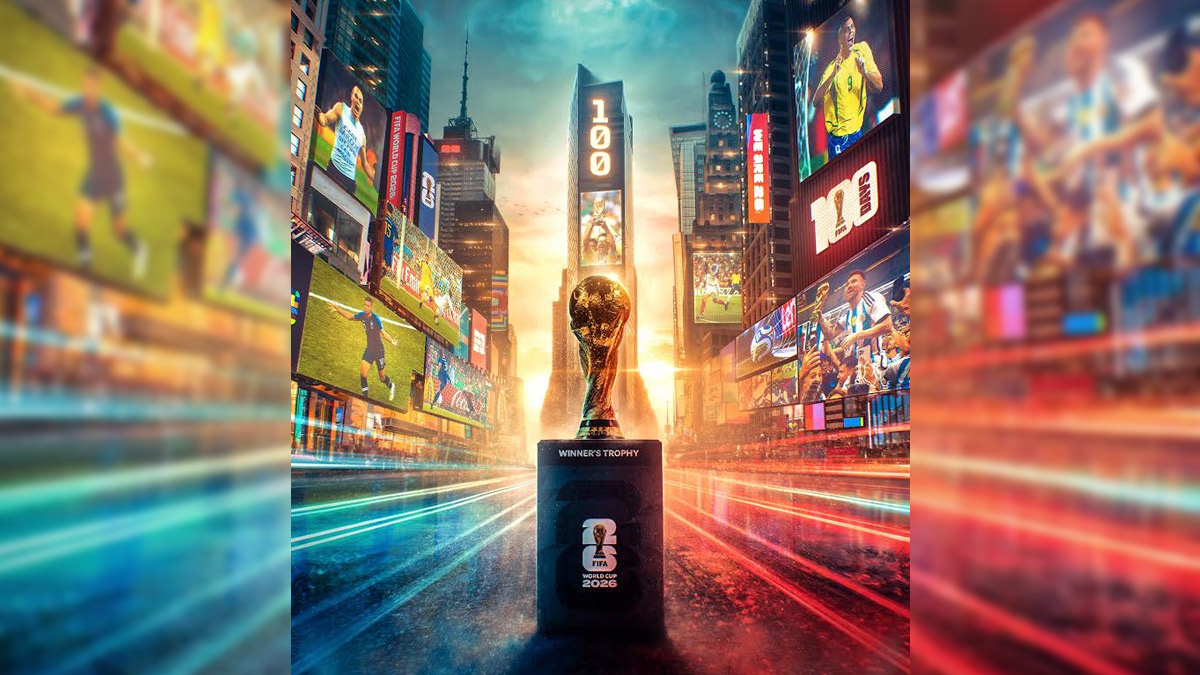
MUMBAI: The world’s biggest sporting event cannot find a single taker in the world’s most sports-mad nation. Fifa’s television rights for the 2026 World Cup remain unsold in India, and the clock is ticking loudly.
To shift the property, world football’s governing body has already swallowed hard and cut its asking price from $100m to $35m, bundling in the 2030 edition as a sweetener. It has not worked. Indian broadcasters have looked at the offer, done the sums and quietly walked away.
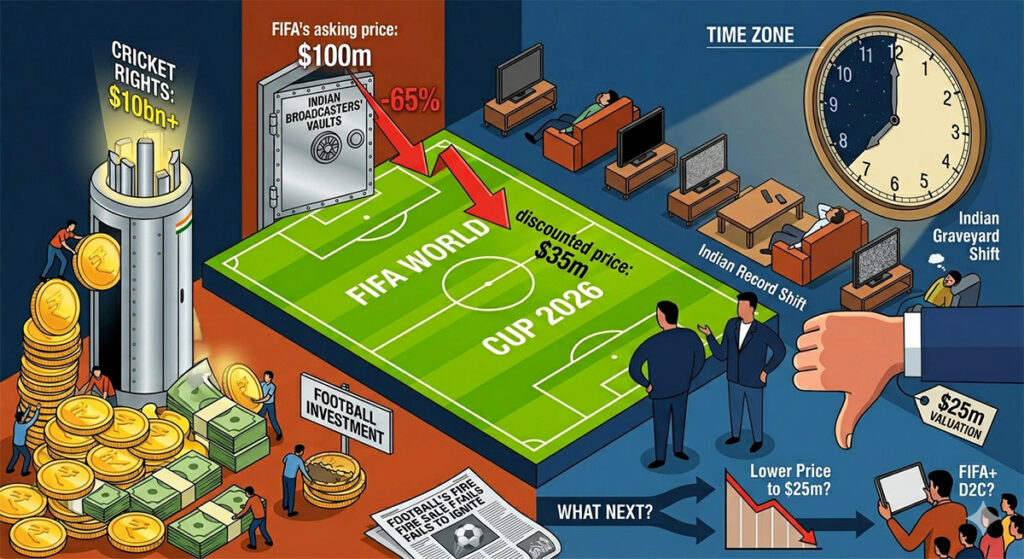
The reasons are brutally simple. The 2026 tournament, co-hosted by the United States, Canada and Mexico, kicks off in a time zone that turns India’s primetime into a graveyard shift. Most matches will air between midnight and 7am IST, a scheduling catastrophe for advertisers chasing mass reach. The 2022 Qatar edition was a gift by comparison, with matches dropping neatly into Indian evenings. North America offers no such luxury.
The market itself has also changed beyond recognition. The merger of Star India and Viacom18 into JioStar has gutted the competitive tension that once sent sports rights prices soaring. Where rival bidders once slugged it out, there is now a single dominant buyer, and it is in no hurry. JioStar has valued the rights at roughly $25m, a full $10m below Fifa’s already-discounted floor price. That gap has so far proved unbridgeable.
Broadcasters are also nursing a ferocious cricket hangover. Between 2022 and 2023, Indian media houses committed well over $10bn to cricket rights alone, covering IPL, ICC events and BCCI domestic fixtures combined. After a binge of that scale, appetite for a football package that delivers a fraction of the ratings, in the dead of night, is close to zero.
The economics of football broadcasting make the maths even harder. Cricket, with its natural breaks every few overs, is an advertiser’s paradise. Football offers a 15-minute halftime and precious little else. Recovering a nine-figure rights fee from a single half-hour ad window is a stretch at the best of times. These are not the best of times: the Indian government’s tightening grip on real-money gaming and gambling advertising has vaporised a category that once underwrote the economics of big sporting events.
Nor is the World Cup an anomaly. Indian Super League valuations have cratered. English Premier League rights have softened across successive cycles. The cooling of football as a broadcast commodity in India is structural, not cyclical.
With the tournament opening on 11th June, Fifa is running out of road. It may yet blink and meet JioStar at $25m. Or it may go direct, streaming the entire tournament on its own platform, Fifa+, or cutting a digital deal with YouTube, and hoping that a generation of Indian football fans finds its way there without a broadcaster to guide them.
Either way, the beautiful game’s Indian chapter is looking decidedly ugly.







