News Headline
The Great Exodus: Latest Data Confirms Premium Audiences Moving Away from HDTV to CTVs

The ongoing TATA IPL has witnessed a significant shift in consumer behaviour, with Connected TVs (CTV) eating into HD TV viewership in a big way. Data from BARC shows that CTV viewership for TATA IPL accounts for 44.4 million, nearly double of HD TV Viewership of 23.9 million. As the popularity and significance of digital services continue to grow among the masses, premium cosmopolitan audiences particularly are opting to watch live sports via CTVs. This trend highlights the growing consumer affinity for consuming live sports via digital platforms. As things stand, the contribution of English-speaking audiences takes a bigger share of the CTV pie.
Here’s a closer look and break-down of some of the key data
IPL HD viewership stood at a meagre 23.9 Mn viewers vs 44.4 Mn on JioCinema’s Connected TVs.


The HDTV numbers come apart further when scrutinized, as urban viewers account for about only 12.4 Mn of the 23.9 HDTV viewership, with the rest coming in from rural India. This evidences the vast divide between HDTV and CTV viewership.
The decline is not limited only to this season of TATA IPL, though. When viewed on a five-year timeline, statistics show that this season’s urban viewership contribution to HDTV is the lowest it has been since the past five seasons.

An additional point which brings alive the HDTV decline reality is the language contribution pie. TATA IPL viewers on HD channels on TV are heavily skewed towards Hindi feed, with only 17% contribution coming from the English feed.


On the other hand, CTV viewers on TATA IPL on JioCinema show way higher affinity towards English feed, where 48 % have watched the high-octane tournament in English- a stark difference when compared to HDTV for the same parameters.
Separating the Fantasies from Facts
Star has claimed a higher number on HD reach of above 43 Mn, which is not a fair representation of the premium HD tv audiences. When broken down under a scanner, 19.8 Mn of the claimed 43 Mn is accounted for by OOH HD TVs. These include tv sets at establishments like malls, restaurants, bars, etc. which inflate the minuscule real figures.

Take the dilution of 19.8 Mn away, and one is left with just 23.9 Mn, which is the more accurate residential viewership of HDTV.
Why does this matter? Advertisers typically pay higher CPRP for HD Households to access premium customers in their houses to get attention for their ads. The OOH TV HD screens do not have audio on. Additionally, the profile of people on OOH is not necessarily premium.
As a result, advertisers/agencies paying for HD Pay TV households, end up truly reaching merely 23.9 Mn.
Where viewers go, advertisers follow !
Previous season no of advertisers on IPL TV HD was 62 which has come down to 28 this season (source Barc)
Most advertisers seeking premium audiences on IPL are moving away to Connected TV .This is reflected in 3x more advertisers on CTV than on HD Channels on Linear TV.


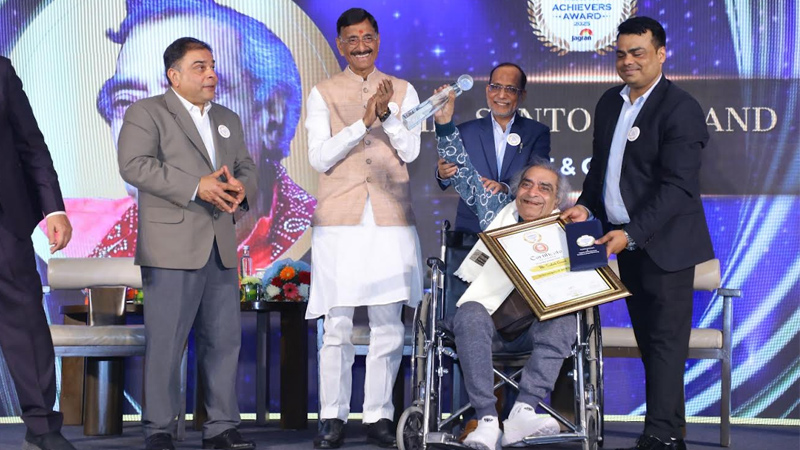
NEW DELHI: Hamdard Laboratories gathered a cross-section of India’s achievers in New Delhi on Friday, handing out the Hakeem Abdul Hameed Excellence Awards to figures who have left their mark across healthcare, education, sport, public service and the arts.
The ceremony, attended by minister of state for defence Sanjay Seth and senior officials from the ministry of Ayush, celebrated individuals whose work blends professional success with a sense of public purpose. It was as much a roll call of achievement as it was a reminder that influence is not measured only in profits or podiums, but in people reached and lives improved.
Among the headline awardees was Alakh Pandey, founder and chief executive of PhysicsWallah, recognised for turning affordable digital learning into a mass movement. On the sporting front, Arjuna Awardee and kabaddi player Sakshi Puniya was honoured for her contribution to the game and for pushing women’s participation onto bigger stages.
The cultural spotlight fell on veteran lyricist and poet Santosh Anand, whose songs have echoed across generations of Hindi cinema. At 97, Anand accepted the honour with characteristic humility, reflecting on a life shaped by perseverance and hope.
Healthcare honours spanned both modern and traditional systems. Manoj N. Nesari was recognised for strengthening Ayurveda’s place in national and global health frameworks. Padma shri Mohammed Abdul Waheed was honoured for his research-backed work in Unani medicine, while padma shri Mohsin Wali received recognition for his long-standing contribution to patient-centred care.
Education and social development also featured prominently. Padma shri Zahir Ishaq Kazi was honoured for decades of work in education, while former Meghalaya superintendent of Police T. C. Chacko was recognised for public service. Goonj founder Anshu Gupta received an award for his dignity-centred rural development initiatives, and the Hunar Shakti Foundation was honoured for empowering women and young girls through skill development.
The Lifetime Achievement Award went to former IAS officer Shailaja Chandra for her long career in public healthcare and governance, particularly in the traditional systems under Ayush.
Speaking at the event, Hamdard chairman Abdul Majeed said the awards were a tribute to those who combine excellence with empathy. “These awardees reflect Hakeem Sahib’s belief that healthcare, education and public service must ultimately serve humanity,” he said.
Minister Seth struck a forward-looking note, saying India’s young population gives the country a unique opportunity to become a global destination for learning, health and wellness by 2047.
The ceremony also featured the trailer launch of Unani Ki Kahaani, an upcoming documentary starring actor Jim Sarbh, set to premiere on Discovery on 11 February.
Instituted in memory of Unani scholar and educationist Hakeem Abdul Hameed, the awards have grown into a national platform that celebrates those building a more inclusive and resilient India. For one evening at least, the spotlight was not just on success, but on service with substance.







