News Headline
The Direct & Digital Imperative

The big media story of 2006? Let’s say it is one which is being carried forward from 2005 (and to a certain extent, 2004). And that is direct-to-home (DTH) television. Tata Sky (the joint venture between Tata Group and Rupert Murdoch’s Star India) has got all the government clearances and looks to be on course for launch a little ahead of mid-2006.
TATA SKY DTH WILL OPEN UP INVESTMENT OPPORTUNITIES ACROSS THE VALUE CHAIN
The take-off of Star’s DTH project will open up investment opportunities across the chain, allow for the entry of many more channels, and provide healthy competition to other delivery platforms. On the back of it can ride content, giving a boost to production houses that are finding top line growth difficult. This of course is a future prospect because at this point it is only the possibility of a whole range of international niche channel offerings that really serves up any value add proposition.

Currently, DTH in India lacks punch with Subhash Chandra’s Dish TV unable to sew contracts with Star India and Sony Entertainment Television India. Dish TV claims 650,000 subscribers are hooked on to the service, hardly amazing numbers. Dish TV’s base is just too low to shake up the industry. And the average revenue per user (ARPU) is also not on the upper curve, though it offers sports channels ESPN and Star Sports.
Doordarshan’s DD Direct has roped in around 1.1 million subscribers, a much faster growth than Dish TV. But the two can’t be compared as DD Direct offers only free-to-air channels.
At the end of the day, it is Star’s entry that the industry is waiting for to change the economics of this game. In the year, issues over interconnect and sharing of content would also have been sorted out. Scrambling for better content, DTH operators will try to lure viewers with a wider offering. And other players like Kalanithi Maran’s Sun Group and Anil Ambani’s Reliance Group are eyeing a launch in 2006.
DTH will bring with it value-added services. Dish TV, which has already launched movie-on-demand services, expects growth in the top segment of the market with more such launches. Says New Era Entertainment Network CEO Sunil Khanna, “We will see a revolution in 2006 with interactive launches taking place. It will be a new way of watching TV. We have had more than one lakh subscribers for the Hindi movies. We will be launching personal video recorders in January. We will also have interactive gaming channels.”
Tata Sky is just waiting to get into the business. And it plans to get many of the advanced interactive applications from various News Corp platforms for launch in the Indian market. Says Tata Sky CEO Vikram Kaushik, “Large investments are being made to customise these applications for the Indian audience.”
Even then, nobody expects an immediate explosion: DTH will have to slowly build up in a price sensitive market. Its biggest hindrance: the interconnect agreement which does not allow for exclusive content. Don’t forget that BSkyB’s success in the UK was underpinned on exclusive rights it held to a variety of sporting properties, the English Premier League soccer in particular.
CABLE HAS TO GO DIGITAL
Pressure will build up for cable TV to aggressively go digital and also launch value-added services.
Fortunately, a large number of cable TV operators are realising this. Multi system operators (MSOs), who have put big money behind digital systems, have failed to mobilise their last mile operators (LMOs). But with the arrival of DTH, offering content equal if not superior to cable TV, the mindset of LMOs will in all probability change. Being entrepreneurial in spirit over these long years, they will not just sit idle and allow DTH to snatch their customers away.
The fag end of 2005, in fact, saw a debate raging within the LMOs. At a meeting called by Cable Operators and Distributors Association (CODA) in Mumbai, the operators wanted to know from the MSOs how to counter DTH. They were particularly agitated by the way Tata Sky was approaching housing societies with the proposal of offering residents a central dish antenna through which it would connect individual installations.
The truth is that cable TV will have to compete with technologies like DTH. As Kaushik says, “Whenever any restructuring happens in any business, there will be forces which will have to adjust to the new reality.”
The reality is that digital cable will have to be aggressively marketed. That will happen in 2006 as the industry faces competition from DTH. We will see easy installment schemes and serious subsidising of set-top boxes, both from DTH and cable. The success of DTH will initially depend on pricing, particularly when there is no scope to offer exclusive content.
The trend will catch on among independent operators to install low-cost digital headends. This will solve the bandwidth problem on analogue cable, allowing carriage of more channels. Even in small towns like Kannur, a small operator has put up a digital system ahead of Asianet, the leading MSO in Kerala.
Digitalisation of cable is inevitable: whether it comes through a triple play route of Reliance or Tatas, or from a single play route of a cable operator. You may delay the inevitable but you cannot kill it. It will compete with DTH, and the cable industry has a huge headstart. It is anyone’s guess which of the over- the-ground mechanisms will succeed. But DTH and cable will grow.
Analogue cable, however, will continue to enjoy carriage or placement fees. But it will seriously have to examine ways and means on how to change business models. Offering broadband, for instance, is one opportunity worth chasing more aggressively.
MANY A PLAYER LOOKING AT BROADBAND AND TRIPLE PLAY OPTION
DTH or no DTH, the other big “techno-driven” content delivery vehicle is broadband. The year may also see the launch of broadband content by telecom operators like state-owned MTNL and BSNL. Bharti, Reliance Infocomm and VSNL are in various stages of development to offer IPTV.
The triple play game is becoming a popular business model for telcos and cable TV operators across the world. Among the telcos in India, MTNL and BSNL are most prepared to offer these services and have the last mile infrastructure to deliver video content to consumer homes. MTNL in particular has deployed a networking platform developed by Ericsson. The challenge for these two state-owned telcos in 2006 is to set up a content delivery platform and sew up content.
VSNL and Reliance Infocomm have done a few content deals for movies, but there are other major issues waiting to be resolved: last mile, set-top boxes and video multiplexing.
IPTV may take off in 2006 but it will mature only later. Big volume business from the new delivery platforms will take some years to build. But investments into such ventures will at least flow in.
MR STING WILL CONTINUE TO BE ACTIVE
Mr Sting (Indiantelevision.com’s Personality of the Year) will stay busy in 2006 as news channels compete fiercely on ratings. He will have more targets to cover and expose, be it politicians, government officials, celebrities, professionals and who knows even journalists.
News channels will air news with, perhaps, more drama and entertainment value. This is not to say that the seriousness of the channels will disappear. But we will see channels setting out to dominate specific cities or regions with their style and content of coverage.
There will be fewer launches in 2006 than this year. The biggest among them is, of course, Times Now from The Times of India stable. The English general news segment, earlier the monopoly of NDTV 24X7, will see a string of channels competing against each other. How this shakes up or expands the market will be the story of 2006.
SPORTS BROADCASTING
The ‘must share’ clause with pubcaster Doordarshan will continue to haunt private sports broadcasters in 2006. But one doubts if the acquisition price for cricket properties will actually fall. In fact, it can only go up. The prime contest for the BCCI cricket rights will be between ESPN Star Sports (ESS) and Subhash Chandra’s newly-launched channel Zee Sports. It will be interesting to watch who will get the India cricket rights and at what cost as this will lay the ground for future battle among the sports channels.
As costs go up for cricket, broadcasters will also try to promote alternate sports properties. Already ESS has interest in making hockey more watched and is marketing PHL (Premier Hockey League). Zee Sports has acquired local football rights for 10 years from All India Football Federation (AIFF). One can also expect broadcasters to push tennis which has Sania Mirza as a strong icon for young audiences.
The ad revenue from cricket in 2006 is expected to zoom as there are many more tournaments in the year, the big ones being the India-Pakistan series and the Champions Trophy. If the Indian team continues to do well, advertisers can rest assured as far as return on investments go. Fatigue is unlikely to be an issue.
GECs TO EXPERIMENT WITH ALTERNATE PROGRAMMING TO SOAPS
General Entertainment channels will bank on alternate programming formats to differentiate from the normal fare of soap operas. The reality genre will continue to rule the roost, although there is a risk of fatigue setting in.
Channels have a rich lineup. Here is the list:
Fear Factor India on Sony
Paisa Bhari Padeja on Sony (with celebs)
Extreme Makeover on Sony
The Cricket Match on Star Plus or Star One
Indian version of Endemol’s high tension quiz show Hearbeat on Star Plus, Star World or Star One
Mission Ek Crore on Sahara One
Sony will bring back its second season of Fame Gurukul and may or may not also bring back Idol towards the fag end of the year (as the channel has acquired two new formats at this year’s Mipcom).
Zee TV’s much-awaited gameshow Business Baazigar is expected to roll out in 2006. The channel is also expecting its mega game show Kam Ya Zyaada to be a big draw among audiences. Zee TV is spending more to market its shows.
General entertainment channels are likely to bring in a greater number of adventure and crime shows, as they have been generating consistent TRPs. Of course comedy will continue to get a boost. Additionally, one can expect further niche shows to be introduced targeting specific niches: be it the youth or the intellectual.
It’s also quite possible that channels will go back to classical story telling in new genres of soaps. Zee, Star, Sahara and Sony have also been on the prowl at international TV marketplaces picking up international TV series formats which they can translate into TV shows that Indian audiences can identify with.
However, it is quite unlikely that the super successful saas-bahu sagas will be scratched out from TV schedules by programmers. Unless the new shows manage to make a considerable impact. So audiences will continue to stare goggle-eyed at their TV at the exploits of Tulsi’s and Parvati’s great grand daughters or sons.
KIDS CHANNELS TO FIGHT FOR MARKET SHARE
Live action content on kids channels will jump next year to lure the tweens. This trend was already visible in 2005 on Disney, Cartoon Network and Hungama channels.
As far as pre-school programming is concerned, Cartoon Network and Pogo will be launching the localised version of Sesame Street sometime in May-June. With this, the Playhouse Disney block on the Disney Channel will be under attack.
Next year promises more heated competition in the kids space. Cartoon Network, which has been the leader for the last 10 years, will have to protect its turf against a more aggressive Toon Disney (Hindi launch), Hungama TV and Nick.
The channels will make efforts to develop merchandising and consumer products as serious revenue earners.
REGIONAL SPACE
The Sun Group, which has virtually not expanded its TV business in 2005 except the launching of two niche channels, will probably be back in action – in a big way. Maran could well launch his DTH business, focused on the South Indian language markets where he continues to rule with ease. He has booked Ku-band transponders on Insat 4C which is scheduled to launch in the second half of 2006.
Sun’s initial public offering (IPO) is likely to hit the money market in 2006, according to news reports. Will he enter the non South market with a Bangla channel as he had planned in 2005? Or has he given it up after he failed to snap up Indian Cable Net (formerly RPG Netcom), the leading MSO in Kolkata, losing out to Siticable? We will, perhaps, know in 2006. Meanwhile, he is planning to expand his FM radio business.
ETV, Sun, Asianet, Malayala Manorama, Mathrubhoomi and Malayalam Communications Ltd (Kairali TV) are among the South Indian firms which have applied for an FM licence in the state. Obviously, down south players are bullish on this sector.
No major change is expected in the regional markets. But the year could see new entrants jumping into the TV sector. Print major Malayala Manorama will make a foray into television with the launch of a Malayalam news channel, MM TV.
ENGLISH CHANNELS
English language channels will need to try and increase the 360 degree experience they provide if they are to compete with growing viewing consumption from other genres like news. Alternate media like the internet are also competing for TV time. Niche channels like NGC and Discovery would do well to conduct more on-ground events to grab attention. And increasing localisation should also be a focus area.
Time spent on English movie channels dropped in 2005. Reversing this trend will be a big challenge in 2006. It will also be a key year for Zee Studio as it has to play catch up with HBO and Star Movies. And, perhaps, we will see Sony Entertainment Television India launch an English movie channel in India, following up on its its parent company’s acquisition of Hollywood studio MGM in 2005.




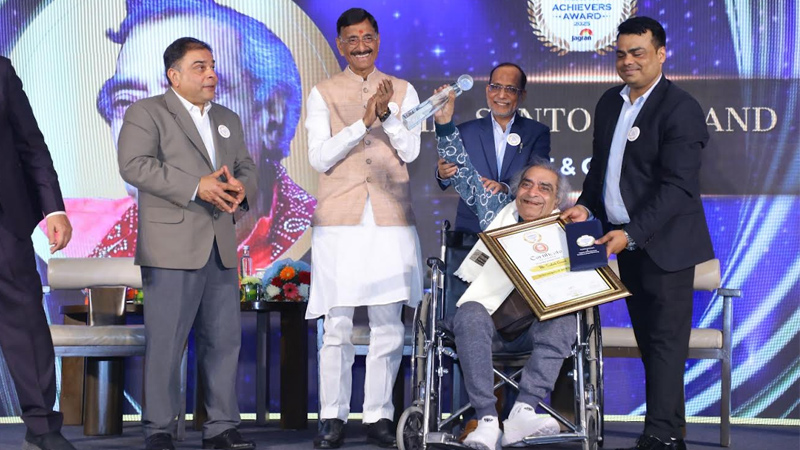
NEW DELHI: Hamdard Laboratories gathered a cross-section of India’s achievers in New Delhi on Friday, handing out the Hakeem Abdul Hameed Excellence Awards to figures who have left their mark across healthcare, education, sport, public service and the arts.
The ceremony, attended by minister of state for defence Sanjay Seth and senior officials from the ministry of Ayush, celebrated individuals whose work blends professional success with a sense of public purpose. It was as much a roll call of achievement as it was a reminder that influence is not measured only in profits or podiums, but in people reached and lives improved.
Among the headline awardees was Alakh Pandey, founder and chief executive of PhysicsWallah, recognised for turning affordable digital learning into a mass movement. On the sporting front, Arjuna Awardee and kabaddi player Sakshi Puniya was honoured for her contribution to the game and for pushing women’s participation onto bigger stages.
The cultural spotlight fell on veteran lyricist and poet Santosh Anand, whose songs have echoed across generations of Hindi cinema. At 97, Anand accepted the honour with characteristic humility, reflecting on a life shaped by perseverance and hope.
Healthcare honours spanned both modern and traditional systems. Manoj N. Nesari was recognised for strengthening Ayurveda’s place in national and global health frameworks. Padma shri Mohammed Abdul Waheed was honoured for his research-backed work in Unani medicine, while padma shri Mohsin Wali received recognition for his long-standing contribution to patient-centred care.
Education and social development also featured prominently. Padma shri Zahir Ishaq Kazi was honoured for decades of work in education, while former Meghalaya superintendent of Police T. C. Chacko was recognised for public service. Goonj founder Anshu Gupta received an award for his dignity-centred rural development initiatives, and the Hunar Shakti Foundation was honoured for empowering women and young girls through skill development.
The Lifetime Achievement Award went to former IAS officer Shailaja Chandra for her long career in public healthcare and governance, particularly in the traditional systems under Ayush.
Speaking at the event, Hamdard chairman Abdul Majeed said the awards were a tribute to those who combine excellence with empathy. “These awardees reflect Hakeem Sahib’s belief that healthcare, education and public service must ultimately serve humanity,” he said.
Minister Seth struck a forward-looking note, saying India’s young population gives the country a unique opportunity to become a global destination for learning, health and wellness by 2047.
The ceremony also featured the trailer launch of Unani Ki Kahaani, an upcoming documentary starring actor Jim Sarbh, set to premiere on Discovery on 11 February.
Instituted in memory of Unani scholar and educationist Hakeem Abdul Hameed, the awards have grown into a national platform that celebrates those building a more inclusive and resilient India. For one evening at least, the spotlight was not just on success, but on service with substance.