News Broadcasting
The DD Metro prime time imbroglio; Adhikari lashes out


Prasar Bharati acting CEO Anil Baijal surely must be in a dilemma. His plan to not continue with existing DD Metro partner HFCL-Nine and instead go in for open bidding has backfired if one goes by the kind of offers made to pocket the 8 to 10 pm prime time slot on the network. Rs 180 million by Sri Adhikari Brothers as against the Rs 1,210 (though for a larger programming time block) offered by HFCL Nine is obviously something that will not please either Aunty Sushma or the PMO.
So it’s no surprise that noises have emanated from within Mandi House that the bids are not acceptable as the offers are too low. No official notice has been sent to the bidders on what it intends to do.
According to industry sources, HFCL Nine CEO Ravina Raj Kohli has been in closed door meetings with I&B minister Sushma Swaraj to try and sort out the issue and win back the slot for her company.

In the meanwhile, the bidders, Shri Adhikari Brothers, Prachar Communication’s, and PNC are standing aside watching the developments.
“No official notice has come our way as yet,” says Shri Adhikari vice-chairman Markand Adhikari. “Only after that reaches us will we decide our course of action.”
Adhikari is angry about the government rethinking on its tendering process and the behind-the-scenes jostling that is taking place. “Nobody stopped anyone from bidding,” he says. “Those who have not bid have no right to make an offer after the bids have been opened. It will amount to a foul practice and bad example if this is done. It will not be acceptable.”
Adhikari also dismisses the allegation that a cartel was formed by the bidders to keep the offer price for DD Metro low. “There is no question of cartelisation,” he says. “We are competing with each other for the slots and don’t forget there is no concept of unity in the production industry.”
He is quick to point out that the Prasar Bharati will have to accept the bids on the principle of business ethics.
“The facts are that they tendered the DD Metro slot without any floor price. Now they cannot complain that the bids are too low,” he points out.
Adhikari is also livid about the fact that HFCL-Nine did not put in its bid and now it is trying to make a play for DD Metro. “Why did they not bid?” he asks.
To which an official spokesperson of HFCL-Nine responds: “The terms and conditions were not acceptable and commercially viable.”
The Shri Adhikari Brothers bid was of Rs 90 million for each hour. Another outfit Prachar Communications bid for the 7-8 pm and 10-11 pm slots with offers of Rs 10 million and Rs 50 million. Prachar’s bid was for Rs 105 million for the 8-10 pm slot. The third contender, Pritish Nandy Communications, made a bid for only one hour from 8-9 pm with an offer of just Rs 10 million.
Including Prachar’s bid, the total DD can expect from the 7-11 pm slot is Rs 240 million, one-fifth of what HFCL-Nine had paid last year.


News Broadcasting
CNN-News18 to host Fury in the Gulf conclave on West Asia crisis
Three-hour summit to unpack geopolitical fallout and impact on India
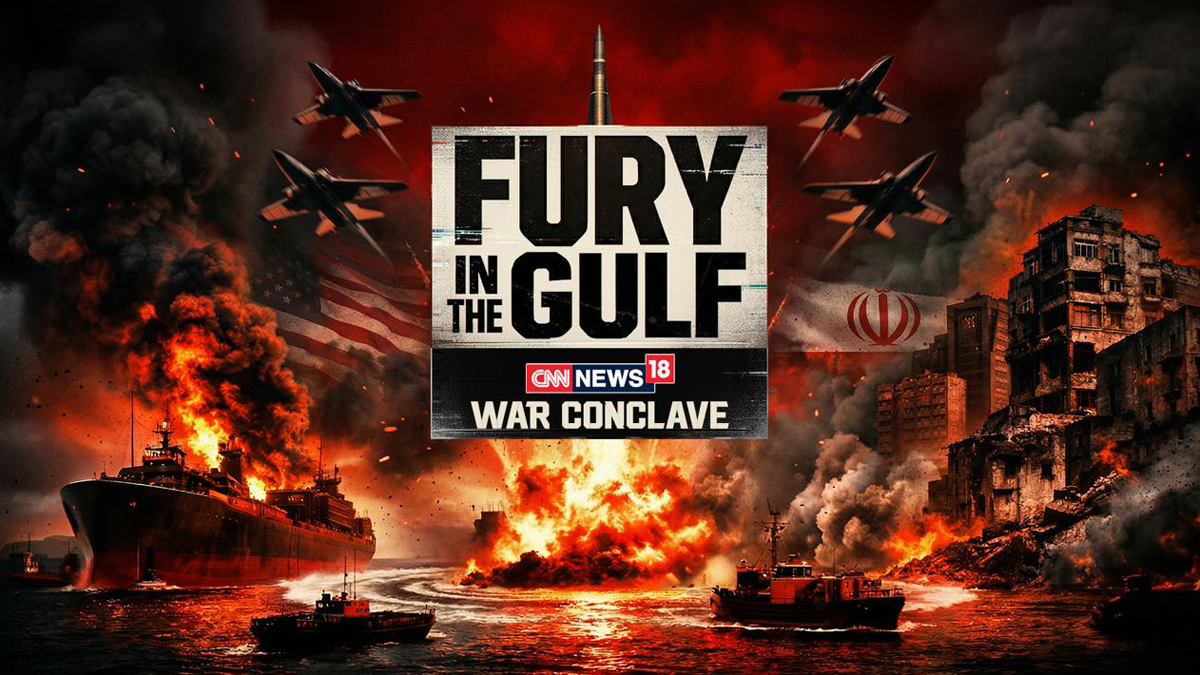
MUMBAI: CNN-News18 is set to host a special three-hour broadcast, Fury in the Gulf – War Conclave, on April 7, aiming to decode the escalating West Asia crisis and its far-reaching implications for India.
Scheduled from 4:00 PM to 7:00 PM, the conclave comes at a time when tensions between Iran and the United States are reshaping global geopolitics and triggering economic uncertainty. With India’s deep energy ties, trade links and large diaspora in the Gulf, the developments carry significant domestic relevance.
Built around the theme ‘Conflict, Consequences, and The Future,’ the programme will feature six curated sessions combining one-on-one interviews and panel discussions. The focus is to cut through the clutter and offer viewers a clearer understanding of the fast-evolving situation.
Key sessions include ‘Diplomacy in Times of War’ featuring Shashi Tharoor, and ‘World After the Iran Conflict’ with voices such as Ram Madhav, Reuven Azar, representatives from the European Union and the Iranian Deputy Envoy. Another session titled ‘Another Dunkirk?’ will bring together K. J. S. Dhillon and Jitin Prasada among others.
CNN-News18 editorial affairs director Rahul Shivshankar said, “In times of war, clarity becomes the most powerful tool. Fury in the Gulf – War Conclave brings together credible voices to address the questions and confusion that arise amid an overwhelming influx of information.”
He added that the initiative is aimed at delivering “facts, perspective, and insight” at a time when misinformation can easily cloud public understanding.
Echoing the sentiment, CNN-News18 CEO– English and business news Smriti Mehra said the conflict marks a defining global moment, with consequences that extend well beyond the region. She noted that the conclave seeks to present the crisis with “depth, nuance and responsibility” so audiences can better grasp its real-world impact.
As geopolitical tensions continue to dominate headlines, the conclave positions itself as an attempt to bring order to the noise, offering viewers a structured, insight-led look at a complex and rapidly shifting global situation.






