News Broadcasting
The analogue viewpoint


Recent legislation in India mandates the use of conditional access systems (CAS) for pay TV channels. Presently, every subscriber to the network receives all the channels and has to pay for them whether or not they wish to view. This is obviously unfair on the subscriber and hinders the growth of the cable TV business in India. The use of a secure and flexible CAS will transform the industry into a profitable and mainstream business.
Digital or Analogue CAS
Three to four years ago, cable operators in Europe and America decided to change their CAS from analogue to digital. Mainly, this was in an attempt to preserve their business from the satellite (DTH) threat. They were also being attacked by pirates stealing the signals. History now tells us this move to digital was a mistake.
Digital CAS was the vehicle of choice for European cable operators in the last few years. It promised security, multiple channel line up and additional services from which the operator could derive a further revenue stream. Companies such as NTL and Telewest in the UK, Kirsch in Germany, UCN in Europe and Adelphia in the USA invested many hundreds of millions in the new technology. They purchased new headends, new set top boxes but they underestimated the size of the task required to upgrade their networks to take the digital signals. All of the above mentioned companies are now in Chapter 11, the American equivalent of bankruptcy, due partially to the escalating costs of running a digital network.

Digital CAS promised much but delivered little. Security, the much vaunted holy grail of digital, was compromised. Indeed, the encryption algorithms of a leading CAS company were posted on the World Wide Web. This has resulted in a multimillion dollar law suite and a statement from a prominent CEO admitting there can never be a secure system. Additional revenue from the added services such as internet access has failed to emerge as cable operators the world over find that subscribers are only prepared to pay a certain percentage of their disposable monthly income on TV services, irrespective of whether they are video or internet.
Digital set top boxes are not tolerant of input power, slope and reflections on the network. All of these problems will cause picture “blocking” resulting in subscriber dis-satisfaction. Solutions to these problems are usually expensive, take a lot of time and require bespoke engineering.
Analogue CAS has served cable operators well for many years. Traditional systems have suffered in recent years from piracy of signals and the stigma of being associated with old technology. However, today’s facts paint a different picture. Analogue systems based on sync manipulation and inversion techniques are indeed relatively easy to defeat. It is to these types of system that people refer when they claim that analogue CAS cannot be secure.
The more recent and advanced systems use full digital technology, within the box, to produce a highly secure yet cost effective solution. Using techniques such as cut and rotate, line shuffle or a combination of both produces video which is extremely obscure and practically impossible to reconstruct without massive computing power and access to extreme electronics. Indeed, a situation exactly the same as a traditional digital system.
Analogue systems can provide additional services such as NIPPV, internet access and others where applicable. These are normally achieved through either a telephone or cable modem. Analogue systems have the benefit of being extremely tolerant of cable system imperfections. They can accept a wide range of input powers, at least five or six times larger than a digital unit; they do not mind about adjacent channel slope and they are resilient to reflections on the network. The time and therefore cost to implement an analogue solution is many times less than that for a digital solution.







News Broadcasting
CNN-News18 to host Fury in the Gulf conclave on West Asia crisis
Three-hour summit to unpack geopolitical fallout and impact on India
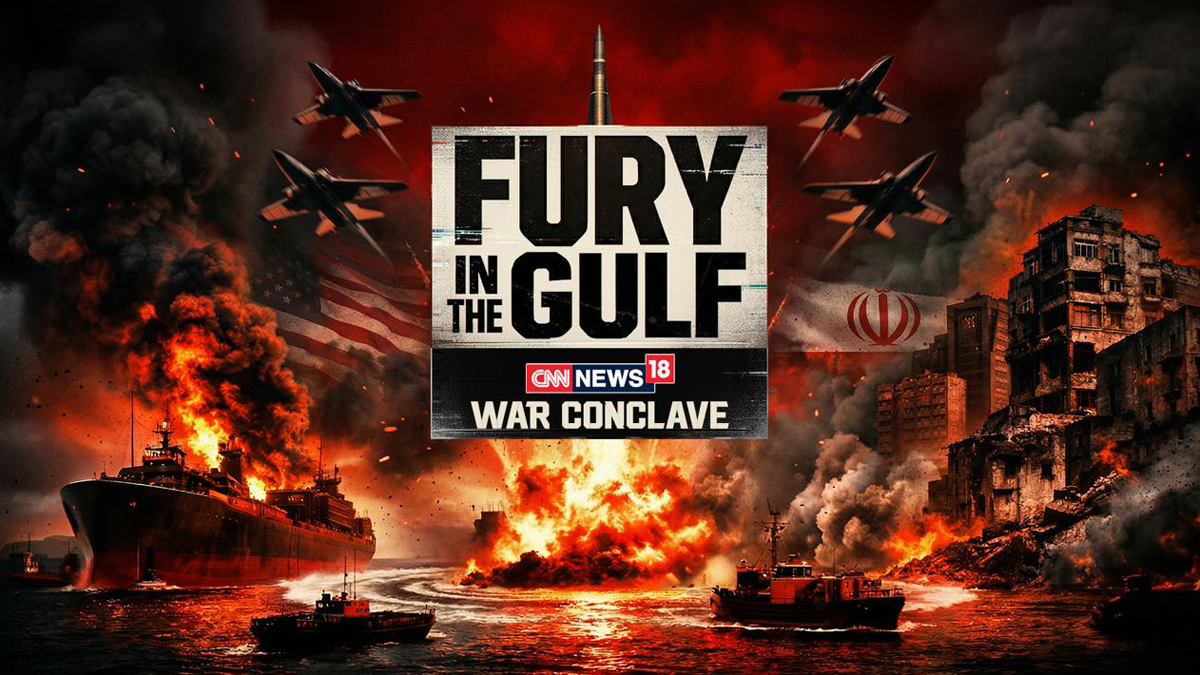
MUMBAI: CNN-News18 is set to host a special three-hour broadcast, Fury in the Gulf – War Conclave, on April 7, aiming to decode the escalating West Asia crisis and its far-reaching implications for India.
Scheduled from 4:00 PM to 7:00 PM, the conclave comes at a time when tensions between Iran and the United States are reshaping global geopolitics and triggering economic uncertainty. With India’s deep energy ties, trade links and large diaspora in the Gulf, the developments carry significant domestic relevance.
Built around the theme ‘Conflict, Consequences, and The Future,’ the programme will feature six curated sessions combining one-on-one interviews and panel discussions. The focus is to cut through the clutter and offer viewers a clearer understanding of the fast-evolving situation.
Key sessions include ‘Diplomacy in Times of War’ featuring Shashi Tharoor, and ‘World After the Iran Conflict’ with voices such as Ram Madhav, Reuven Azar, representatives from the European Union and the Iranian Deputy Envoy. Another session titled ‘Another Dunkirk?’ will bring together K. J. S. Dhillon and Jitin Prasada among others.
CNN-News18 editorial affairs director Rahul Shivshankar said, “In times of war, clarity becomes the most powerful tool. Fury in the Gulf – War Conclave brings together credible voices to address the questions and confusion that arise amid an overwhelming influx of information.”
He added that the initiative is aimed at delivering “facts, perspective, and insight” at a time when misinformation can easily cloud public understanding.
Echoing the sentiment, CNN-News18 CEO– English and business news Smriti Mehra said the conflict marks a defining global moment, with consequences that extend well beyond the region. She noted that the conclave seeks to present the crisis with “depth, nuance and responsibility” so audiences can better grasp its real-world impact.
As geopolitical tensions continue to dominate headlines, the conclave positions itself as an attempt to bring order to the noise, offering viewers a structured, insight-led look at a complex and rapidly shifting global situation.






