News Headline
Tennis ventures into murky waters as power struggle between WTA, ATP & Grand Slams intensifies

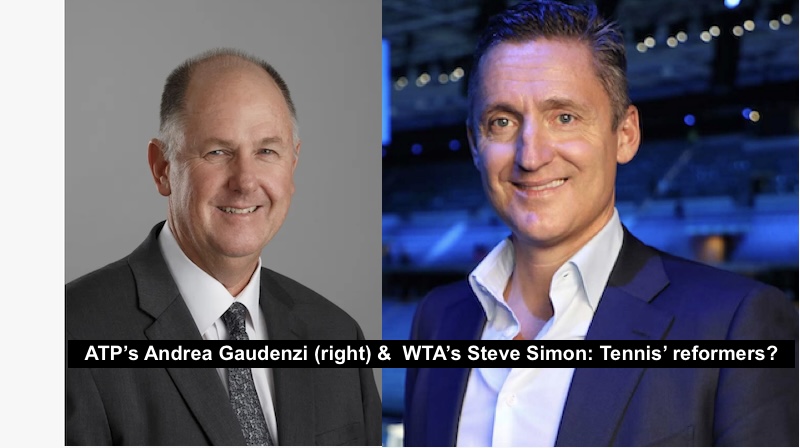
MUMBAI: The ATP and WTA tours have served up a bold proposal to tennis’s four Grand Slams that would unite the sport’s fractured ecosystem under one corporate umbrella, only to be met with a terse rejection that leaves the future of the sport in a state of limbo.
In a 23-page pitch presented last week, ATP chairman Andrea Gaudenzi and WTA chief Steve Simon outlined a sweeping reform package to address tennis’s fragmented structure and financial inequities. The timing couldn’t be more fraught, coming just as the Professional Tennis Players Association (PTPA) co-founded by Novak Djokovic unleashed a legal volley against the sport’s governing bodies, accusing them of “anti-competitive practices and a blatant disregard for player welfare”.
The tours’ proposal envisions creating a new entity called Tennis Ventures that would combine the commercial interests of the ATP, WTA and the four Grand Slams. While the majors would maintain control of their domestic media rights, international rights would be packaged together to maximize bargaining power.

“It all starts with top players at premium events—driving rivalries and elevating the sport’s biggest stages,” the proposal states, advocating for a streamlined calendar featuring four Grand Slams, 10 ATP Masters 1000 events and 10 WTA 1000 events.
But the Grand Slams, who contribute over 50 per cent of tennis’s estimated $2.2 billion annual revenue, have returned a withering response. “Whilst we appreciate the time and effort you have put in to articulating your position, it fails to adequately address the essential issues we have repeatedly raised,” they wrote in an eight-paragraph letter.
The majors prefer a more radical pruning of the tennis calendar, cutting from 118 tournaments to around 30 elite events with a substantially longer off-season. Their priorities include creating what they call a “premium product” that would be easier for fans to follow—and conveniently give even more prominence to their already dominant events.
A particularly sticky point is governance. The proposed board structure would give the four Grand Slams just three representatives, a notion that reportedly landed with all the grace of a double fault. One insider familiar with the majors’ thinking described the tours’ proposal as “essentially no different to what we have already”.
At the heart of the dispute lies the age-old question of money. Currently, player prize money at Grand Slams represents just 15 to 20 per cent of tournament revenue—a stark contrast to major American sports leagues, where players receive closer to 50 per cent.
Gaudenzi and Simon aim to address this disparity through “a profit-sharing model where players and tournaments share in new value created,” including bringing the cash-rich Grand Slams into the bonus pool system that already exists at lower-tier events.
“This is ultimately about creating a sustainable ecosystem,” the tours’ document states. “Where players have transparency over the financials. Where your wins are their wins.”
But with the PTPA now lobbing legal challenges on three continents and the Grand Slams holding firm, tennis seems destined to remain a house divided against itself. As the majors curtly concluded in their rejection letter: “Until you feel able to commit to a vision and a plan with respect to these core issues it is difficult to see how our discussions can continue”.
The ball, it seems, is once again in nobody’s court.






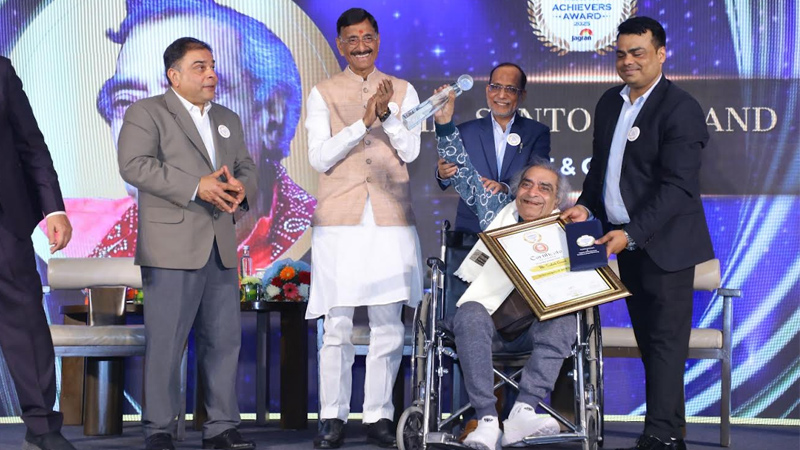
NEW DELHI: Hamdard Laboratories gathered a cross-section of India’s achievers in New Delhi on Friday, handing out the Hakeem Abdul Hameed Excellence Awards to figures who have left their mark across healthcare, education, sport, public service and the arts.
The ceremony, attended by minister of state for defence Sanjay Seth and senior officials from the ministry of Ayush, celebrated individuals whose work blends professional success with a sense of public purpose. It was as much a roll call of achievement as it was a reminder that influence is not measured only in profits or podiums, but in people reached and lives improved.
Among the headline awardees was Alakh Pandey, founder and chief executive of PhysicsWallah, recognised for turning affordable digital learning into a mass movement. On the sporting front, Arjuna Awardee and kabaddi player Sakshi Puniya was honoured for her contribution to the game and for pushing women’s participation onto bigger stages.
The cultural spotlight fell on veteran lyricist and poet Santosh Anand, whose songs have echoed across generations of Hindi cinema. At 97, Anand accepted the honour with characteristic humility, reflecting on a life shaped by perseverance and hope.
Healthcare honours spanned both modern and traditional systems. Manoj N. Nesari was recognised for strengthening Ayurveda’s place in national and global health frameworks. Padma shri Mohammed Abdul Waheed was honoured for his research-backed work in Unani medicine, while padma shri Mohsin Wali received recognition for his long-standing contribution to patient-centred care.
Education and social development also featured prominently. Padma shri Zahir Ishaq Kazi was honoured for decades of work in education, while former Meghalaya superintendent of Police T. C. Chacko was recognised for public service. Goonj founder Anshu Gupta received an award for his dignity-centred rural development initiatives, and the Hunar Shakti Foundation was honoured for empowering women and young girls through skill development.
The Lifetime Achievement Award went to former IAS officer Shailaja Chandra for her long career in public healthcare and governance, particularly in the traditional systems under Ayush.
Speaking at the event, Hamdard chairman Abdul Majeed said the awards were a tribute to those who combine excellence with empathy. “These awardees reflect Hakeem Sahib’s belief that healthcare, education and public service must ultimately serve humanity,” he said.
Minister Seth struck a forward-looking note, saying India’s young population gives the country a unique opportunity to become a global destination for learning, health and wellness by 2047.
The ceremony also featured the trailer launch of Unani Ki Kahaani, an upcoming documentary starring actor Jim Sarbh, set to premiere on Discovery on 11 February.
Instituted in memory of Unani scholar and educationist Hakeem Abdul Hameed, the awards have grown into a national platform that celebrates those building a more inclusive and resilient India. For one evening at least, the spotlight was not just on success, but on service with substance.






