International
Ten books that deserve to be adapted into films in 2026

MUMBAI: As 2026 kicks off, cultural authority feels increasingly dispersed. First-time novelists sit alongside literary mainstays, while actors, influencers, and playwrights all compete for cinematic attention. In this environment, the old question resurfaces with urgency: why do some books translate so effectively to film, while others are dismissed as unadaptable?
We already know the canonical successes. Harry Potter, The Lord of the Rings, Normal People. But as attention spans shorten and viewing habits fragment, can interior, structurally difficult novels still hold an audience? And should cinema even try?
The following books suggest that it should.

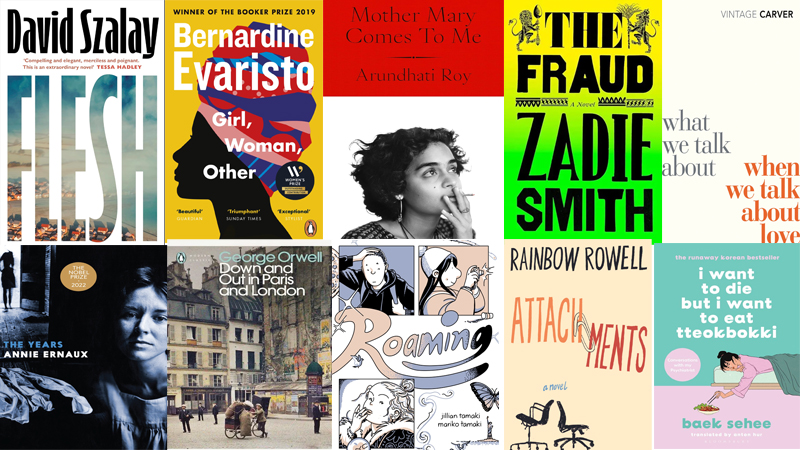
1. Flesh by David Szalay

Szalay’s novel follows a male protagonist drifting through sex, work, and power with an emotional blankness that becomes its own diagnosis. The book is an anatomy of masculine passivity, entitlement, and quiet self-destruction.
Seen against the rise of online masculinity discourse and figures emerging from the so-called manosphere, Flesh offers a far more unsettling portrait. It neither redeems nor condemns its subject. A film adaptation would succeed only if it preserved this moral discomfort, forcing viewers to sit inside a masculinity that does not announce itself as a problem.
Adaptation status: no announced screen adaptation.
2. I Want to Die, but I Want to Eat Tteokbokki by Baek Se-hee

First published in 2018, this book documents therapy sessions addressing depression, medication, and stigma in South Korea. Baek Se-hee has unfortunately passed away, yet the book’s popularity has endured.
Its appeal lies in its ordinariness. There is no narrative breakthrough, only repetition and honesty. A restrained film adaptation could offer a rare depiction of mental health that avoids both melodrama and uplift, while also opening a culturally specific conversation rarely shown on screen.
Adaptation status: no confirmed adaptation.
3. Attachments by Rainbow Rowell

Despite the current enthusiasm for romantic adaptations, this novel has yet to be adapted for the screen. Told largely through monitored workplace emails, it follows an IT employee who falls in love with someone he has never met.
It is a romance shaped by surveillance, distance, and ethical unease. In an era of digital intimacy and algorithmic proximity, this would make a sharp, contemporary romantic film that understands how affection now develops indirectly.
Adaptation status: previously optioned, not produced.
4. What We Talk About When We Talk About Love by Raymond Carver

This short story collection is built on silence, miscommunication, and emotional failure. Its minimalism is cinematic rather than literary, relying on what is withheld rather than explained.
A film adaptation in vignette form could capture this accumulation of small disappointments. It would resist plot in favour of mood and implication, demanding patience rather than rewarding it.
Adaptation status: individual stories adapted; no definitive feature adaptation of the collection.
5. The Fraud by Zadie Smith

Published in 2023, this is Zadie Smith’s first historical novel. Set around the Victorian Tichborne Trial, it examines race, class, authorship, and credibility in a society obsessed with legitimacy.
Though intellectually dense, it has a strong narrative frame and vivid historical texture. A film adaptation could streamline its arguments while preserving its central concern: who gets believed, and why.
Adaptation status: no announced adaptation.
6. Roaming by Jillian Tamaki and Mariko Tamaki

This graphic novel follows three university friends as they drift through New York, capturing the emotional slackening that defines early adulthood.
Its visual language and episodic structure already resemble cinema. A film adaptation could thrive as a quiet coming-of-age story focused on atmosphere rather than transformation.
Adaptation status: no announced adaptation.
7. The Years by Annie Ernaux

Ernaux’s collective autobiography rejects traditional narrative, moving instead through memory, photographs, and shared cultural experience.
A recent stage adaptation showed that the book can survive translation across forms. A film version would need to embrace fragmentation and essayistic techniques, but the result could be formally daring and emotionally precise.
Adaptation status: stage adaptations exist; no major film announced.
8. Girl, Woman, Other by Bernardine Evaristo

This polyphonic novel traces the interconnected lives of Black British women across generations. Its modular structure suits screen adaptation, particularly ensemble formats.
While television may be the natural home, a carefully constructed film could foreground its thematic coherence without flattening difference.
Adaptation status: a screen adaptation has been announced and is in development.
9. Mother Mary Comes to Me by Arundhati Roy

Published in 2024, this memoir explores Roy’s relationship with her mother, politics, faith, and personal history. It is intimate, uncompromising, and formally loose.
A film adaptation would need to avoid biopic conventions in favour of reflection and contradiction. It would appeal to audiences comfortable with ambiguity rather than narrative closure.
Adaptation status: no announced adaptation.
10. Down and Out in Paris and London by George Orwell

Orwell’s account of poverty and precarious labour remains unsettlingly current. Its depiction of invisible work and social indifference resonates strongly in an age of gig economies and housing insecurity.
A modern adaptation could retain its period setting while making its relevance unmistakable. Darkly comic and ethically sharp, it is overdue for a serious cinematic reimagining.
Adaptation status: adapted previously; no recent major adaptation announced.
Books that adapt well are not necessarily plot-driven but structurally honest. They trust audiences to tolerate discomfort, ambiguity, and silence. If cinema is serious about reflecting contemporary life, fractured, anxious, plural, these are exactly the stories it should be brave enough to attempt.
* Note: These books are not in any particular order


International
Russia-India cinematic spectacle Persimmon of My Love set for grand Moscow debut
Hindi cinema style musical revives Indo-Soviet cinema ties for today

MUMBAI: A new chapter in cross-border storytelling is set to unfold as Persimmon of My Love gears up for its premiere in Moscow on 1 April 2026, marking the first large-scale cinematic collaboration between Russia and India in decades.
Positioned as a modern nod to the cultural exchange that once brought Indian classics to Soviet audiences, the film blends Hindi cinema flair with Russian storytelling, aiming to rekindle a long-standing cinematic friendship.
Directed by Marius Weisberg, the musical comedy follows two brothers navigating a lively world of music, family and romance. The lead roles are played by Demis Karibidis and Mikhail Galustyan, with Karibidis also contributing as a screenwriter.
Shot entirely in India, the production leans heavily into Hindi cinema style spectacle. Filming took place across Mumbai studios and the cities of Udaipur and Jodhpur, whose architecture was used to create the fictional setting of Khurmada. A crew of over 350 worked on the project, with large-scale sequences featuring up to 1,000 extras.
The film also brings Indian creative talent into the mix. Dance sequences are choreographed by Jay Kumar, while music by Zurab Matua features songs in both Hindi and Russian, adding to its cross-cultural appeal.
Backed by TNT channel, MyWayStudio and the Russian Cinema Fund, the project reflects a broader push to strengthen cultural ties between the two countries.
With its mix of colour, comedy and cross-border collaboration, Persimmon of My Love is not just a film release but a reminder that cinema, much like music, travels well across borders.







