News Headline
Television News in India: Crassness or Credibility?

The year gone by saw more and more Indian television channels featuring news and current affairs programmes entering an already-crowded space. Apprehensions of an imminent shake-out proved unfounded even as channels attempted gimmicks galore to attract eyeballs, even for brief periods. As more players prepare themselves to enter this highly competitive arena in 2005, attempts to gain credibility, present content that is exclusive and add value to non-exclusive news that is widely disseminated would acquire paramount importance – these attempts would determine the difference between survival and slow death.
India’s experience with television is unique in the world in more ways than one. This was the first country on the planet to use satellites for television broadcasting in 1975. During the mid-1980s, Doordarshan’s terrestrial network expanded faster than any TV network anywhere in the world ever had. We were the first country to market news and current affairs on videotapes thanks to the government’s control over the medium. The transition of cable TV from a class to a mass phenomenon in the early-1990s changed the TV viewing scenario in ways few could have imagined. Even today, India is the only country where the number of TV sets with cable and satellite connections exceeds the number of either fixed telephone lines or mobile phones and the only country where a subscriber can receive over 100 channels for barely US$ 5-6 per month.

Add to the above list of “firsts” the fact that we are the only country with such a large number of TV channels with news and current affairs programmes – at least two dozen in various languages, a number that is growing by the month. But quantity, as any fool knows, does not mean quality. If the reverse was true, as a country producing around 800 feature films would not account for less than 5 per cent of the turnover of the international film industry. Competition is supposed to be healthy since it cuts costs and offers choices to consumers – who remembers that until as recently as 14 years ago, almost all Indian TV viewers could only view public broadcaster Doordarshan’s sub-standard offerings?
The problem with too much competition today is that, in the race to grab viewers’ attention, TV channels end up dumbing down or using the lowest common denominator to produce programmes that end up insulting the intelligence of their viewers. Worse, channels trivialize, sensationalize and frequently cross the thin dividing line between between a citizen’s right to information and the invasion of her/his privacy. Witness, for instance, the manner in which Zee News converted Gudia’s poignant story into a “reality show”. She, after all, had no idea that her first husband would return before she chose to remarry and bear a child.
As far as credibility is concerned, during the run-up to the 14th general elections, most Indian TV channels displayed feet of clay. All of us have our personal predilections and political preferences but to allow blatant bias to creep into news coverage damages if not destroys, credibility. Thus, it would be simplistic to presume that most TV news channels displayed a distinct bias in favour of the incumbent BJP-led NDA regime merely on account of the fact that they were beneficiaries of the India Shining/Bharat Uday advertising campaign.
Like many elitist journalists and opinion pollsters who falsely claimed that they could feel the proverbial pulse of the people, quite a few of these commentators who were heavily promoted by TV channels turned out to be little more than opinionated, self-appointed pundits. A study by a New Delhi based NGO, the Centre for Advocacy and Research, has placed actual numbers revealing the partisan manner in which TV channels covered pre-election news between March 8 and May 7 that is worth looking at.
If TV channels were not so biased, would they have covered former Deputy Prime Minister L K Advani’s yatra from Kanyakumari to Kashmir in his air-conditioned rath with a portable loo by the hour and all but ignored Congress leader (now Chief Minister) Y S Rajshekhar Reddy’s 1,200-km walk through Andhra Pradesh in the peak of summer? Not surprisingly, these channels were left with such a lot of egg on their face on May 13 that they needed a vacuum cleaner to remove the mess – to use Asian Age editor M J Akbar’s memorable self-deprecatory phrase.
After the poll pundits were proved wrong, few of them had the grace to acknowledge the fact that they had put on blinkers, that they had completely misread the political reality but indulging in wishful thinking. In view of the lack of objectivity and the pro-status-quo attitudes displayed by a substantial section of the country’s TV news media, if television in India is to play a more proactive role in the political life of the country — as many think it already is – serious introspection is called for.
But all is far from being lost. The same channels that were gung-ho about the Vajpayee regime were far more circumspect in their coverage of the Maharashtra assembly elections. Many channels have been (and continue to be) at their sensitive best in the manner in which stories were (are) being carried about the victims of the natural disaster that has devastated so many lives.
As more news channels enter the fray – CNBC-TV18’s monopoly on the business news space would be over in January itself — the endeavour to ensure not just authenticity and empathetic portrayal of people, but credibility as well, would assume paramount importance. Unlike those who work in news channels, most viewers are less concerned about who broke the news first – the word “exclusive” was much abused by channels during 2004 – and more bothered about the quality and depth of the portrayal of news.
TV news in India could degenerate into something worse than eye-candy – or, if you so prefer, chewing gum for the mind! The idiot box could, on the other hand, become a misnomer by becoming a powerful tool — not to titillate but to empower.
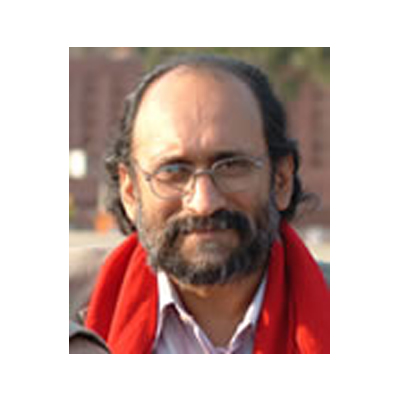
The author is Director, School of Convergence and a journalist with over 27 years of experience in various media – print, radio, television and the Internet. He has co-authored a book “A Time of Coalitions: Divided We Stand” and directed a documentary “Idiot Box or Window of Hope”. He may be contacted at paranjoy@yahoo.com.
(The views expressed here are those of the author. www.indiantelevision.com need not necessarily subscribe to them.)







NEW DELHI: Hamdard Laboratories gathered a cross-section of India’s achievers in New Delhi on Friday, handing out the Hakeem Abdul Hameed Excellence Awards to figures who have left their mark across healthcare, education, sport, public service and the arts.
The ceremony, attended by minister of state for defence Sanjay Seth and senior officials from the ministry of Ayush, celebrated individuals whose work blends professional success with a sense of public purpose. It was as much a roll call of achievement as it was a reminder that influence is not measured only in profits or podiums, but in people reached and lives improved.
Among the headline awardees was Alakh Pandey, founder and chief executive of PhysicsWallah, recognised for turning affordable digital learning into a mass movement. On the sporting front, Arjuna Awardee and kabaddi player Sakshi Puniya was honoured for her contribution to the game and for pushing women’s participation onto bigger stages.
The cultural spotlight fell on veteran lyricist and poet Santosh Anand, whose songs have echoed across generations of Hindi cinema. At 97, Anand accepted the honour with characteristic humility, reflecting on a life shaped by perseverance and hope.
Healthcare honours spanned both modern and traditional systems. Manoj N. Nesari was recognised for strengthening Ayurveda’s place in national and global health frameworks. Padma shri Mohammed Abdul Waheed was honoured for his research-backed work in Unani medicine, while padma shri Mohsin Wali received recognition for his long-standing contribution to patient-centred care.
Education and social development also featured prominently. Padma shri Zahir Ishaq Kazi was honoured for decades of work in education, while former Meghalaya superintendent of Police T. C. Chacko was recognised for public service. Goonj founder Anshu Gupta received an award for his dignity-centred rural development initiatives, and the Hunar Shakti Foundation was honoured for empowering women and young girls through skill development.
The Lifetime Achievement Award went to former IAS officer Shailaja Chandra for her long career in public healthcare and governance, particularly in the traditional systems under Ayush.
Speaking at the event, Hamdard chairman Abdul Majeed said the awards were a tribute to those who combine excellence with empathy. “These awardees reflect Hakeem Sahib’s belief that healthcare, education and public service must ultimately serve humanity,” he said.
Minister Seth struck a forward-looking note, saying India’s young population gives the country a unique opportunity to become a global destination for learning, health and wellness by 2047.
The ceremony also featured the trailer launch of Unani Ki Kahaani, an upcoming documentary starring actor Jim Sarbh, set to premiere on Discovery on 11 February.
Instituted in memory of Unani scholar and educationist Hakeem Abdul Hameed, the awards have grown into a national platform that celebrates those building a more inclusive and resilient India. For one evening at least, the spotlight was not just on success, but on service with substance.






