News Broadcasting
Telemart-2004 will spark new ideas: Ronnie Screwvala

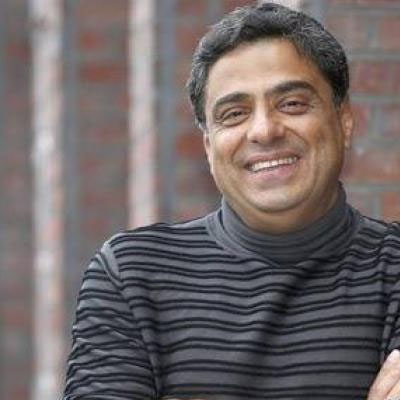
MUMBAI: “Telemart isn’t like any other conference. The focus here is on actual trade and not just company plugs. In fact, the two-hour conference held every day, before the actual trade opens, will instead deal with the industry and community issues.”
UTV promoter and CII Telemart’s event chairperson Ronnie Screwvala opines about the first-ever International Content Marketplace – Telemart 2004.
First ever such conference to be held in India, Telemart is touted as Mipcom of India. To be held in Mumbai on 16 – 17 September at the Grand Hyatt, the event is meant specifically for Indian and neighbouring markets and is designed to help media businesses capitalise on the growing opportunities by offering a platform to network and trade in content for the Indian market.

Media companies like broadcaster Sony, production major UTV, television glossie GR8 and indiantelevision.com are the main partners for the event.
“Whenever we (Indian producers) went abroad, it has always been an individual effort. And hence we were always a small fry. But with Telemart being an annual event, one can hope that trading of software — content or animation or technology — in India would be much organised,” Screwvala says.
With technology coming of age, what with Indian media upbeat about the technologies like DTH, Pay TV, and broadband, the conference comes at a good time.
According to Screwvala, CII expects about 200-250 focused participants for the inaugural edition, 35 of them are expected to be serious international players.
“With format shows, soaps adapted being the current flavour of the season on Indian television, it can be anticipated that international payers- both big and small will be keen,” says Screwvala.
Although he does not expect either bidding or actual trade to take place, Screwvala expects that Telemart 2004 will be a platform for broadcasters, TV content makers, distributors, distribution to interact and initiate businesses. “If on-the-spot trading happens, then that would be quite a success, but we are ideally targeting the same for the second or the third edition,” he says.
Speaking about his role as the event chairperson, Screwvala says, “I am looking at it to be an annual affair with good participation from both the regional as well as small players. Even for the seminar, I am looking at the talks sparking new thoughts.”
Although he is upbeat about the animation industry’s participation, he opines that it will have more to do with showcasing the talent and use of technology rather than creative portfolio’s. “There is hardly any original content churned out of India. But so is the case with the UK, France and Canada. Churning of original content requires government support as it is not a cheap proposition,” he adds.
For further details about Telemart, contact Gayatri Gulati at CII office— 24931790. Or visit Telemart website www.telemart.tv.







News Broadcasting
CNN-News18 to host Fury in the Gulf conclave on West Asia crisis
Three-hour summit to unpack geopolitical fallout and impact on India
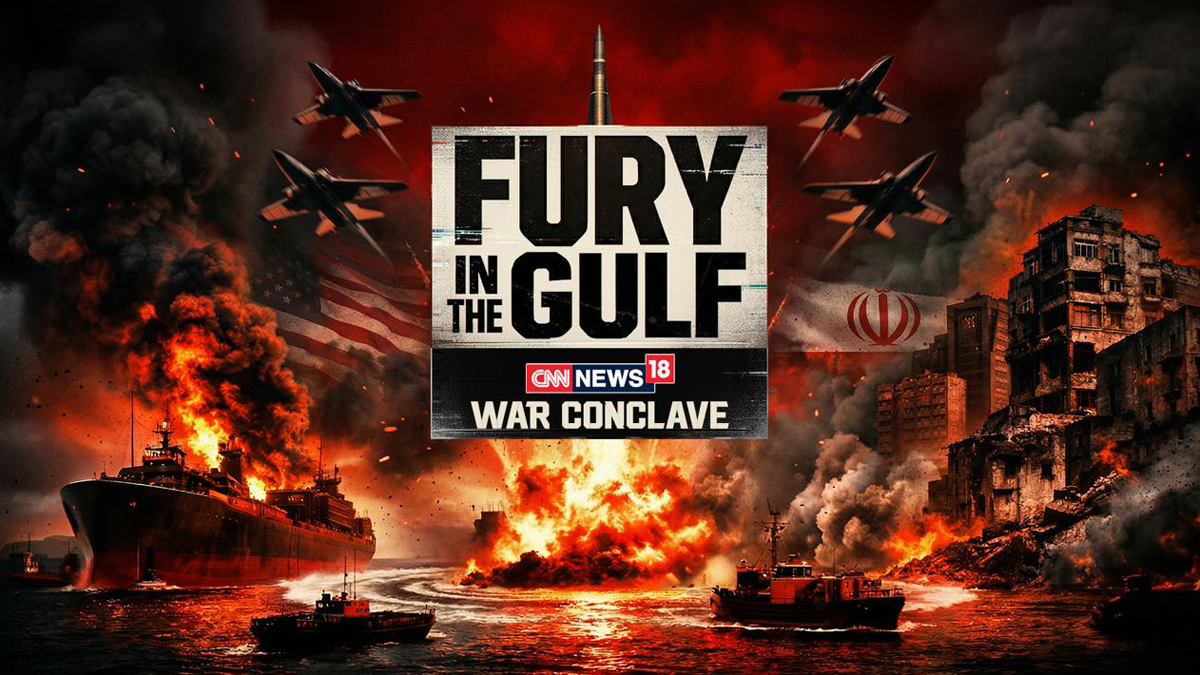
MUMBAI: CNN-News18 is set to host a special three-hour broadcast, Fury in the Gulf – War Conclave, on April 7, aiming to decode the escalating West Asia crisis and its far-reaching implications for India.
Scheduled from 4:00 PM to 7:00 PM, the conclave comes at a time when tensions between Iran and the United States are reshaping global geopolitics and triggering economic uncertainty. With India’s deep energy ties, trade links and large diaspora in the Gulf, the developments carry significant domestic relevance.
Built around the theme ‘Conflict, Consequences, and The Future,’ the programme will feature six curated sessions combining one-on-one interviews and panel discussions. The focus is to cut through the clutter and offer viewers a clearer understanding of the fast-evolving situation.
Key sessions include ‘Diplomacy in Times of War’ featuring Shashi Tharoor, and ‘World After the Iran Conflict’ with voices such as Ram Madhav, Reuven Azar, representatives from the European Union and the Iranian Deputy Envoy. Another session titled ‘Another Dunkirk?’ will bring together K. J. S. Dhillon and Jitin Prasada among others.
CNN-News18 editorial affairs director Rahul Shivshankar said, “In times of war, clarity becomes the most powerful tool. Fury in the Gulf – War Conclave brings together credible voices to address the questions and confusion that arise amid an overwhelming influx of information.”
He added that the initiative is aimed at delivering “facts, perspective, and insight” at a time when misinformation can easily cloud public understanding.
Echoing the sentiment, CNN-News18 CEO– English and business news Smriti Mehra said the conflict marks a defining global moment, with consequences that extend well beyond the region. She noted that the conclave seeks to present the crisis with “depth, nuance and responsibility” so audiences can better grasp its real-world impact.
As geopolitical tensions continue to dominate headlines, the conclave positions itself as an attempt to bring order to the noise, offering viewers a structured, insight-led look at a complex and rapidly shifting global situation.






