Applications
Telefónica, Microsoft to deploy global video platform


MUMBAI: Telecom company Telefónica‘s subsidiary Telefonica Digital and Microsoft have announced a multi-year strategic agreement to create a new global video platform (GVP) for all video entertainment services across Telefónica‘s Operating Businesses.
Based on key Microsoft technologies including the Microsoft Mediaroom platform, the GVP is unique in delivering TV services over both managed (IPTV) and non-managed (over the top) networks, at global scale, to a range of consumer devices.
The first GVP deployments are taking place in Brazil, Chile and Spain, and Telefónica anticipates extending the deployment of TV services based on the GVP to a number of its other Operating Businesses over the next few years.

Telefónica Digital director of digital services Vivek Dev said, "Video is a fast-growing market, and we already play a leading role in delivering Pay TV services to customers in Europe and Latin America. This new platform allows us to reflect the deep and rapid changes happening in this market. It offers the ease and convenience of a global, convergent platform while maintaining flexibility over content for our local businesses. Most important, it allows us to meet customer demands for access to video content on an ever-expanding range of devices".
The GVP, and its use of Mediaroom, will enable Telefónica to deliver to consumers high-performance, differentiated and feature-rich TV services over both its managed high-speed broadband networks as well as "over-the-top" nonmanaged broadband networks. It provides a range of advanced features to TV subscribers, including time-shifting and multiscreen among others, enabling Telefónica to take advantage of its multidevice capabilities.
Microsoft corporate VP, Operator TV Business Tom Gibbons said, "Telefónica is a close partner to Microsoft, and the Global Video Platform, based on the Microsoft Mediaroom platform, will enable them to grow their business and reach new audiences. This new agreement focused on Telefónica‘s GVP further extends our alliance in the world of TV and video entertainment to a range of screens throughout the home and on the go, and the benefits will be enjoyed by many millions of people globally. Through its use of IP-based broadband networks and the Microsoft Mediaroom platform, Telefónica‘s next-generation TV services are poised to delight and entertain millions of consumers across their markets in Europe and Latin America."
These services can be enjoyed by consumers on a range of devices inside and outside the home, including set-top boxes, Xbox 360, tablets and smartphones. Because the Mediaroom platform includes key technologies such as Microsoft PlayReady, Internet Information Services Smooth Streaming and Microsoft Silverlight, the delivery of TV services across these various networks and to multiple screen types can all be done via one common technology infrastructure. This is expected to result in significant efficiencies for Telefónica in time to market, cost of delivery and overall scale.
Earlier this month, Telefónica launched its premium Internet Protocol television (IPTV) service in Brazil, which follows a similar launch in Chile in October. Both services, Vivo TV Fibra in Brazil and Movistar IPTV in Chile, are the first IPTV deployments that take advantage of the new GVP platform and its capabilities, offering an exceptional user experience for their Fiber to the Home customers. In November 2011, Telefónica and Microsoft launched the first service enabled by the GVP: Movistar Imagenio on Xbox 360. It provides subscribers with 12 linear channels focused on sports, including the Spanish First Soccer League (Liga BBVA) under Canal+ Liga Channel.
During the past 14 months, the Microsoft Mediaroom platform has continued to scale its deployments and services, surpassing 11 million consumer households and 22 million set-top boxes across the Americas, EMEA and APAC, further securing its position as the world‘s most deployed IPTV platform.*







Applications
With 57 per cent single new users, Ashley Madison rebrands as discreet dating platform
Platform says majority of new members now identify as single
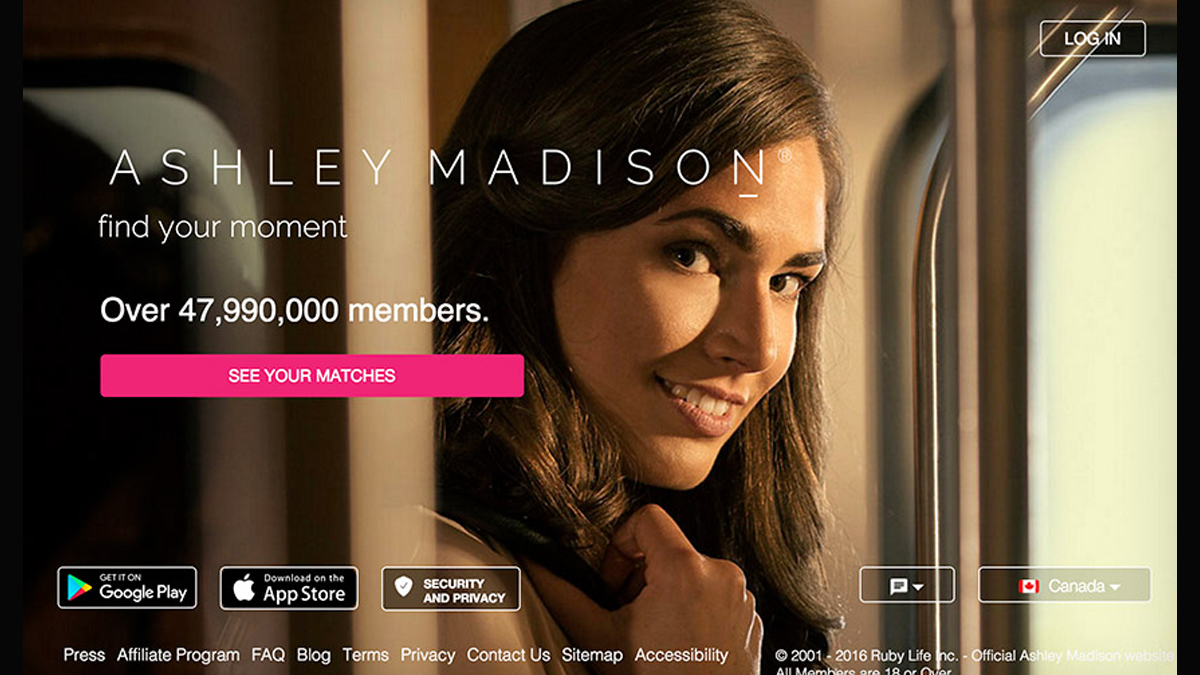
INDIA: Ashley Madison is shedding the “married-dating” label that defined it for two decades, repositioning itself as a platform for discreet dating in what it calls the post-social media age.
The rebrand, unveiled in India on 27 February, 2026, marks a structural shift in business model and identity. Once synonymous with married dating, the company now describes itself as the “premier destination for discreet dating” under a new tagline: Where Desire Meets Discretion.
The pivot is data-driven. Internal figures show that 57 per cent of global sign-ups between 1 January and 31 December, 2025 identified as single: a notable departure from the platform’s married core. The company argues that its community has already evolved beyond its original positioning.
“In an age where our lives have been constantly put on public display, privacy has become the new luxury,” said Ashley Madison chief strategy officer Paul Keable. He framed the platform’s offering as “ethical discretion” for singles, separated, divorced and non-monogamous users seeking private connections.
The shift also taps into wider digital fatigue. A global survey conducted by YouGov for Ashley Madison, covering 13,071 adults across Australia, Brazil, Canada, Germany, India, Italy, Mexico, Spain, Switzerland, the UK and the US, found mounting discomfort with hyper-public online lives.
Among dating app users, 30 per cent cited constant swiping and messaging as a source of fatigue, while 24 per cent pointed to pressure to curate public-facing profiles and early personal disclosure. Some 27 per cent said fears of screenshots or information being shared contributed to exhaustion; an equal share cited unwanted attention.
The retreat from oversharing appears broader. According to the survey, 46 per cent of adults actively try to keep most aspects of their life private online. Only 8 per cent feel comfortable sharing most aspects publicly, while 35 per cent say they are becoming more selective about what they disclose.
Ashley Madison is betting that this cultural recalibration towards controlled visibility can be monetised. By doubling down on privacy infrastructure and reframing itself around discretion rather than infidelity, the company is attempting to convert reputational baggage into a premium proposition.








