iWorld
Telecom cloud market to be worth US$ 31 billion by ’21: Report

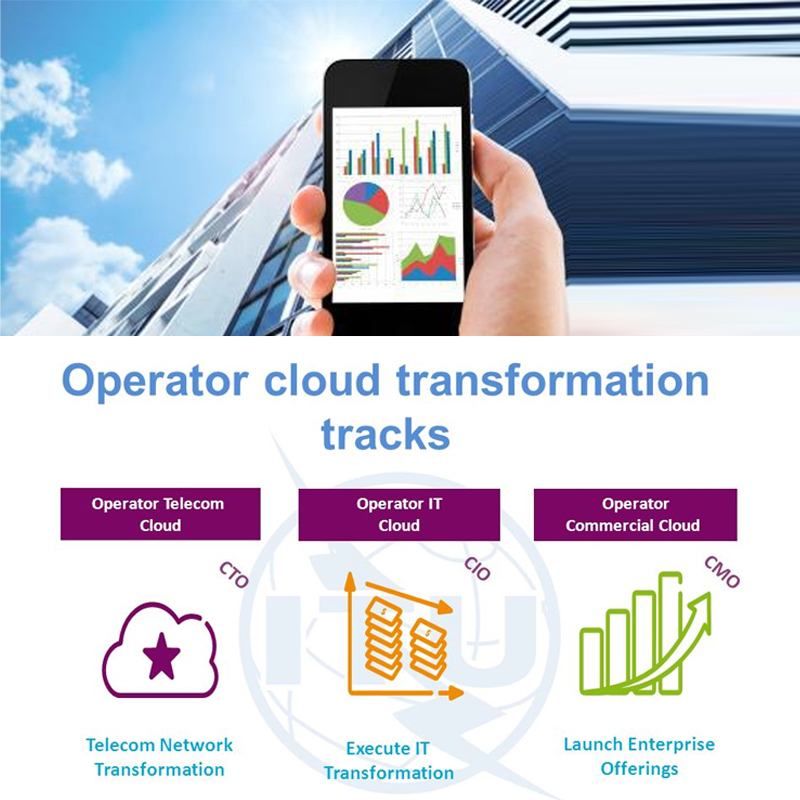
MUMBAI: The telecom cloud market is expected to expand from USD 10.92 billion in 2016 to USD 30.79 billion (Rs 2098.5 billion) by 2021, at a compounded annual growth rate (CAGR) of 23.0% during the forecast period.
This is according to a market research report “Telecom Cloud Market by Type (Solution and Service), Application (Billing & Provisioning and Traffic Management), Service Model (SaaS, PaaS, and IaaS), Organization Size, Vertical, and Region – Global Forecast to 2021,” published by Pune-based MarketsandMarkets.
The major drivers of this market include the need for lower operational and administration costs, as telecom cloud is hosted on cloud platform. It offers flexible pricing for products & services and allows managing various types of revenue without constraints, a news release from PRNewswire stated.

The Unified Communication and Collaboration (UCaaS) solution segment is estimated to dominate the Telecom Cloud Market share during the forecast period
UCaaS is estimated to have the largest market share in the telecom cloud market. Various features, such as multimedia, unified messaging, conference bridges, presence management, and Customer Relationship Management (CRM) integration are helping improve business functions. Therefore, with its increasing demand, Telecom Service Providers (TSPs) are providing UCaaS solutions in the market.
Network services are expected to capture the highest market share during the forecast period.
The network services of the telecom cloud market is witnessing a potential growth, in comparison to other services, owing to the benefits, such as Local Area Network (LAN)/Wide Area Network (WAN)/Wireless Local Area Network (WLAN) management, Voice over Internet Protocol (VoIP), managed network services, Internet Protocol (IP) contact centre management, network integration, and network implementation services.
North America is the leading region, in terms of market share in the telecom cloud market space.
North America is expected to hold the largest market share and dominate the telecom cloud market in 2016. North America has a huge penetration from large enterprises with technically-sound employees providing continuous innovative technologies. This has led to the growing Telecom Cloud Market. These are some of the major driving factors contributing to the growth of cloud-based services and solutions in North America.
Major vendors covered in the telecom cloud market for the study are AT&T, Inc. (Dallas, Texas, U.S.), BT Group PLC (London, U.K.), Verizon Communication, Inc. (New Jersey, U.S.), Level 3 Communications, Inc. (Broomfield, Colorado, U.S.), Deutsche Telekom (Bonn, Germany), NTT Communications Corporation (Tokyo, Japan), CenturyLink, Inc. (Louisiana, U.S), Singapore Telecommunications Limited (Singapore), Orange Business Service (Paris, France), and Ericsson (Stockholm, Sweden).
M&M claims to be the largest market research firm worldwide in terms of annually published premium market research reports. Serving 1700 global fortune enterprises with more than 1200 premium studies in a year, M&M is catering to a multitude of clients across eight different industrial verticals.





iWorld
Meta warns 200 users after fake Whatsapp spyware attack
Italy-targeted campaign used unofficial app to deploy surveillance spyware.

MUMBAI: It looked like a message, but it behaved like a mole. Meta has warned around 200 users most of them in Italy after uncovering a targeted spyware campaign that weaponised a fake version of WhatsApp to infiltrate devices. The attack, first reported by Agenzia Nazionale Stampa Associata, relied on classic social engineering with a modern twist: persuading users to download an unofficial WhatsApp clone embedded with surveillance software. The malicious application, believed to be developed by Italian firm SIO through its subsidiary ASIGINT, was designed to mimic the real app closely enough to bypass suspicion.
Meta’s security teams identified roughly 200 individuals who may have installed the compromised version, triggering immediate countermeasures. Affected users were logged out of their accounts and issued alerts warning of potential privacy breaches, with the company describing the incident as a “targeted social engineering attempt” aimed at gaining device-level access.
The malicious app was not distributed via official app stores but circulated through third-party channels, where it was presented as a legitimate WhatsApp alternative. Once installed, it reportedly allowed external operators to access sensitive data stored on the device turning a simple download into a potential surveillance gateway.
According to Techcrunch, Meta is now preparing legal action against the spyware developers to curb further misuse. The company, however, has not disclosed details about the specific individuals targeted or the extent of data compromised.
A Whatsapp spokesperson reiterated that user safety remains the top priority, particularly for those misled into installing the fake iOS application. Meanwhile, reports from La Repubblica suggest the spyware may be linked to “Spyrtacus”, a strain previously associated with Android-based attacks that could intercept calls, activate microphones and even access cameras.
The episode underscores a growing reality in the digital age, the threat is no longer just what you download, but where you download it from. As unofficial apps become increasingly convincing, the line between communication tool and covert surveillance is getting harder to spot and far easier to exploit.






