News Broadcasting
Tektronix to help China set up digital broadcasting research and development lab

Tektronix, the video test, measurement, and monitoring solutions company, will partner with the Academy of Broadcasting Science (ABS) to establish a national digital broadcasting research and development laboratory for China’s broadcast industry.
ABS is a part of the Chinese State Administration of Radio, Film, and TV (SARFT). According to an official release, the acceleration of TV digitisation, the maturation of video technology and the demands for China’s television system to be upgraded has led the Chinese government to recognise the need to establish a digital TV testing lab that can accelerate the digitisation of the country’s television industry.
Tektronix claims its award-winning solutions fulfill ABS’ requirements to test and monitor a variety of signal formats. Tektronix’ equipment will provide reliable evidence whether the country’s consumers are receiving good digital video quality, whether the video is being broadcast in standard – or in high-definition.

The Institute of Standardization and Planning, a department within ABS, will use the new Tektronix WFM700M multi-format waveform monitors, MTG300 MPEG-2 generators, VM700T video measurement sets, MTS300 MPEG test systems, and TG2000 signal generation platforms in the lab. The equipment will be used to test specific characteristics of digital TV modulation and transmission, provide performance testing of digital TV decoders and set-top boxes, subjectively evaluate picture quality, and analyze the structure of the video signal.
Tektronix solutions will also be used in conformance testing, software evaluation, and will provide built-in system testing of digital TV products. The award-winning WFM700M is a measurement-quality multi-format waveform monitor that provides for the evaluation of the digital transport layer and digital analysis capabilities important in design, installation, and maintenance of 270MB and 1.485 GB component digital systems, says the release.
The TG2000 is a programmable, multi-format test signal generation platform that provides reference-quality test signals in both the analog and digital domain. It is used to generate standardised test signals for installation, timing and sync, maintenance, and design evaluation applications. The MTS300 MPEG test system, based on Emmy(R) award-winning technology, provides comprehensive analysis of MPEG-2 transport streams, while the MTG300 MPEG generator is a flexible, cost-effective source of MPEG-2 transport streams for design evaluation and conformance testing of compressed digital video products.
Established 44 years ago, ABS has completed many big projects such as the definition of black-and-white TV, color TV, frequency modulation broadcasting module and the building of preliminary broadcasting system in China.


News Broadcasting
CNN-News18 to host Fury in the Gulf conclave on West Asia crisis
Three-hour summit to unpack geopolitical fallout and impact on India
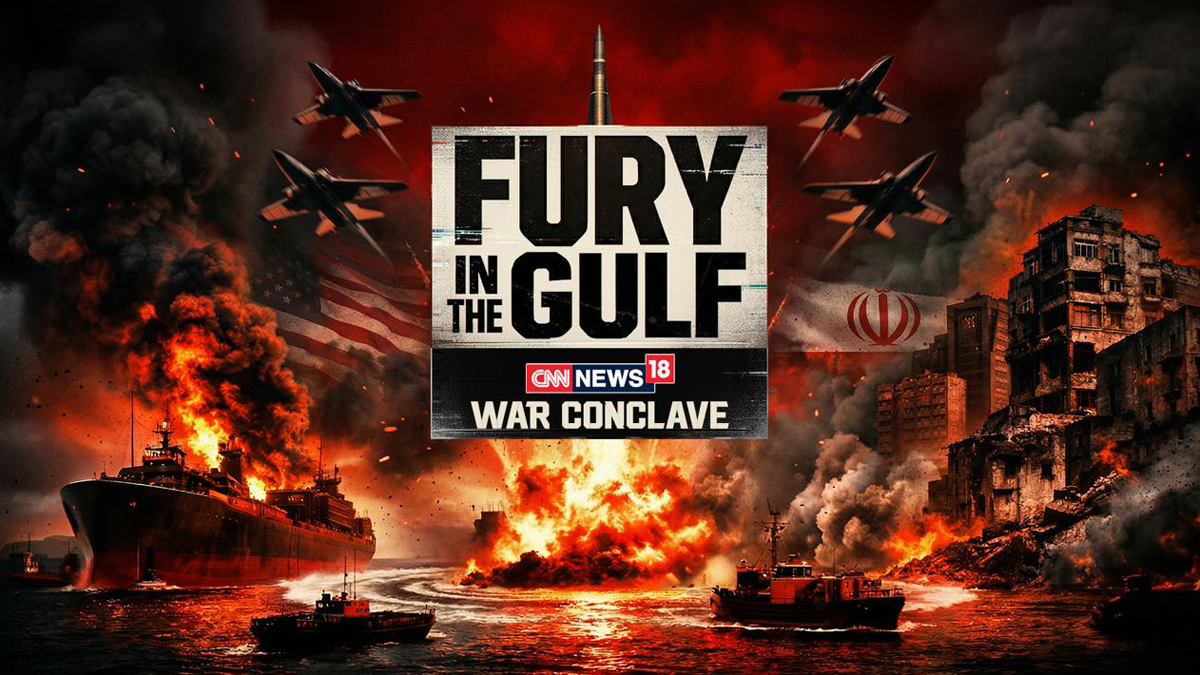
MUMBAI: CNN-News18 is set to host a special three-hour broadcast, Fury in the Gulf – War Conclave, on April 7, aiming to decode the escalating West Asia crisis and its far-reaching implications for India.
Scheduled from 4:00 PM to 7:00 PM, the conclave comes at a time when tensions between Iran and the United States are reshaping global geopolitics and triggering economic uncertainty. With India’s deep energy ties, trade links and large diaspora in the Gulf, the developments carry significant domestic relevance.
Built around the theme ‘Conflict, Consequences, and The Future,’ the programme will feature six curated sessions combining one-on-one interviews and panel discussions. The focus is to cut through the clutter and offer viewers a clearer understanding of the fast-evolving situation.
Key sessions include ‘Diplomacy in Times of War’ featuring Shashi Tharoor, and ‘World After the Iran Conflict’ with voices such as Ram Madhav, Reuven Azar, representatives from the European Union and the Iranian Deputy Envoy. Another session titled ‘Another Dunkirk?’ will bring together K. J. S. Dhillon and Jitin Prasada among others.
CNN-News18 editorial affairs director Rahul Shivshankar said, “In times of war, clarity becomes the most powerful tool. Fury in the Gulf – War Conclave brings together credible voices to address the questions and confusion that arise amid an overwhelming influx of information.”
He added that the initiative is aimed at delivering “facts, perspective, and insight” at a time when misinformation can easily cloud public understanding.
Echoing the sentiment, CNN-News18 CEO– English and business news Smriti Mehra said the conflict marks a defining global moment, with consequences that extend well beyond the region. She noted that the conclave seeks to present the crisis with “depth, nuance and responsibility” so audiences can better grasp its real-world impact.
As geopolitical tensions continue to dominate headlines, the conclave positions itself as an attempt to bring order to the noise, offering viewers a structured, insight-led look at a complex and rapidly shifting global situation.






