I&B Ministry
Technological touch points leading to convergence in media: Jaitley

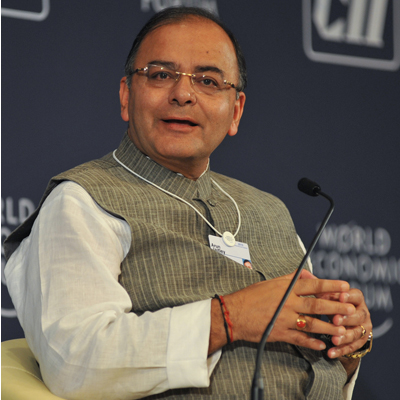
NEW DELHI: Information and Broadcasting Minister Arun Jaitley has said that the future belonged to digital media due to its reach, scale, variety and accessibility as technology influenced change in the communication landscape.
The technological thrust also impacted the nature of information dissemination in view of changes taking place globally across platforms. These rapid changes had led to a convergence of technological touch points in the media space, impacting the nature and flow of information dissemination.

Jaitley said the nature and character of news dissemination had undergone change due to the challenges thrown by 24×7 television consistently. The camera today had become the prime mover for defining content and setting the agenda, thereby impacting the flow of news.
The remarks were made while inaugurating the workshop on ‘Streamlining Government Communication’ organised by Press Information Bureau under the aegis of the Ministry here.
On the relevance and importance of government communication in the changed communication paradigm, Jaitley said the environment today offered a tremendous opportunity to stakeholders within the government to disseminate credible, factual, relevant and reader friendly information. A large constituency even today existed which required authentic and credible information from the government. The Minister called upon the participants to package data, facts and information keeping in mind contemporary tools and trends, media requirements and content for opinion makers and analysts in the media space.
Regarding the packaging of Government information, the Minister emphasized that Government Departments needed to optimally utilize their websites to place accurate and credible information. The website platforms were an important medium to address concerns of stakeholders who required information related to the policies and initiatives of the Government. The content of the website needed to be in a language which was easy to read and understand. Each Ministry also needed to cultivate the mechanism of reaching out to those stakeholders who constituted the wider assembly of people including representatives of the people/civil society, etc.
Jaitley also referred to the need to utilize different tools available in the social media space i.e. Twitter, Blog, Facebook to enhance the reach of Government communication. During the course of the address, the Minister also mentioned that the media needed to take a comprehensive view of the decision making process while highlighting the decisions taken by the Government. In his remarks to the participants, Minister of State Rajyavardhan Singh Rathore said the current communication perspective was driven by speed, accuracy, brevity and clarity of thought. It was imperative to utilize new tools of communication for enhancing outreach to a wide range of stakeholders. Perception management had also become a critical tool in the communication paradigm and needed to be addressed in totality.
In his opening remarks, I&B secretary Bimal Julka gave an overview of the efforts being made by the Ministry of I&B to position the communication approaches of the Government. Julka outlined the key initiatives undertaken by the Ministry to address the new challenges in the context of adopting a 360 degree approach, integrated media planning and initiatives undertaken in the social media space. Julka also outlined the specific initiatives undertaken for Swachh Bharat Mission, Beti Bachao, Beti Padhao and PM’s Jan Dhan Yojana along with efforts of the Ministry in addressing the crisis situation. Emphasizing the need of integrating the IEC component within proposals for consideration/approval, secretary called upon the participants to formulate the Cabinet proposals wherein the IEC component was an inbuilt part of the said proposal. This would enhance the communication efforts and address the budgetary requirements.
In his welcome address, PIB director general (Media and Communications) Frank Noronha referred to the critical role being played by PIB in view of the paradigm shift in the media space and the needs and requirement of stakeholders. He also highlighted the need for synergy among various Ministries/Departments for better outreach of Government policies/programmes.
The one day Workshop discussed various perspectives/issues on Changing Media Scenario viz Emergences of Social Media, Communication of Financial Policy of the Government to Regional Media’, and ‘PMO Perspectives on Media Communication among others through Technical Sessions, Panel Discussions, Open-house Discussions, Question & Answer Sessions, etc. The Workshop is being attended by officers of the level of Joint Secretary and above along with Private Secretaries to Ministers from various Ministries and Departments. The Workshop aims to integrate the enhanced role of Government communication through various media platforms.
Cabinet Secretary Ajit Seth said in the new communication environment, there was a need to integrate and synergise government efforts in a professional and calibrated manner. This was critical in view of the change in the mode, nature and content of communication. The need of the hour was to device modalities to deliver services and access to information. This would enable the government to engage with citizens and receive feedback. Ministries and departments need to be geared up to address the challenges of information dissemination especially in the social media space. There was a need to put in place strategies to utilise social media as a tool to interact with the people.
Seth added that in the recent past, efforts had been made to mainstream communication in addressing disaster and emergency situations as there is a dearth of information in such situations. The challenge was also in view of the different communication requirements of concerned stakeholders and recipients. The officers of Press Information Bureau need to be empowered and given timely information.
Elaborating, the Cabinet Secretary mentioned that in view of the recent initiatives of the government such as “Digital India”, the crowdsourcing method had been adopted. This in turn reiterated the need to have a strategy for addressing issues in totality. In view of the framework adopted for the current workshop, states should be encouraged to organise such workshops on a similar pattern.
Inviting suggestions for the forthcoming Civil Services Day on how to equip civil servants professionally in order to discharge their responsibilities better, he mentioned that one of the areas for discussions could be enhancing the ability of civil servants to communicate.



I&B Ministry
Digital radio, D2M tech set to reshape broadcasting and public messaging
Govt pushes next-gen delivery while TRAI tightens grip on spam ecosystem
NEW DELHI: India’s broadcasting and telecom landscape is undergoing a quiet but significant upgrade, with digital radio and Direct-to-Mobile (D2M) technologies emerging as powerful tools for mass communication, while regulators step up efforts to tackle spam calls.
According to the Ministry of Information and Broadcasting, digital radio and D2M are poised to transform how content reaches audiences by making more efficient use of spectrum. In simple terms, multiple channels can now be delivered over a single frequency, opening the door to a wider range of free-to-air content.
D2M technology takes this a step further by enabling video, audio and data to be broadcast directly to mobile handsets without relying on SIM cards or mobile data. The result is a resilient and cost-effective data pipe that can deliver everything from entertainment and education to critical emergency alerts, even in low-connectivity scenarios.
At the same time, the Telecom Regulatory Authority of India is tightening its grip on unsolicited commercial communication, better known as spam calls. The regulator has deployed a distributed ledger technology platform to bring transparency and accountability into the system.
Through this blockchain-based setup, consumers can register their preferences on receiving promotional messages, while businesses and telemarketers must also sign up and operate within defined rules. The platform also includes a complaint mechanism that allows users to report spam, with complaints shared across telecom operators for coordinated action.
The government’s broader push is being supported by infrastructure upgrades under the Broadcasting Infrastructure and Network Development scheme. Implemented through Prasar Bharati, the initiative focuses on modernising networks such as Akashvani and Doordarshan, including digitisation and adoption of next-generation broadcast equipment.
In a written reply in the Lok Sabha, Ministry of Information and Broadcasting minister of state for information and broadcasting L. Murugan said these steps are part of a larger effort to promote emerging technologies and strengthen the country’s broadcasting backbone. The response came to a query raised by member of Parliament Rao Rajendra Singh.
Together, these developments point to a dual-track strategy: expanding access to reliable, low-cost content while cleaning up the communication ecosystem. As digital pipes get smarter and spam filters sharper, India’s airwaves may soon feel a lot less noisy and far more useful.






